The Scholar Who Taught Kings: Yi Hwang on Korea’s 1,000-Won Bill
There is no king on Korea’s 1,000-won bill.
No general.
No battlefield hero.
Instead, there is a scholar. A man who spent his life trying to understand how a person should think, how a ruler should govern, and how power — if left undisciplined — tends to destroy itself.
His name is Yi Hwang(이황). Most Koreans know him by his pen name: Toegye.(퇴계)
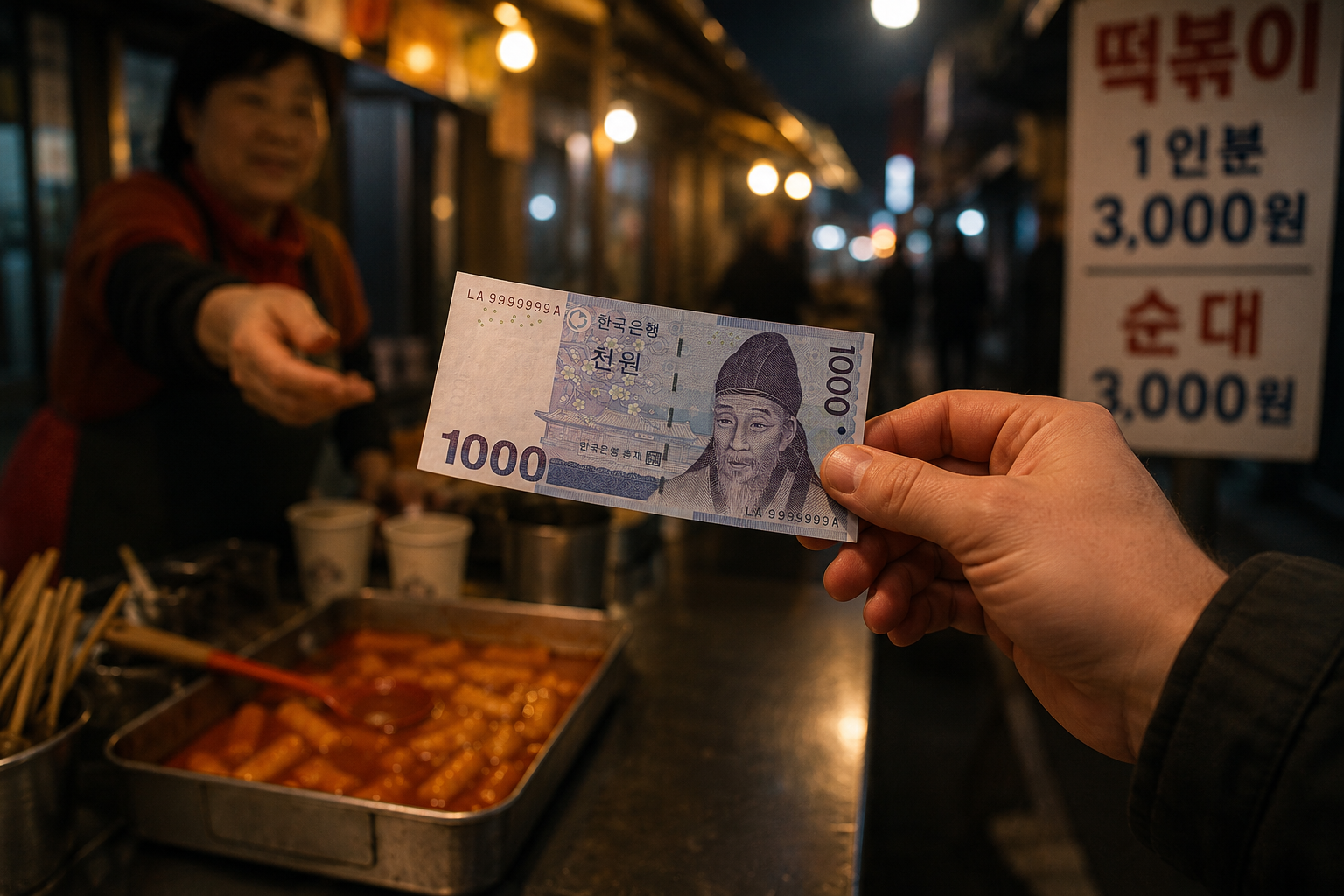
If you’ve ever paid for something in Korea with a 1,000-won bill, you’ve already held his face in your hand without knowing it. And that’s actually the interesting part — not who he was, but why Korea chose to put him there in the first place.
Yi Hwang was a scholar. A teacher. A man who never commanded armies, never conquered territory, never held the kind of power most people associate with having their face printed on currency.
So why is he there?
The Scholar Power Kept Calling Back
Yi Hwang was not powerful because he held office. He was powerful because Joseon Korea believed a true scholar could do something even a king could not do alone: teach a ruler how to discipline his own mind.
That’s a very different kind of authority.
In Joseon, political power meant commanding armies, issuing decrees, and controlling the fate of the country. But moral authority — the kind Yi Hwang carried — meant something else. It meant being the person power actually listened to. Not out of fear, but out of recognition that wisdom was something it needed.
Here’s where Yi Hwang’s story gets genuinely interesting.
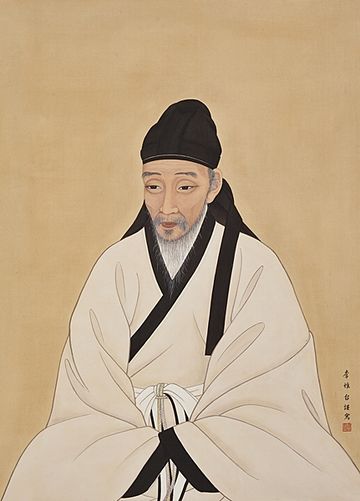
He didn’t want to be near power. He spent decades trying to leave it.
From around his mid-forties onward, Yi Hwang submitted resignation after resignation, requesting to step down from his government posts and return to his hometown. Some accounts say he submitted over fifty resignation requests over roughly twenty years. Fifty. And in those letters, he wasn’t making excuses. He wrote plainly: he doubted his own abilities, he felt that his reputation had outgrown what he actually deserved, and he believed his health would not allow him to serve the court properly.
He genuinely wanted to go home, study, write, and teach students — not advise kings.
But the court kept saying no.
The king kept calling him back.
And this is the tension that defines him: the scholar who tried to leave power was precisely the scholar that power could not afford to lose. Yi Hwang’s reluctance wasn’t a flaw. In Joseon’s eyes, it was part of what made him worth keeping. A man who did not chase office, who did not hunger for influence, who repeatedly asked to be released from the court — that was exactly the kind of man the court believed it needed closest.
Yi Hwang was powerful not because he ruled, but because Joseon believed he could teach rulers how to rule themselves.
A Philosophy Written for the King’s Mind
To understand why Yi Hwang mattered, you need to understand what Neo-Confucianism(성리학) meant in Joseon Korea — not as a philosophy in the abstract sense, but as a way of running an entire civilization.
Think of it this way: if Joseon were a country today, Neo-Confucianism would be its operating system. It wasn’t just a set of ideas people debated in universities. It was the framework that explained how a person should cultivate themselves, how a family should be structured, how a ruler should govern, and how society should maintain moral order from top to bottom. Everything — from how you spoke to your parents to how the king made decisions — was shaped by this framework.
Yi Hwang spent his life deepening and refining this tradition for Korea. He was not simply importing Chinese philosophy. He was thinking through it, building on it, and teaching others to apply it to real life.
But the clearest example of what he believed scholarship was for came near the end of his life.
When King Seonjo(선조) came to the throne as a young ruler in 1567, Yi Hwang — already in his late sixties — was called to court. Instead of delivering a political proposal or an administrative plan, he presented the king with a work called the Ten Diagrams on Sage Learning(성학십도). It was a set of ten visual diagrams, each illustrating a core principle of moral self-cultivation.
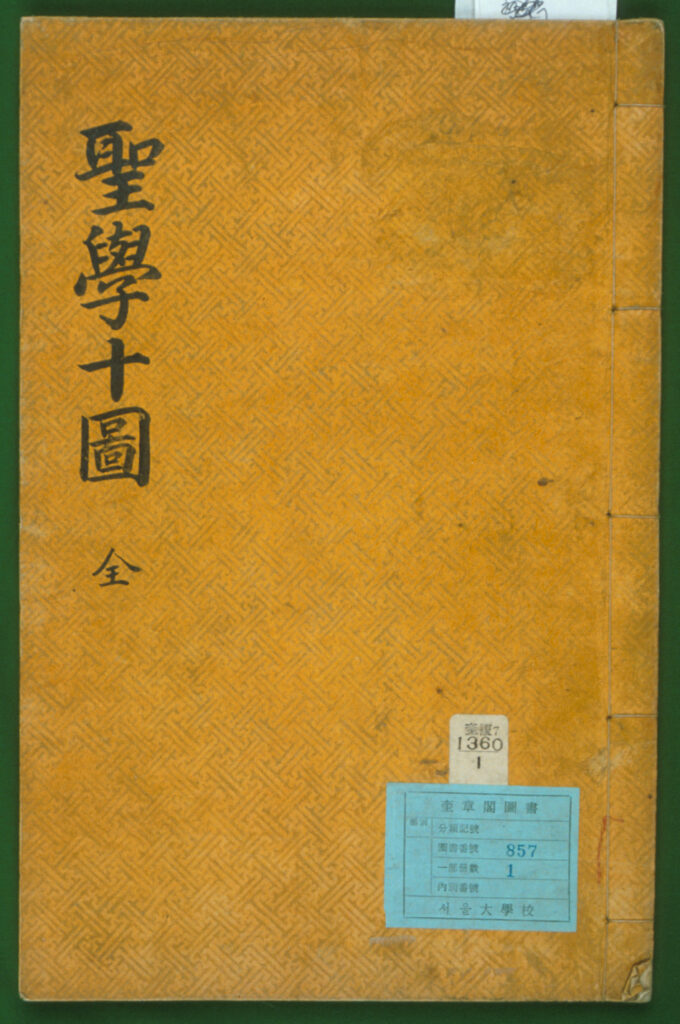
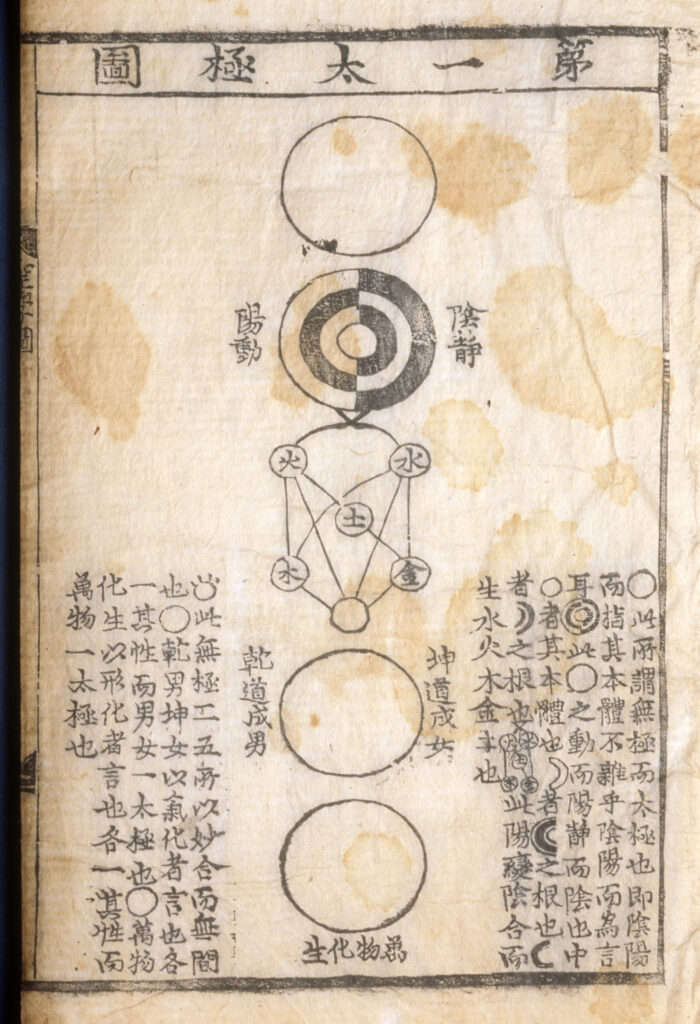
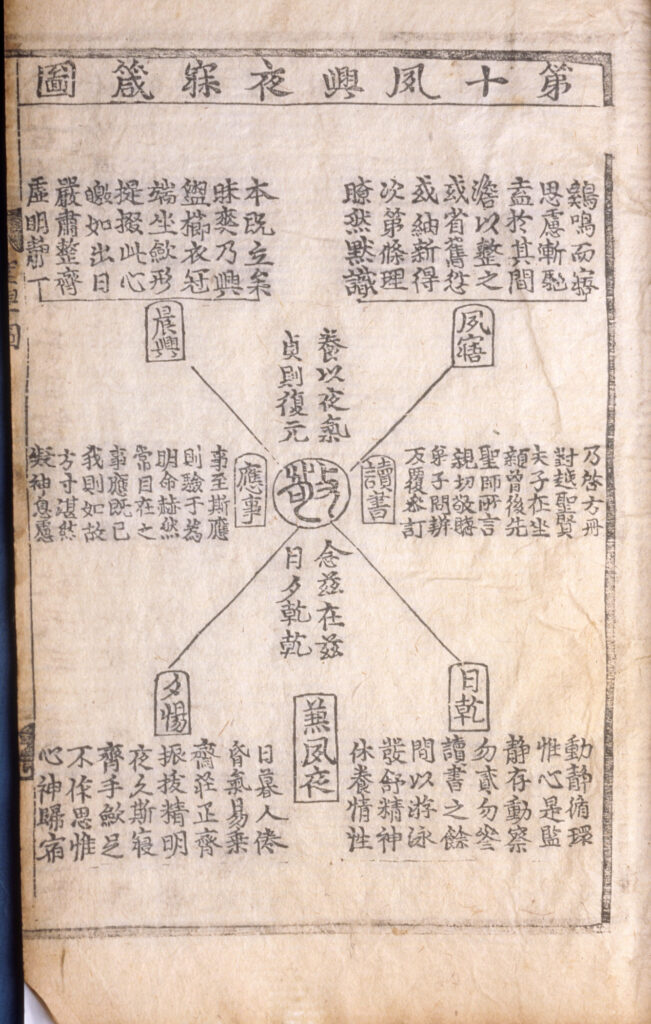
▲ Pages from the Ten Diagrams on Sage Learning — the guide Yi Hwang personally crafted and presented to King Seonjo. Source: Encyclopedia of Korean Culture
What did those ten diagrams actually cover? The range is striking. Some addressed the largest possible questions — the order of the universe, the nature of existence. Others came closer to home: how to practice filial devotion, how to live within a family, how to build proper relationships with others. And then several diagrams turned inward entirely, focusing on the human mind itself — how to understand it, how to discipline it, how to maintain moral clarity through the demands of an ordinary day.
In other words, Yi Hwang gave the king a map. It started with the cosmos and ended with the question of how to spend a single day with integrity.
It was not a policy brief. It was not a lecture on governance.
It was a guide for the king’s mind.
The Ten Diagrams on Sage Learning was, in essence, a mirror held up to the king — asking him to examine his own thinking, his own desires, and his own moral discipline before he presumed to govern others. The message underneath it was quiet but serious: you cannot rule a country well if you cannot first rule yourself.
That was Yi Hwang’s understanding of what scholarship was for. Not status. Not career advancement. Not even wisdom for its own sake. Scholarship, at its highest level, existed to discipline power.
Close to Power, But Never Consumed by It
There is a Korean word that gets used a lot when people talk about Yi Hwang: seonbi (선비).
It roughly translates as “scholar-gentleman,” but that doesn’t quite capture what it meant in Joseon. A seonbi wasn’t just an educated person. He was someone who had internalized a specific moral standard — someone who pursued learning not for personal gain, but because he believed it was the right way to live. And crucially, a true seonbi was expected to maintain that independence even when surrounded by power.
Yi Hwang embodied this. His repeated attempts to leave court life were not weakness or indifference. They were the very thing that made him a seonbi in the classical sense: someone who could stand close to power without being swallowed by it.
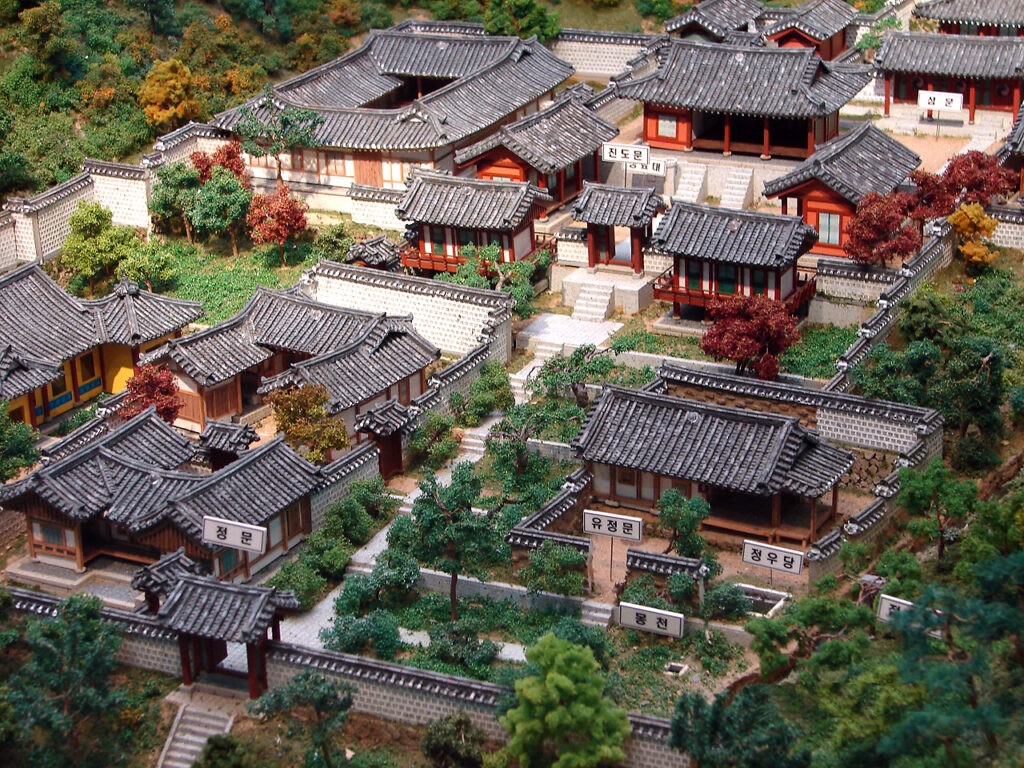
But there’s another side of Yi Hwang that often gets overlooked, and it might be the most revealing thing about him.
For several years, he engaged in a long intellectual exchange with a scholar named Ki Dae-seung. At the time, Yi Hwang was already one of the most respected thinkers in Joseon. Ki Dae-seung was much younger — a student generation below him. And Ki Dae-seung disagreed with him. Seriously, persistently, in writing.
What did Yi Hwang do?
He kept the conversation going. He listened. He pushed back on some points, and on others, he adjusted his own thinking. Not because he had to, but because he believed that was how serious intellectual work was supposed to happen.
In a society that deeply respected seniority, a man of Yi Hwang’s standing could have easily dismissed a younger scholar’s challenge. He didn’t. And that says more about him than any list of his official titles ever could.
A true seonbi could stand close to power without being consumed by it. Yi Hwang was remembered not only because he taught others, but because he could still be challenged — and remain standing.
The Joseon Ideal Korea Still Carries
The 1,000-won bill is about as ordinary as Korean currency gets. It buys you a cheap snack, covers a small portion of a bus fare, and sits forgotten at the bottom of a wallet. Most people barely glance at it.
But the man printed on it was placed there deliberately.
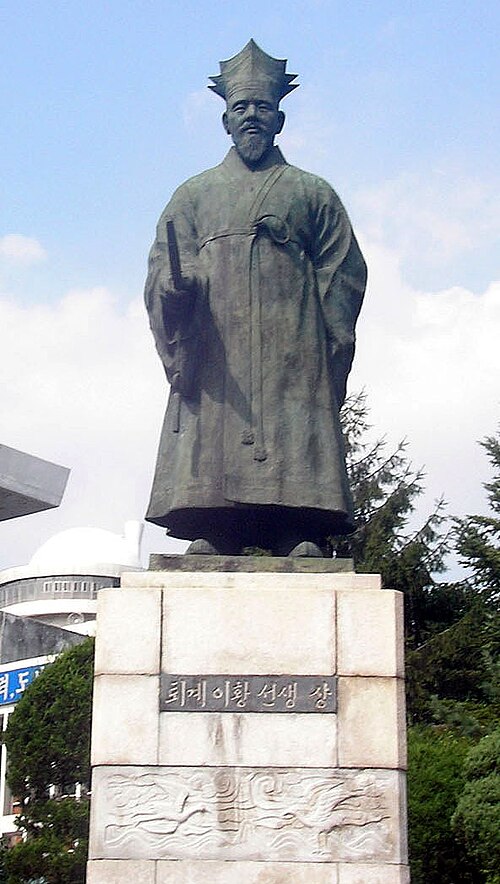
Modern Korea did not have to choose Yi Hwang. There were kings, generals, inventors, and revolutionaries to choose from. Korea chose a scholar who spent decades trying to leave the halls of power — a man whose authority came not from ambition, but from the refusal to be consumed by it.
That choice was not accidental. It was a statement about what Korea wanted to remember.
Joseon Korea built its entire civilization on a specific belief: that knowledge should not merely serve power. It should discipline power. A ruler who could not govern his own mind had no business governing a country. And the scholar who could guide that ruler — who could hold up a mirror without flinching — was not beneath the king. He was essential to the king.
Yi Hwang represented that ideal. Not perfectly — no person ever does. But clearly enough that when modern Korea decided whose face belonged on a banknote, his was the answer.
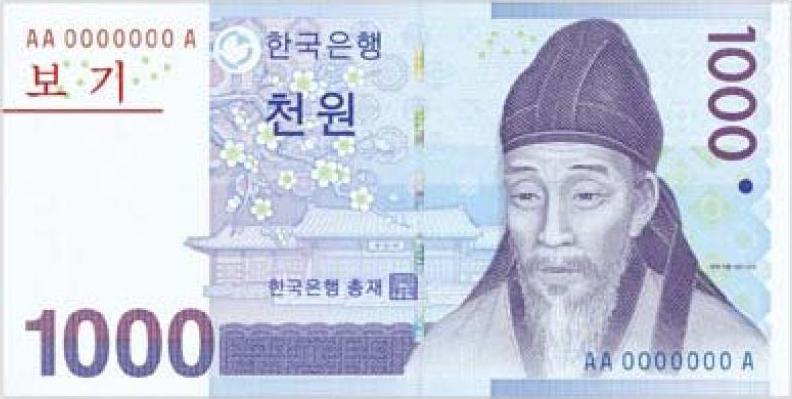
The 1,000-won bill is small, ordinary, and easy to overlook. But the man printed on it carries one of Joseon Korea’s deepest beliefs: knowledge should not flatter power.
It should discipline it.