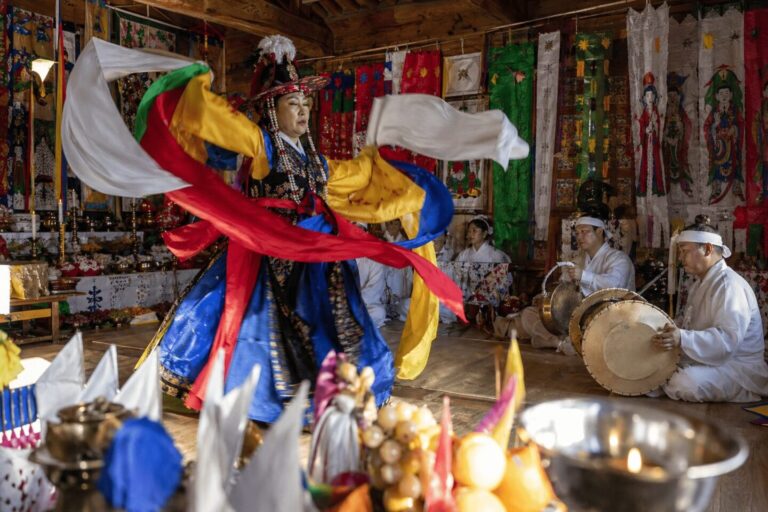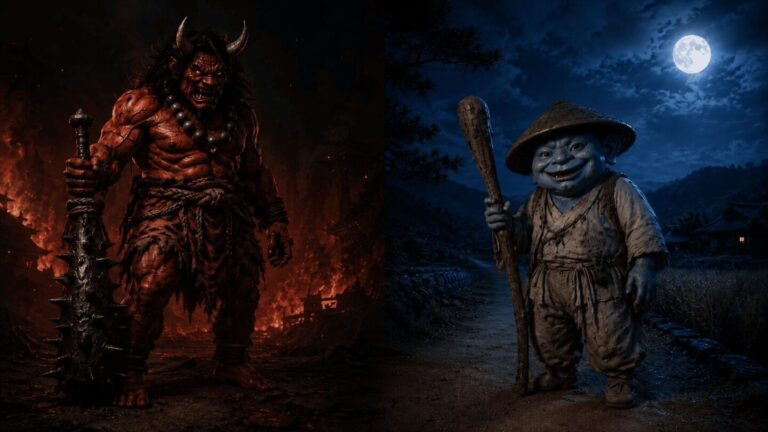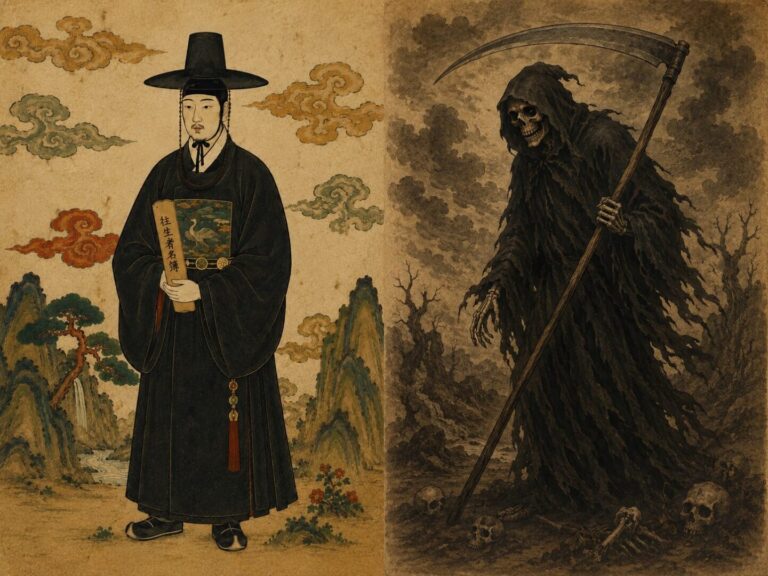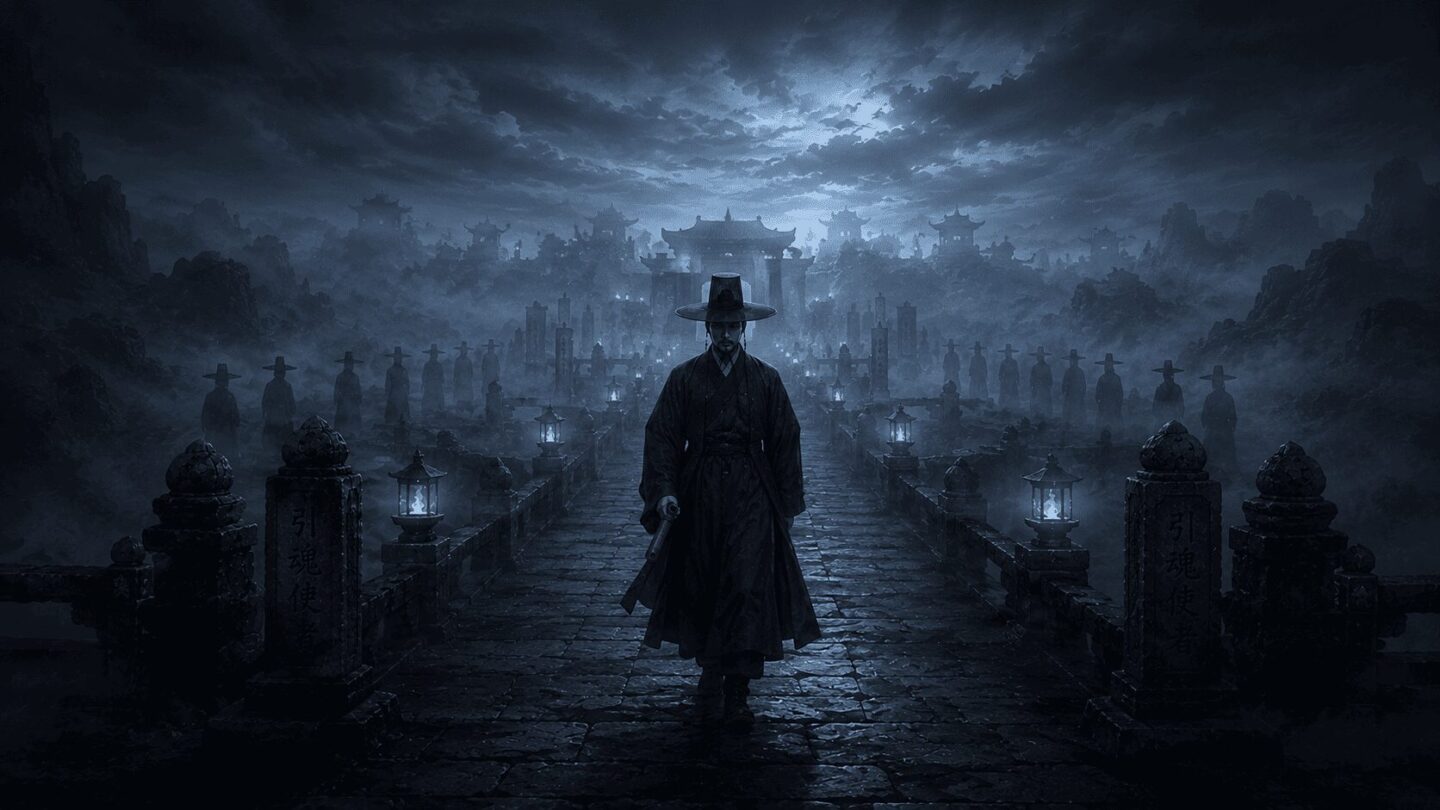
Gangnim Doryeong: The Human Who Became Korea’s Most Famous Death Messenger(saja)
In most myths, humans are summoned by the king of the dead.
Gangnim Doryeong‘s story begins the other way around.
Before he became Korea’s most famous Jeoseung Saja — the death messengers we explored in Part 1 — Gangnim was a human official. Not a god. Not a spirit. A man who worked in a government office, followed orders, and almost certainly never expected his name to survive for centuries.
Then he was given an order no human should have been able to carry out: enter the underworld, and bring back Yeomra (염라), the King of the Dead.
To understand how strange this is, imagine an ordinary person being ordered to enter the realm of the dead and bring its ruler before a human court. The comparison is not exact, but the feeling is close: a mortal is being sent to summon the ruler of the dead — not to be judged, but to compel judgment.
In most myths, humans arrive in the underworld as the powerless. Gangnim arrived with a task.
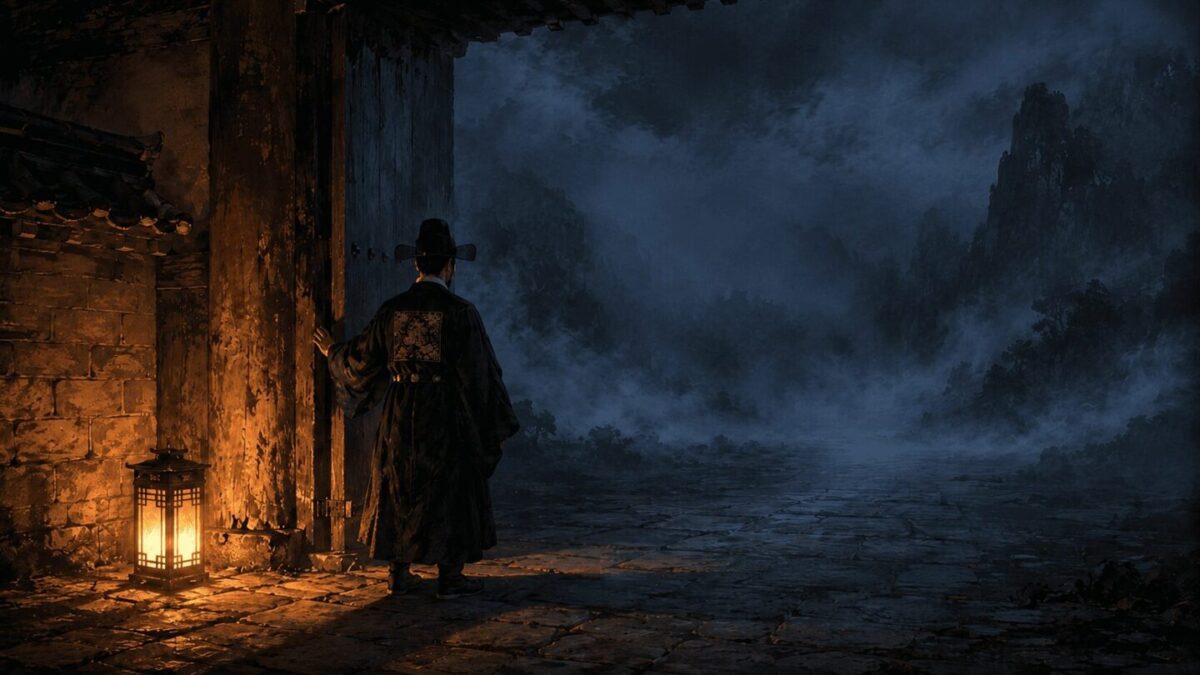
A Death No Human Court Could Explain
To understand why Gangnim was sent into the underworld at all, you need to know about the death that started everything.
The story, preserved in a Jeju Island shamanic myth called the Chasa Bonpuri (차사본풀이), begins with a king whose sons were prophesied to die young. To delay that fate, three of his surviving sons were sent away as traveling merchants.
During their journey, they stopped to rest at the home of a greedy couple — often referred to in the myth as Gwayangsaengi and his wife. The couple, coveting the brothers’ goods, got them drunk, killed all three of them, and threw their bodies into a pond.
Time passed. Three flowers bloomed from that pond. The wife cut the flowers and hung them in the house, but when they kept catching on people’s hair, she burned them in the fire. From the ashes, three jewels appeared. She put them in her mouth, swallowed them by accident, and later gave birth to three sons. Those sons grew up brilliant and eventually passed the civil service examination. Then, when they returned home in triumph, all three died at exactly the same moment — prostrating in greeting and simply never rising again.
No visible cause. No human explanation.
Their mother went to the local authorities, demanding justice. But the human court had no answer. The deaths made no sense by any law it knew. The truth of what had happened — why these children died, what connected them to the brothers murdered in the pond — was not something any living person could see.
That knowledge lived somewhere else.

The point of this strange chain of events is not only that it is tragic. It is that no ordinary human court can explain it. To find the truth, someone had to go to the place that holds the records of death itself.
The Magistrate and His Impossible Order
The case eventually reached Kim Chi-won, the local magistrate.
In premodern Korea, a magistrate was not simply an administrator. He was the government in a given district — responsible for taxation, public order, and legal disputes. His court was the highest authority most people would ever encounter. If he could not resolve a case, there was nowhere else to turn.
Kim Chi-won could not resolve this one.
Gangnim worked under him — one of the officials serving in the magistrate’s office, handling the day-to-day operations of local governance. He was not particularly famous. He was not a warrior or a sorcerer. He was a subordinate official doing his job.
Until the magistrate turned to him with an order that made no ordinary sense.
Unable to resolve the case himself, Kim Chi-won found a way to make Gangnim responsible for it. He had Gangnim brought in on a false charge — and then offered him a way out. Catch the one person who could actually explain these deaths.
Go into the underworld. Find Yeomra, the King of the Dead. And bring him here.
Gangnim does not begin this journey as a fearless hero. He begins as a human being ordered to do something no human should be able to do — standing in front of an instruction that is, by any measure, a death sentence dressed up as an assignment.
What saves him, at least in part, is his wife.
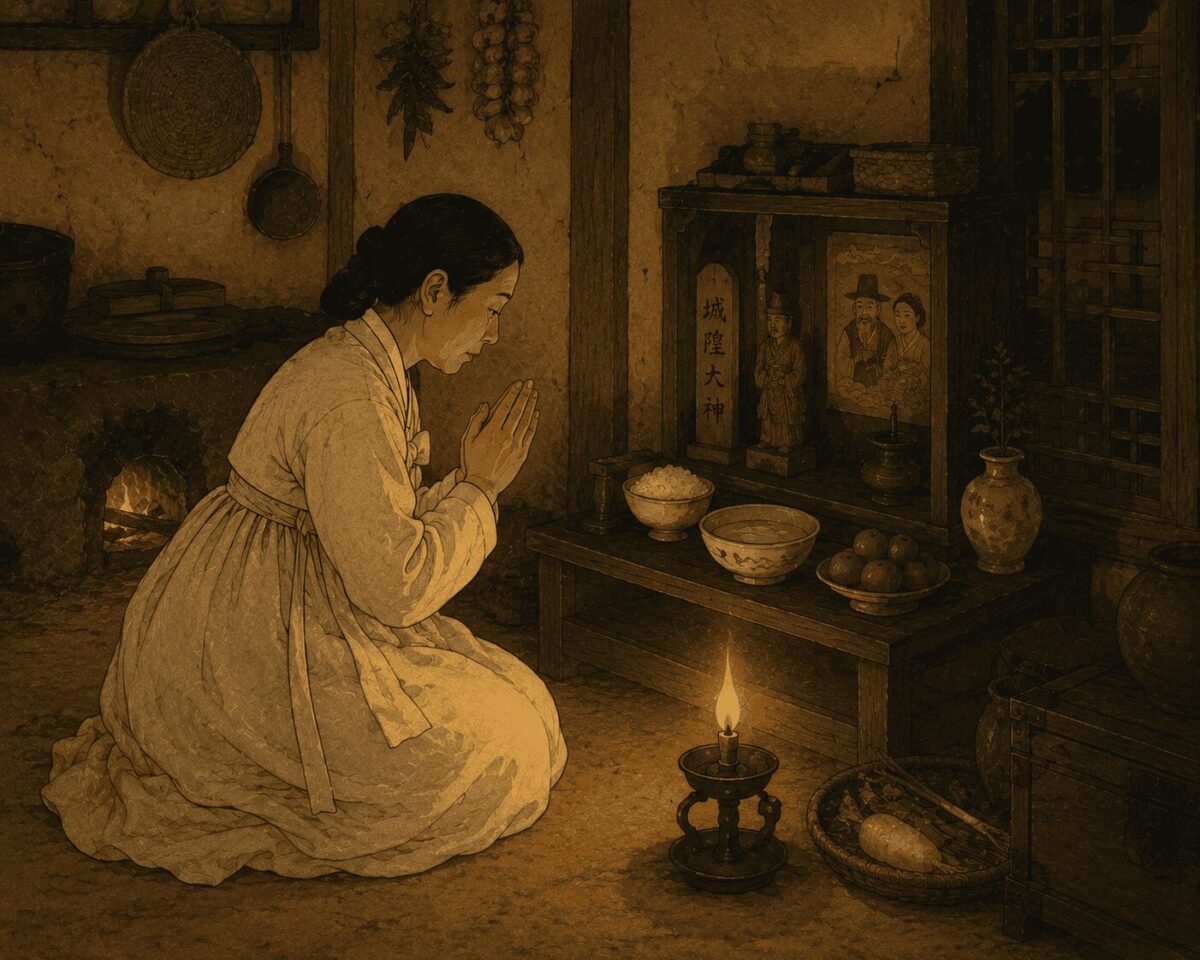
She does not wait helplessly. She prays to the household gods — spirits believed to guard the home, the kitchen, the doorway — and through their guidance, she secures something crucial: proper credentials for the journey. Gangnim had first been given a plain document, black ink on white paper. His wife’s devotion earns him something far more powerful — white ink on red paper, the mark of a legitimate messenger of the underworld. She finds the road. She prepares everything he will need.
Gangnim’s story is not only about the strength of one man. It begins with the intelligence and devotion of the person who prepared his path.
The Road into the Underworld
Most humans enter the underworld only after death.
Gangnim enters it while still alive.
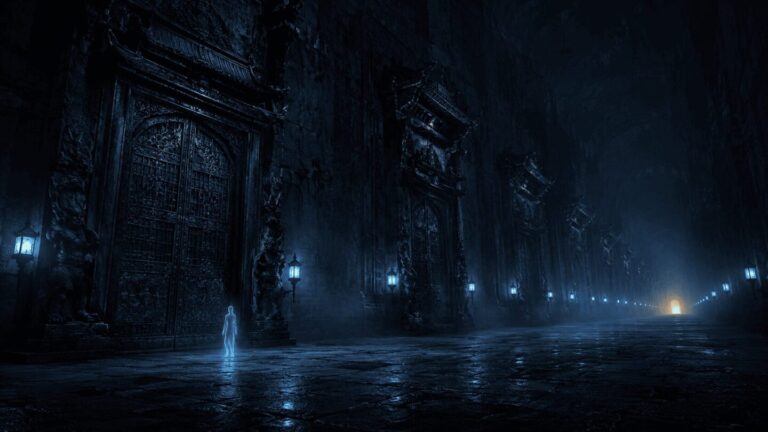
Guided by the directions the household gods provided, Gangnim sets out along a road no living person is supposed to find — crossing into a place that exists somewhere outside the logic of the living world. The myth records that when he finally reached the entrance to the underworld, he closed his eyes and leapt into its waters. When he came to his senses, he was standing before the gates of the dead.
He does not arrive quietly.
The guardians of that realm stand in his way. Gangnim deals with them the way the myth describes plainly and without ceremony: he fights through them. One account puts it simply — he defeated the underworld’s guards with nothing but his fists.
Then he stands before Yeomra himself.
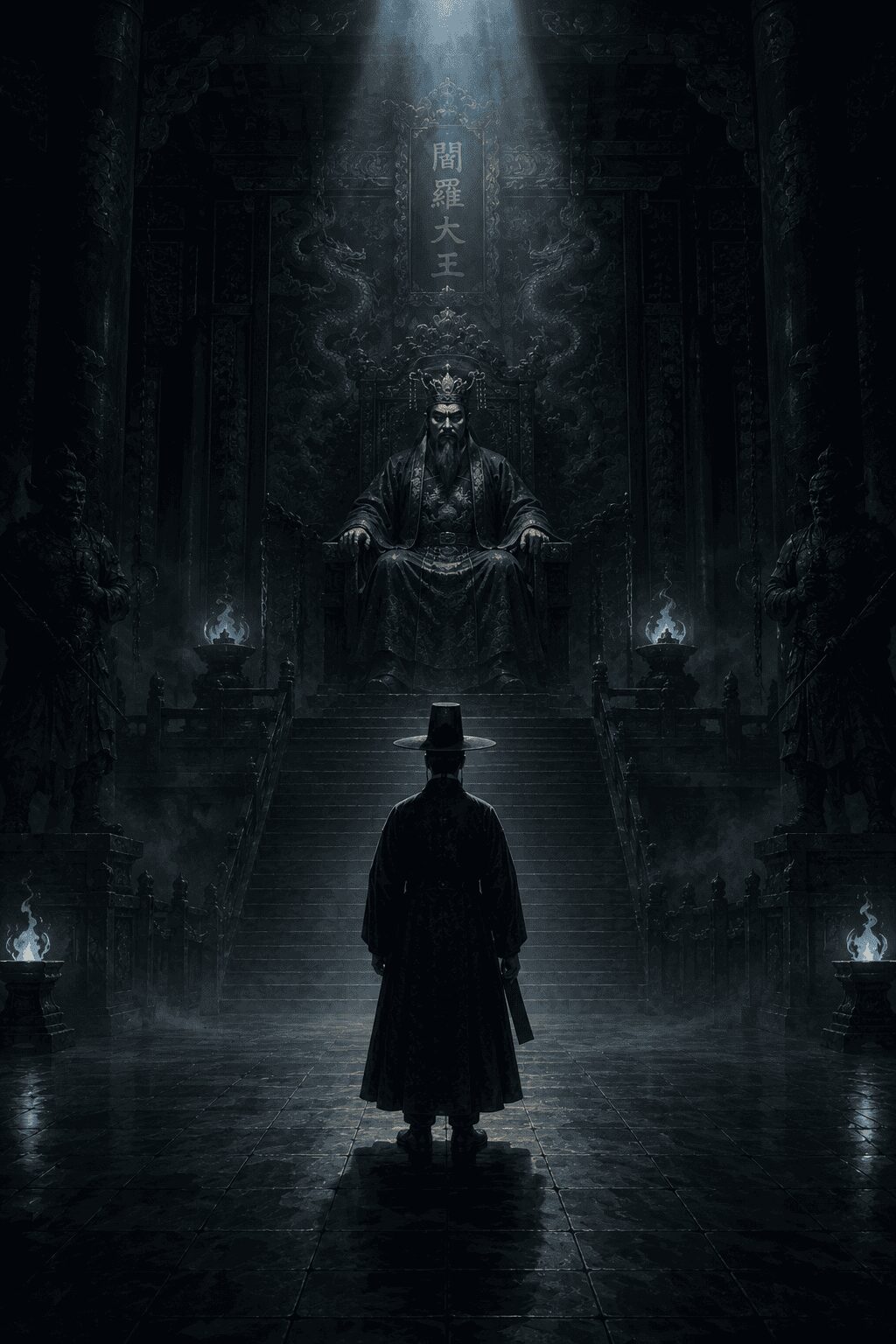
Gangnim does not come as a worshipper asking for mercy. He comes as a messenger carrying an obligation from the living world — a case that cannot be resolved without the records only the underworld holds. Yeomra does not simply submit to him. But he recognizes what is standing in front of him: a living man who crossed into the underworld, fought past its gates, and is not leaving without an answer. Yeomra agrees. He will come to the living court at an appointed time.
Gangnim heads back. But time moves differently between worlds. He had been gone for three days. When he returned to the living world, three years had passed.
Gangnim does not become a representative Jeoseung Saja simply because he crossed into the underworld and returned. He becomes one because he does what almost no living human could: he enters the underworld, faces its king, and comes back with his word.
When Yeomra Came to the Living Court
Gangnim returns to the world of the living.
He reports to Kim Chi-won: Yeomra has agreed to come. The king of the underworld will appear before the magistrate’s court.
Kim Chi-won does not believe him.
He has Gangnim thrown in prison.
Then, at the appointed time, Yeomra arrives.
The magistrate who ordered the impossible task, who locked up the man who completed it — he finds himself face to face with the King of the Dead, standing inside a human courtroom.
In most stories, the dead are brought before the court of the underworld.
Here, the king of the underworld appears before a human court.
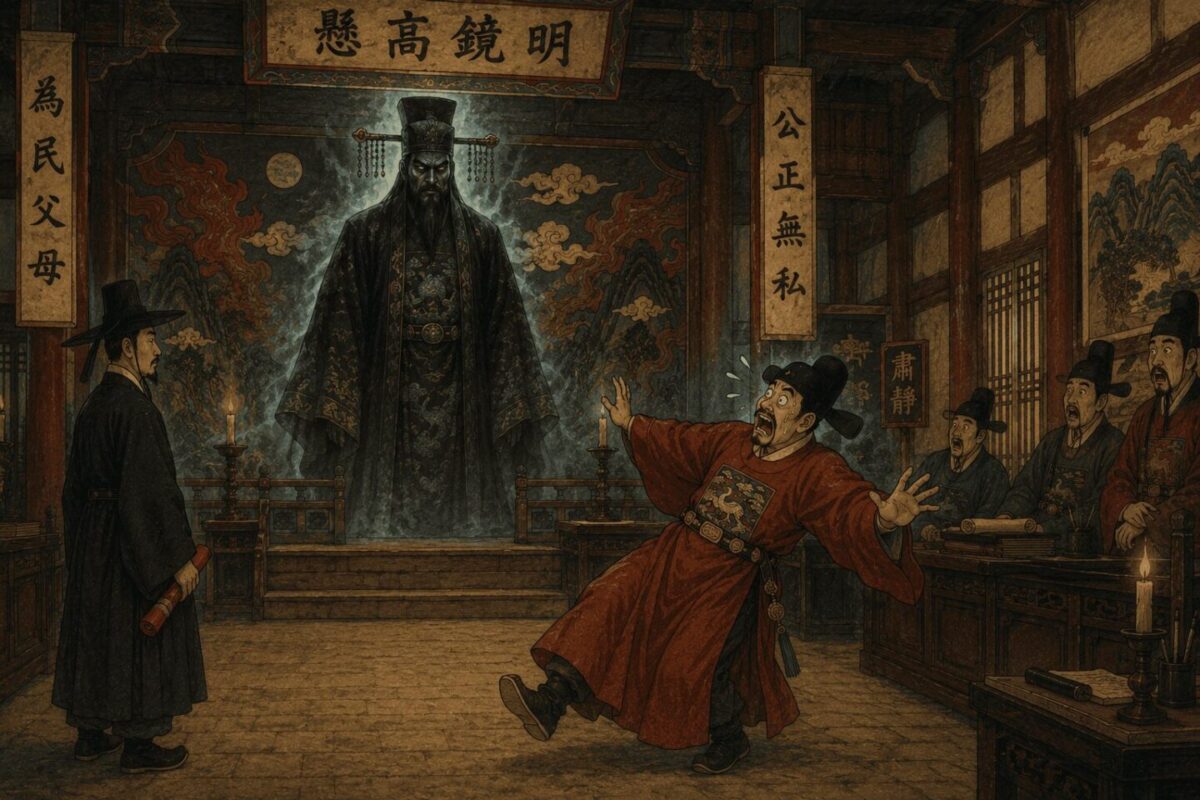
What Yeomra reveals in that courtroom is the truth the human legal system could not find. The three sons who died at the same moment were not simply unlucky. They were connected to the three brothers murdered at the pond — their deaths were not random, but a form of cosmic reckoning, a debt carried across lives and settled all at once. The greedy couple’s crime had not disappeared. It had waited.
The underworld is not only a place of fear. In this myth, it is also the place that holds the records humans cannot see — the complete account of what happened, why it happened, and what it means. Yeomra does not only rule the dead. He keeps the books.
With the truth now spoken aloud in a human court, judgment can finally be made. The grievance is resolved, and the hidden crime is finally judged.
The Man Divided Between Two Worlds
After the court session ends, a different kind of negotiation begins.
Yeomra wants Gangnim.
It is not hard to understand why. This is a man who walked into the underworld while alive, fought past its guardians, compelled its king to honor an obligation, and walked back out. Whatever Gangnim is, he is not an ordinary human official anymore. Yeomra recognizes what the living world has in its possession and wants it for his own.
Kim Chi-won refuses to give him up.
The compromise they reach is one of the stranger details in all of Korean mythology.
The living world keeps his body. The underworld takes his soul. And between those two claims, Gangnim becomes something no longer fully human.
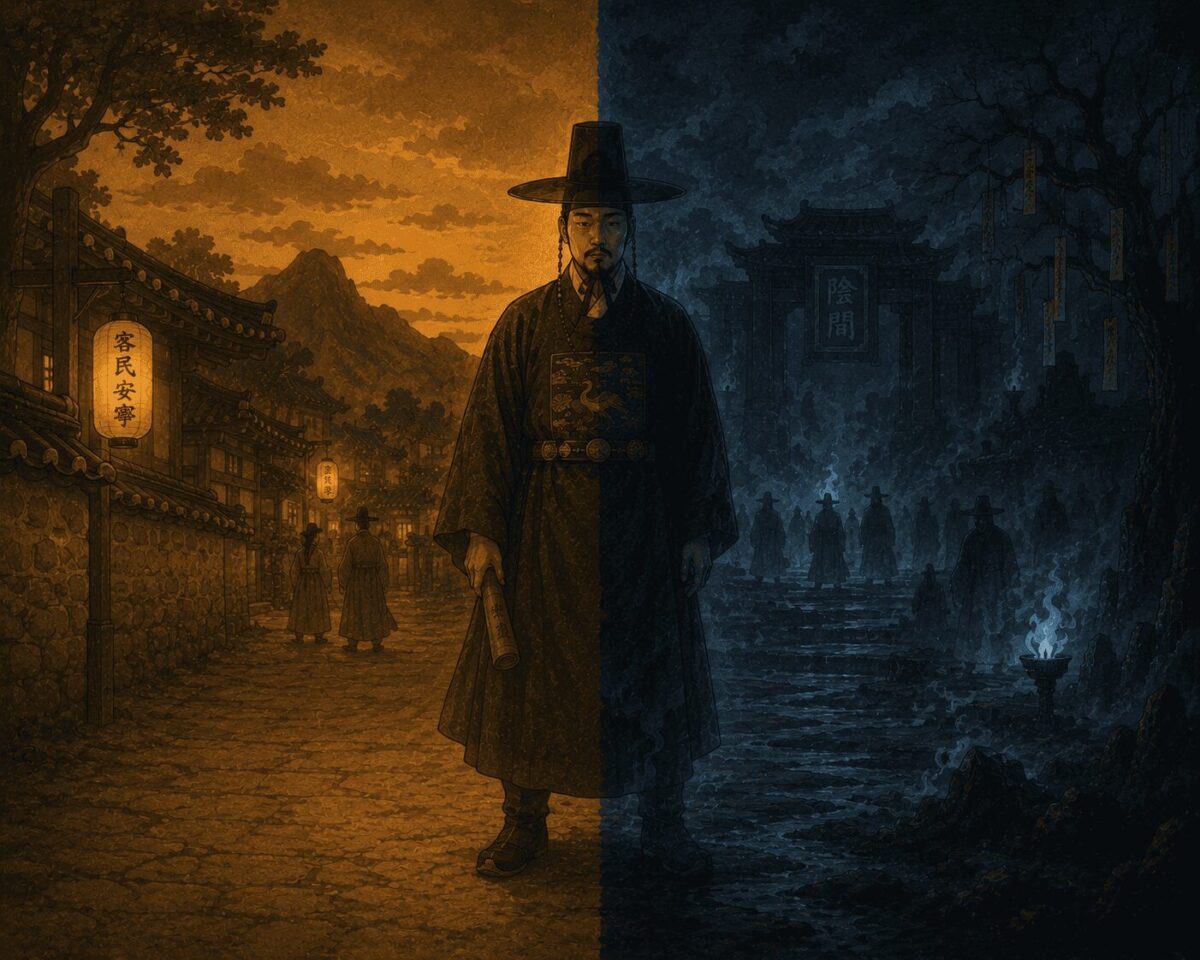
His life as a man ends. But his existence does not. His soul passes into the underworld’s service, and Gangnim — the former government official, the man who survived the impossible errand — becomes a Jeoseung Saja. Not because he was born into that role. Not because he died in any ordinary way. But because he stood between two worlds long enough that both worlds laid claim to him.
In Part 1, we described the Jeoseung Saja as something like underworld civil servants — messengers who operate within a system, carrying out orders they did not write, following a list they did not make. Gangnim shows that, in this myth, even a living human can be drawn into the underworld’s administration — not as a victim, but as one of its messengers.
Why Gangnim Still Matters
Gangnim Doryeong matters because he never fully belongs to one side again.
He knows the fear of the living — because he was human, because he stood in front of an impossible order and had to find a way to carry it out anyway. He knows the authority of the underworld — because he entered it while still breathing, faced its king, and did not leave until he had what he came for.
That is why he became the best-known figure among Korea’s death messengers. Not simply because he carries souls away, but because he once crossed the boundary himself. The Jeoseung Saja who arrives at your door was not always a spirit of death. The most remembered one began as a man.
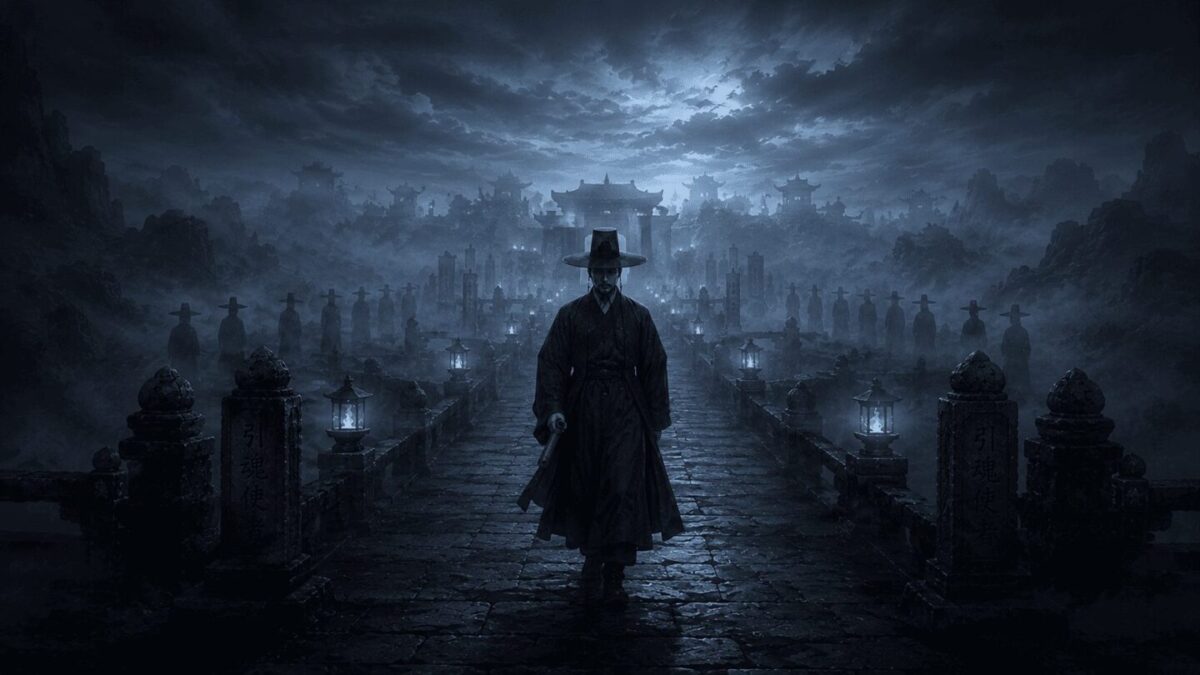
After becoming a Jeoseung Saja, Gangnim appears in other stories as well. In one, he captures Dongbangsak — a legendary figure said to have lived for three thousand years by hiding from death itself. In another, a mistake involving a crow explains why human deaths no longer arrive in any predictable order. But those are stories for another time.
What matters now is the system Gangnim entered.
Because Gangnim was only one messenger in a much larger structure. To understand where souls actually go after the Jeoseung Saja collect them — who judges them, what courts they pass through, what rules govern the world Gangnim crossed into — we have to go deeper.