
Birds by Day, Rats by Night: A Korean Proverb About Secrets
Have you ever told just one person something in private and somehow, days later, everyone already knew?
You didn’t post it. You didn’t send it to a group. You told one person, quietly, and thought that was the end of it.
Korea has an old Korean saying about secrets, gossip, and careless words that captures exactly that feeling. In simple terms, it is a Korean proverb about how words and secrets can spread beyond your control. Koreans have passed it down for generations, and honestly? It has never felt more accurate than it does right now.
The Proverb
낮말은 새가 듣고 밤말은 쥐가 듣는다
Pronounced roughly: nan-ma-reun sae-ga deut-go bam-ma-reun jwi-ga deun-neun-da
Words spoken by day are heard by birds. Words spoken by night are heard by rats.

The message is simple: be careful with your words, because even things said in private have a way of traveling.
But the way Koreans chose to say it — that’s where it gets interesting.
Imagine an Old Korean Village
Imagine this —
An old Korean village, early morning. A woman makes her way to the village well. Her neighbor is already there, drawing water. The woman lowers her voice and leans in slightly — glancing toward the lane before she speaks. A small piece of gossip. A quiet complaint about someone down the road. Just between the two of them.
She walks home thinking nothing of it. A bird moves along the roofline above her.
By that evening, the story has reached three households.
Now picture the same woman, later that night. She’s inside her room, door closed, the house quiet. She speaks in a low voice to her husband — careful this time. Surely no one can hear her now.
By the next morning, her neighbor already knows that too.

낮말은 새가 듣고 밤말은 쥐가 듣는다.
In the daytime, your words float up like birds — light, fast, gone before you notice where they’ve landed. At night, they slip through the dark like rats — quiet, unseen, already there before you started talking.
That’s the proverb. And that’s the warning.
Why Birds and Rats?
Old Korean villages were close-knit in a way that’s hard to imagine from a modern apartment building. Daily life often spilled into courtyards, lanes, wells, and marketplaces. Homes often opened onto narrow lanes, while wells and markets brought neighbors together every day. Privacy worked differently in close-knit villages — daily life was simply more visible and more audible than anything we’re used to today.
In that world, birds and rats weren’t just animals. They were the perfect image for how words moved.
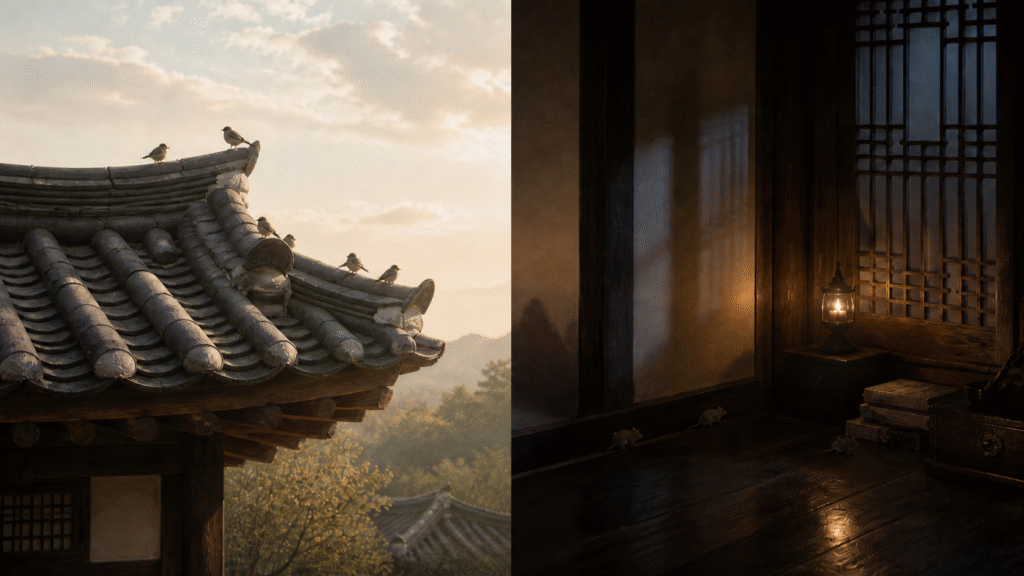
Birds are everywhere during the day — perched on rooftops, darting between trees, moving freely from one end of the village to the other. A word spoken in an open yard could travel just like that. Effortlessly. Without you noticing.
In many agrarian villages, rats were a familiar presence around stored grain and wooden homes — hidden beneath floors, tucked into dark corners. A whisper at night wasn’t safe just because the room was quiet. Something was already there.
Together, they cover everything. Day and night. No matter when you speak or how quietly — something is listening.
In English, there’s a similar idea: “The walls have ears.” Same warning, different image. But a wall is fixed. Passive. It just sits there. Birds fly. Rats hide. The Korean version feels more alive — and somehow, more unsettling.
What This Proverb Is Really Teaching
This Korean saying isn’t just telling you not to gossip.
The wisdom here goes a step further: once words leave your mouth, you can no longer fully control where they go.
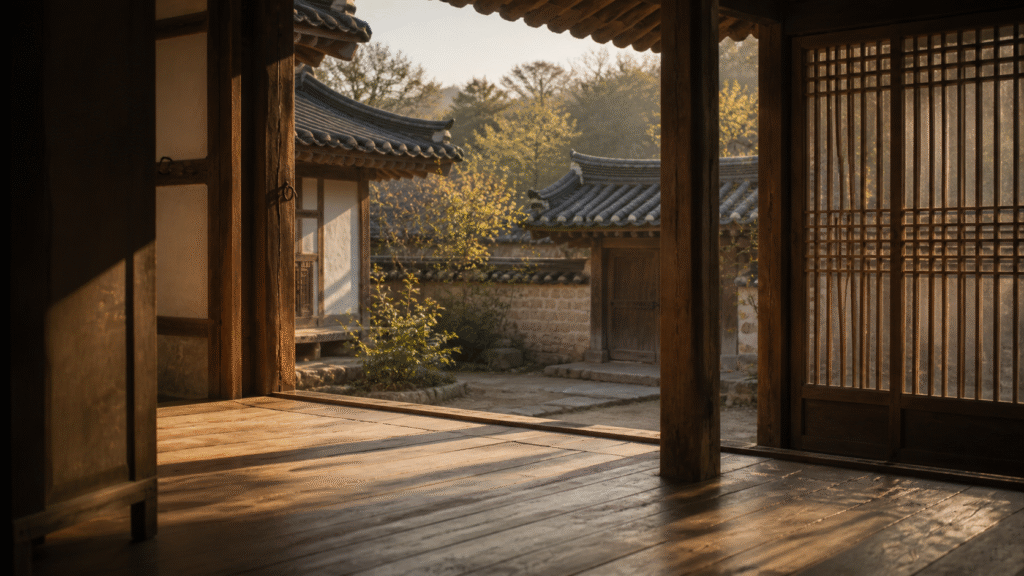
It doesn’t matter how trustworthy the person is. It doesn’t matter how quietly you said it. This proverb treats words almost like travelers — once released, they move beyond you. Passed along, remembered differently, shared at the wrong moment, taken out of context.
That’s not cynicism. That’s just how words work. And Koreans wrapped that understanding in two animals and one unforgettable sentence.
The Village Is Now the Internet
The old village setting has changed. Many Koreans now live in apartment buildings instead of close-knit village homes. The village well is no longer the center of daily life. Narrow lanes do not carry gossip the way they once did.
But this Korean proverb about secrets has never felt more relevant.
Because today, the birds are screenshots. The rats are chat logs. And the village is the internet.

A private DM sent at 2am feels safe — contained. But someone takes a screenshot. Someone forwards it. Someone shares it to a group you didn’t know existed. That word travels farther overnight than it ever could have in an old Korean village.
A Slack message in a “private” channel that gets copied elsewhere. A deleted post that someone already archived. A group chat that quietly has far more people in it than you realized.
The technology is completely different. The warning is exactly the same.
When a Korean person says this proverb today, it’s not a lecture. It’s more like a knowing look — a quiet reminder between people who understand how the world actually works.
Someone venting about their boss too loudly at lunch. A friend oversharing in a group chat. A message sent in frustration that probably should have stayed unsent.
You just say the proverb, and everyone knows what it means.
Words travel. They always have. The birds and the rats have just changed their form.
낮말은 새가 듣고 밤말은 쥐가 듣는다 Words spoken by day are heard by birds. Words spoken by night are heard by rats.