Chosen by the Spirits: The Dark Truth About Becoming a Korean Mudang
At the end of Part 1, I left you with a question.
What happens when the spirits choose someone who doesn’t want to be chosen?
I said it wasn’t a comfortable story. I meant it.
This is the part of Korean shamanism that doesn’t make it into the K-dramas. No silk robes. No dramatic rituals. Just a person — usually someone completely ordinary, with a job, a family, a life — who starts falling apart in ways nobody can explain. And the terrifying thing isn’t what’s happening to them. It’s that there’s only one way out.
Welcome to sinbyeong (신병). The spirit sickness.
When the Body Becomes a Battlefield
Sinbyeong literally means “spirit illness.” And if you heard the symptoms described without context, you’d probably think: psychiatric disorder. Depression. Psychosis. Maybe schizophrenia.
You wouldn’t be entirely wrong — and that’s exactly what makes this so complicated.
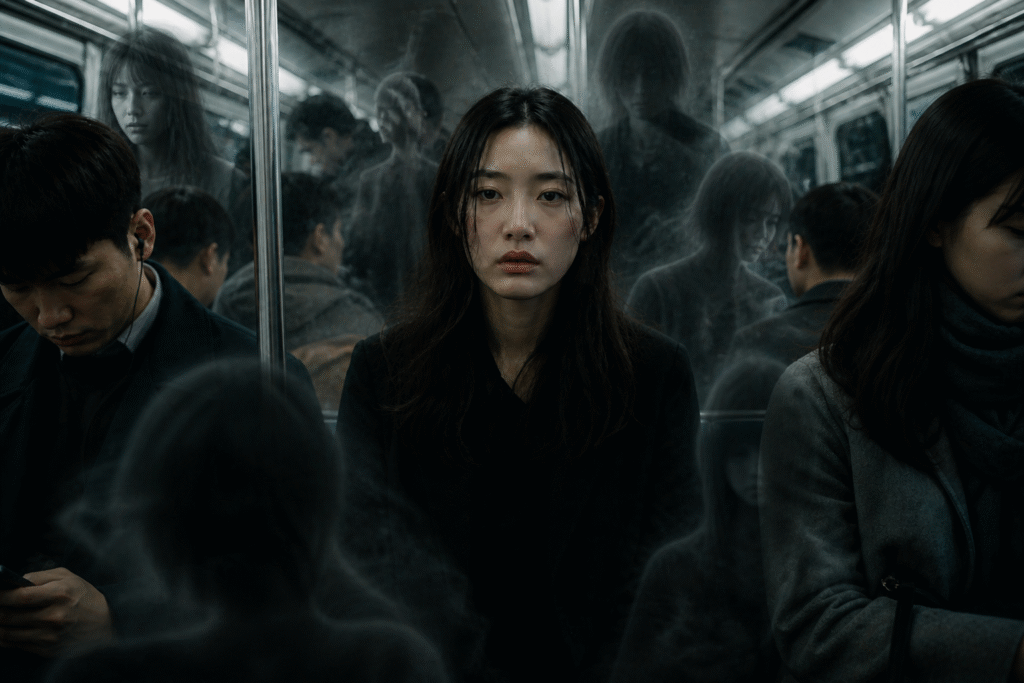
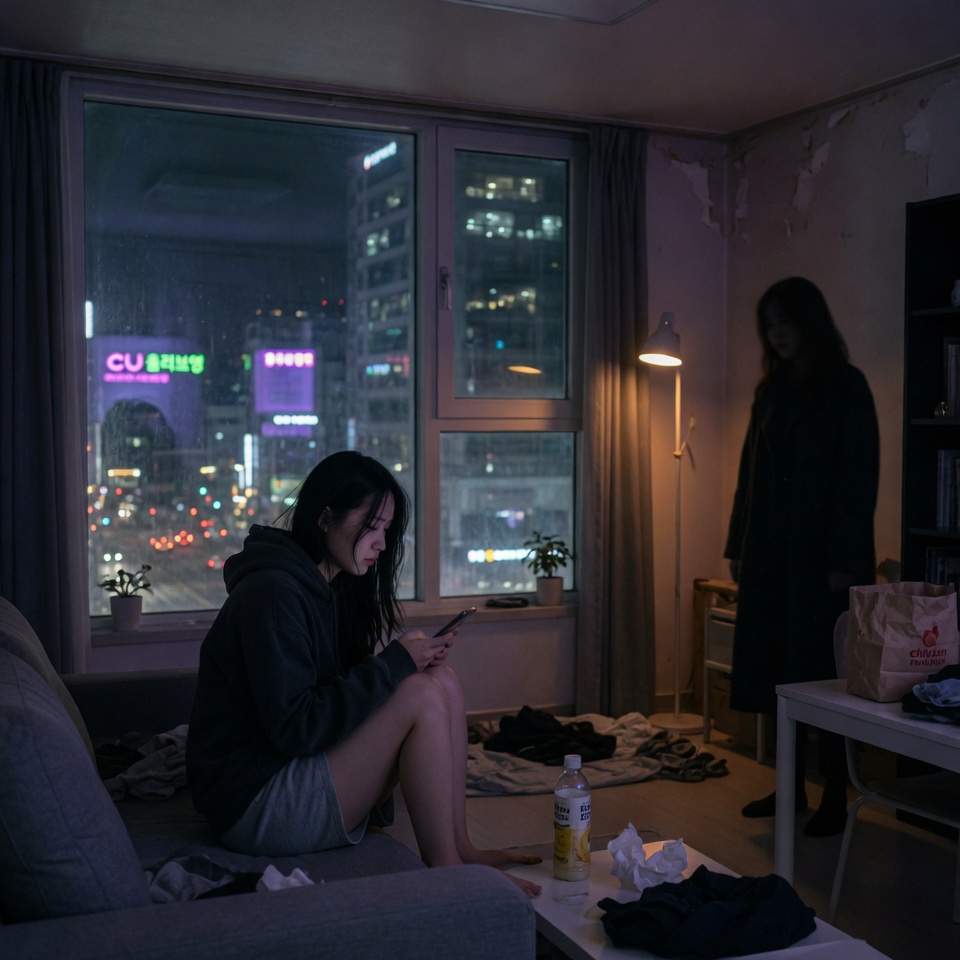
The symptoms arrive without warning. Visions of figures that no one else can see. Voices. Nightmares so vivid they bleed into waking life. A physical pain that moves through the body with no medical cause — joints, chest, head — that shifts the moment a doctor gets close to diagnosing it. Extreme fatigue. An inability to eat. Sometimes, a complete collapse of normal function.
The person experiencing this hasn’t done anything to invite it. They weren’t dabbling in the occult. They weren’t curious about shamanism. Most of the time, they were just living their life — and then, suddenly, they weren’t.
Modern medicine has a name for this cluster of symptoms when it appears in Korean cultural contexts: culture-bound syndrome. A condition that exists within a specific cultural framework and is recognized and treated within that framework. Among Koreans, sinbyeong is widely accepted as something real — in the sense that the suffering is undeniably real — while interpretations of its cause remain a deeply personal matter.
But here’s the question I want you to sit with: If the illness only appears in people who are, according to the shamanic tradition, destined to become mudangs — and if the illness disappears the moment they accept that destiny — what exactly is being treated when it goes away?
A coincidence? A self-fulfilling prophecy? Or something that Western medical frameworks simply don’t have the vocabulary for?
I’m not going to answer that for you. But I think it’s worth holding onto.
Key Takeaway: Sinbyeong is a cluster of physical and psychological symptoms — visions, unexplained pain, collapse of normal function — that appears in those believed to be called to become mudangs. Modern medicine classifies it as a culture-bound syndrome. The shamanic tradition calls it a summons.
You Can Say No. But There’s a Price.
Here’s where the story gets darker.
In most spiritual traditions, a calling is just that — a calling. You can ignore it. You might feel guilty, or unfulfilled, but your life goes on. The spirits, presumably, find someone else.
That is not how sinbyeong works.
In Korean shamanic belief, refusing the spirit’s summons doesn’t make the sinbyeong go away. It makes it worse. The visions intensify. The pain deepens. And — this is the part that may be genuinely difficult for outsiders to grasp — the suffering begins to spread to the people around you.
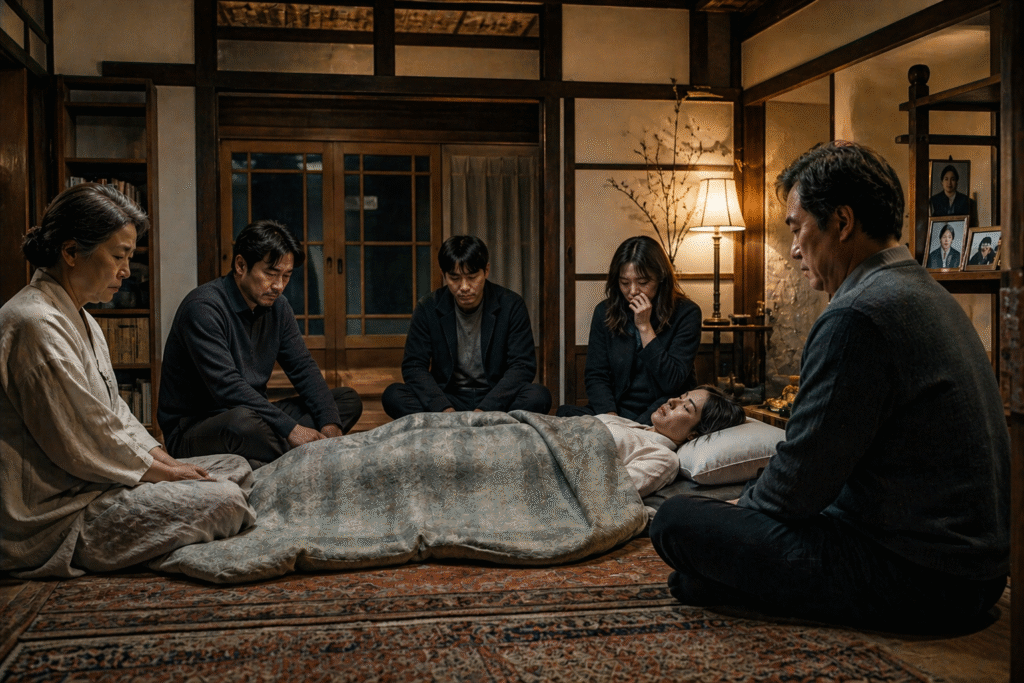
Family members fall ill. Accidents happen. A business collapses. A child gets hurt. The person who said no watches the people they love pay the price for their refusal. And the connection, in the shamanic worldview, is direct: the spirit that chose you is not patient. It is not polite. It will make itself known.
This is not a metaphor. This is not a folk tale used to frighten people into compliance. This is something that Korean families have quietly believed, and quietly witnessed, for generations.
Korean TV documentaries and reality programs based on true accounts have repeatedly featured families who spent years searching for medical explanations for a string of misfortunes, only to eventually consult a mudang and be told: someone in this family is refusing a calling. And more than once, that someone knew exactly what they were refusing.
Does that prove anything? No. But it does tell you something about how deeply this belief is woven into the fabric of Korean life — even now, in 2026, in one of the most technologically advanced societies on earth.
So what do you do when the cost of saying no becomes too high?
You say yes.
Key Takeaway: In Korean shamanic belief, refusing sinbyeong doesn’t end it — it escalates it. The suffering extends beyond the individual to their family. This is why many people accept the calling not out of desire, but out of love.
The Moment Everything Changes
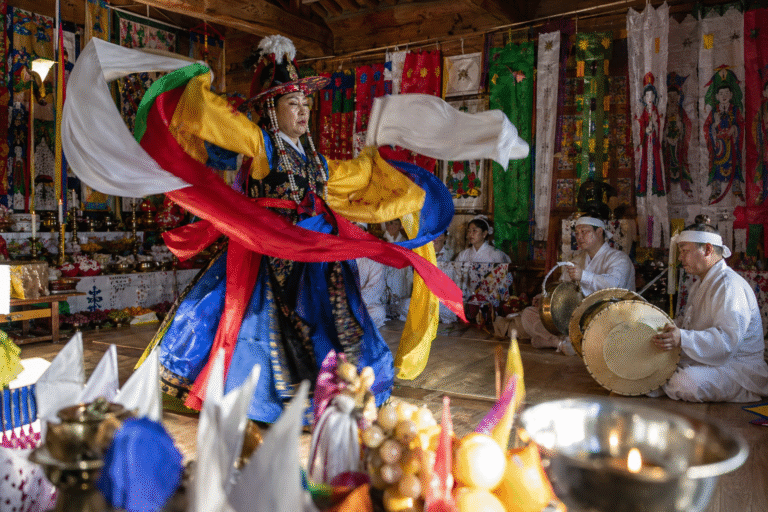
The process of accepting the calling is called naerimgut (내림굿) — the descent ritual. It is the ceremony through which a new mudang formally receives her spirit, and it is, by every account I’ve encountered, an extraordinary thing to witness.
But before the naerimgut can happen, there’s a period of preparation. The candidate must be spiritually cleansed — the false spirits, the heochu (허주), the wandering entities that attach themselves to vulnerable people, must be cleared away. Only then can the true momjushin (몸주신) — the body-guardian deity — be properly received.
This preparation period is not gentle. It involves fasting, isolation, and a kind of sustained psychological intensity that most people would find unbearable. And it costs money — significant money. A full naerimgut, properly conducted by an experienced mudang, can run into the tens of millions of Korean won.
This is also, unfortunately, where predators enter the picture.
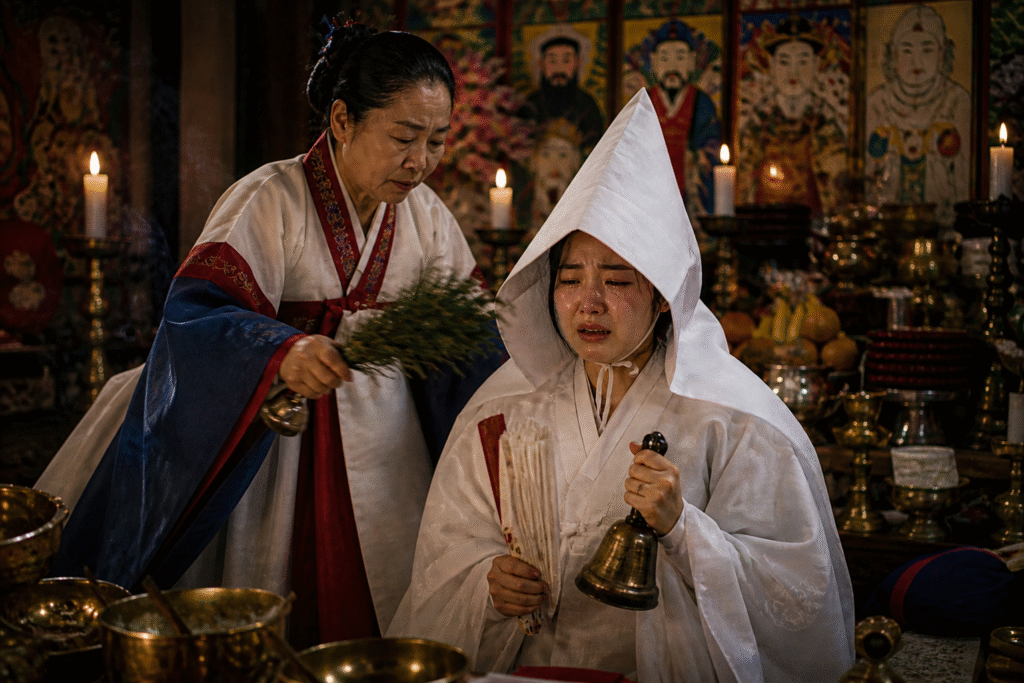
There is a well-documented pattern of fraudulent mudangs targeting people in sinbyeong. Someone in crisis — frightened, exhausted, desperate for an explanation — is told they must receive the calling immediately. No preparation period. No cleansing. Just pay the fee, undergo the ritual, and everything will be fine.
It won’t be fine. According to practitioners within the tradition, a naerimgut performed without proper preparation doesn’t invite the true body-guardian deity. It invites whatever happens to be nearby — and whatever happens to be nearby is rarely something you want living inside you.
The result, in the worst cases, is someone who went looking for relief and came away worse. Deeper in debt. Deeper in the grip of something they don’t understand. And often, bound to the fraudulent mudang who performed the ritual, pressured into further payments, further rituals, further dependency.
This is the side of sinbyeong that Korean dramas and films don’t show. It is not dramatic. It is not spiritual. It is just exploitation, dressed up in ritual language, targeting people at the most vulnerable point in their lives.
The way to protect yourself — or someone you love — is simple, if not easy: if only one mudang tells you that you must receive the calling, don’t act. The tradition itself says that if the calling is real, every mudang you consult will say the same thing. Seek out two, three, four independent practitioners. If they all say the same thing, then perhaps it’s time to listen.
If they don’t — walk away.
Key Takeaway: The naerimgut, the ritual of acceptance, requires extensive spiritual preparation and significant cost. Fraudulent practitioners exploit people in sinbyeong. The tradition’s own safeguard: if the calling is real, every mudang will recognize it independently.
The Mother Who Prayed Her Child Would Never Become What She Is
Here is the final irony of sinbyeong — and it is a heavy one.
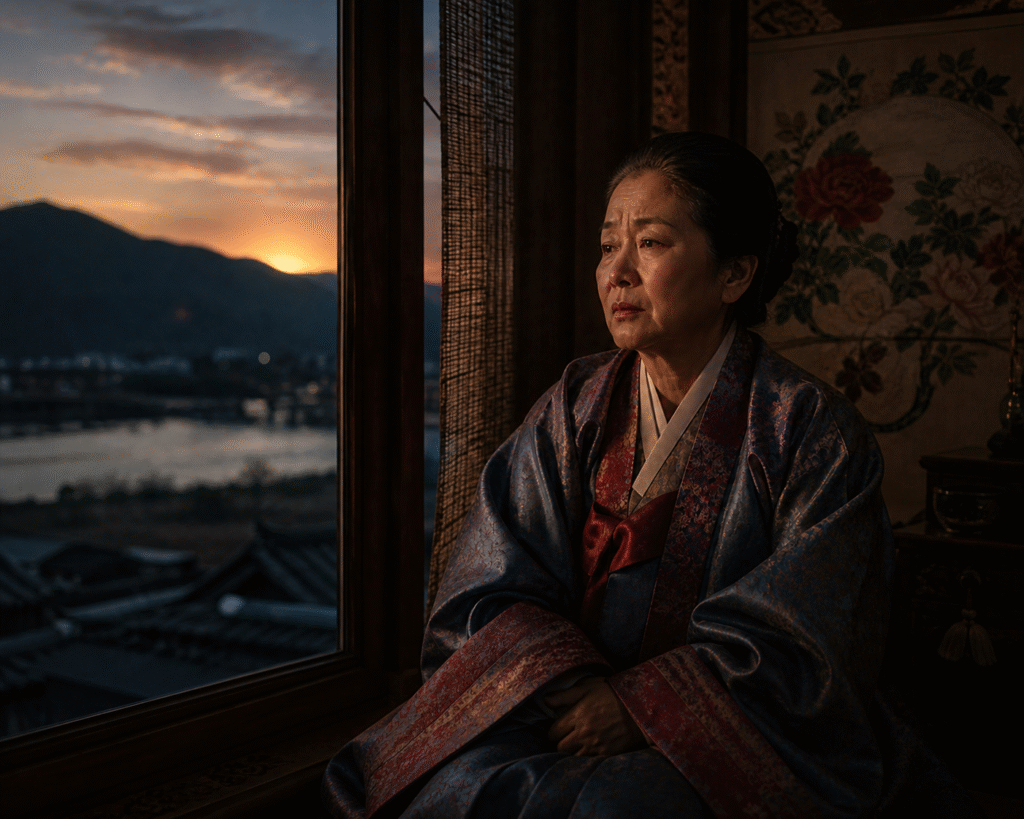
The people who understand it best are the ones who have already lived it. The mudangs themselves. And almost without exception, the one thing they want most is for their children to be spared.
Not because they regret what they are. Most mudangs I’ve read about, or heard described, have made a kind of peace with their calling. They understand the value of what they do. They’ve seen what they can give to people in grief, in confusion, in genuine spiritual crisis. They don’t, as a rule, wish they had chosen differently — because they know they never had a choice.
But they know the cost. The years of sinbyeong before acceptance. The social stigma that still clings to the mudang in Korean society — the sideways looks, the neighbors who don’t quite meet your eye, the family members who pretend not to know. The exhaustion of a practice that never fully turns off. The way the spirit world doesn’t keep office hours.
So they pray. They hope. They do everything they can think of to redirect what they sense is coming.
And then they watch their child begin to have the visions.
There is a word in Korean — han (한) — that has no direct English equivalent. It describes a kind of deep, unresolvable sorrow. A grief that doesn’t leave, that becomes part of who you are, that you carry forward into everything you do. It is one of the most distinctly Korean emotional concepts in the language.
I think of it when I think of a mudang watching her child walk the same path she walked. The path she would have given anything to spare them.
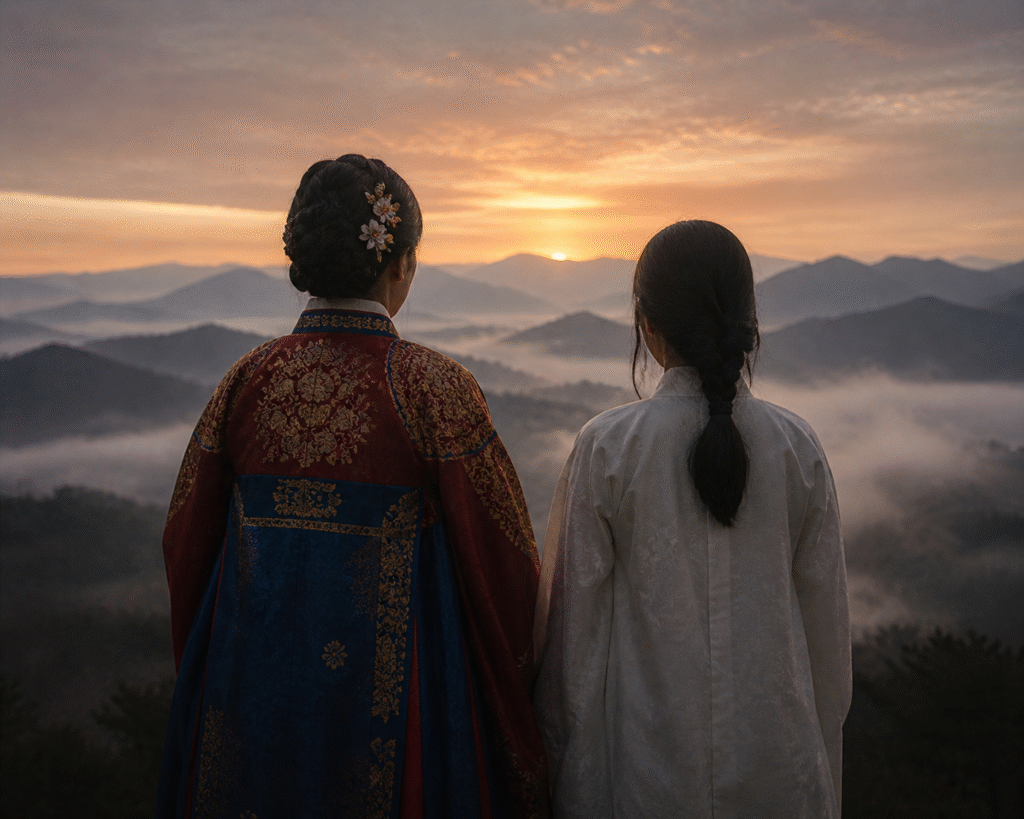
She can’t stop it. She knows she can’t stop it. And so she does the only thing she can: she prepares them as well as she can, initiates them as carefully as she can, and hopes that what she passes on is not just the burden — but also the strength she found inside it.
That, in the end, is what sinbyeong is really about. Not the illness. Not the spirits. Not even the choice that isn’t really a choice.
It’s about what you do with something you never asked for.