Meet the Korean Tiger God Hiding Inside Korea’s Buddhist Temples
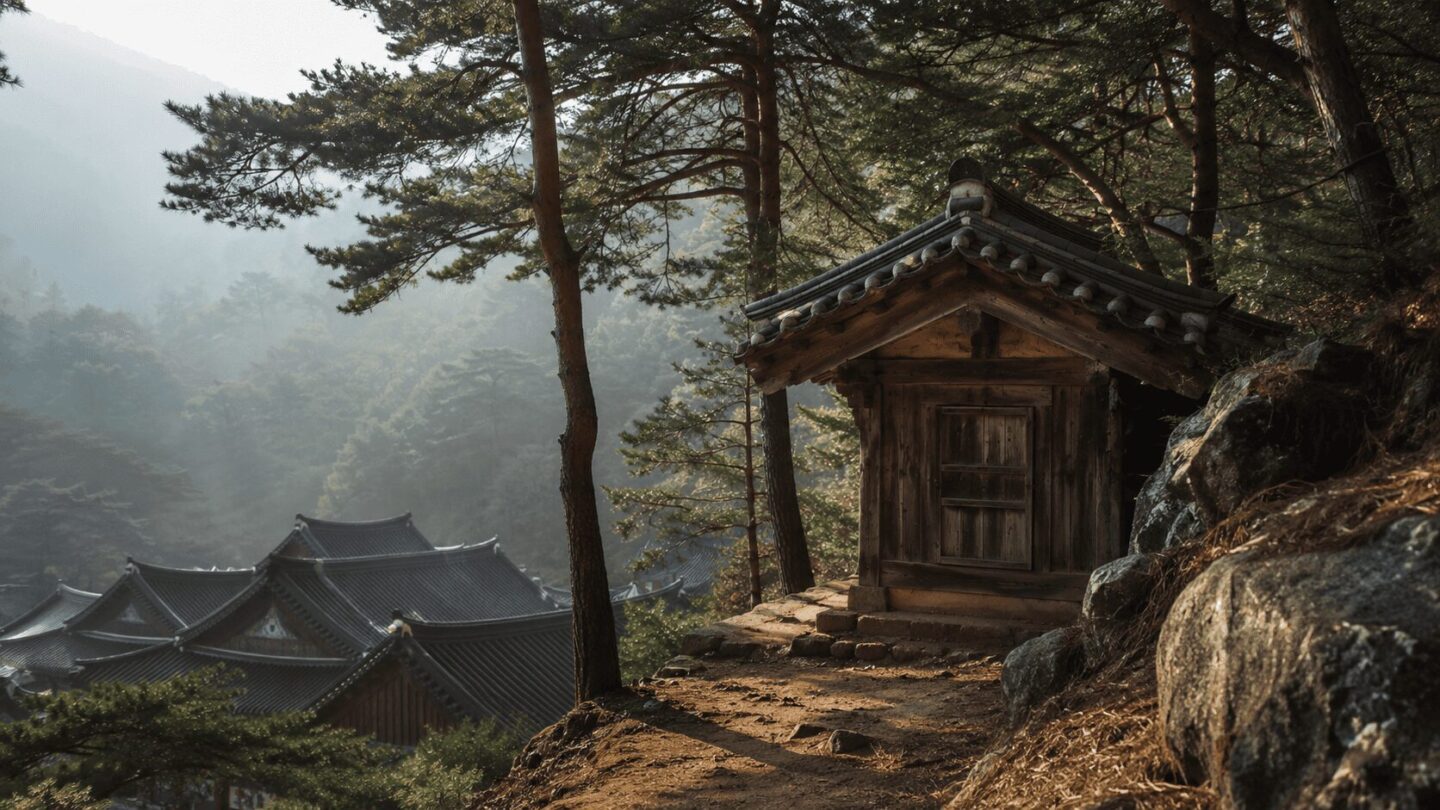
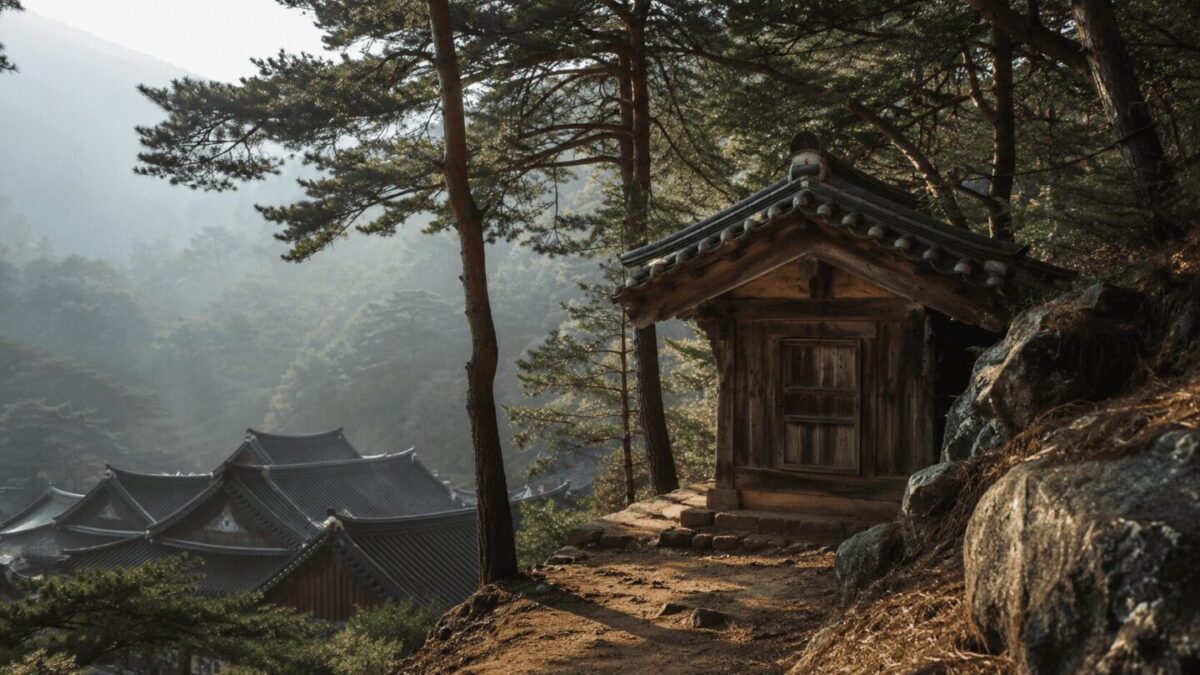
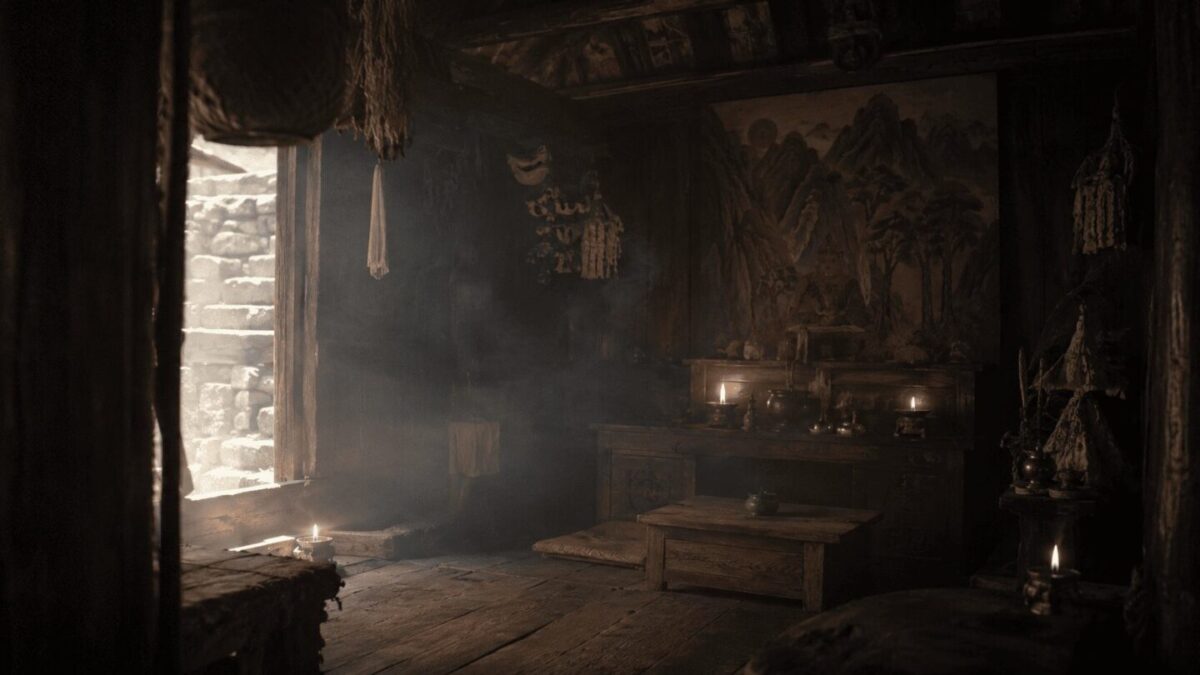
Next time you visit a Buddhist temple in Korea, walk past the main hall — the big, golden, crowded one where everyone takes photos — and keep going. Head toward the back, where the ground starts to slope up into the trees. Sooner or later you’ll find a small, plain wooden building, easy to miss, often no bigger than a garden shed.
Step inside, and you won’t find the Buddha.
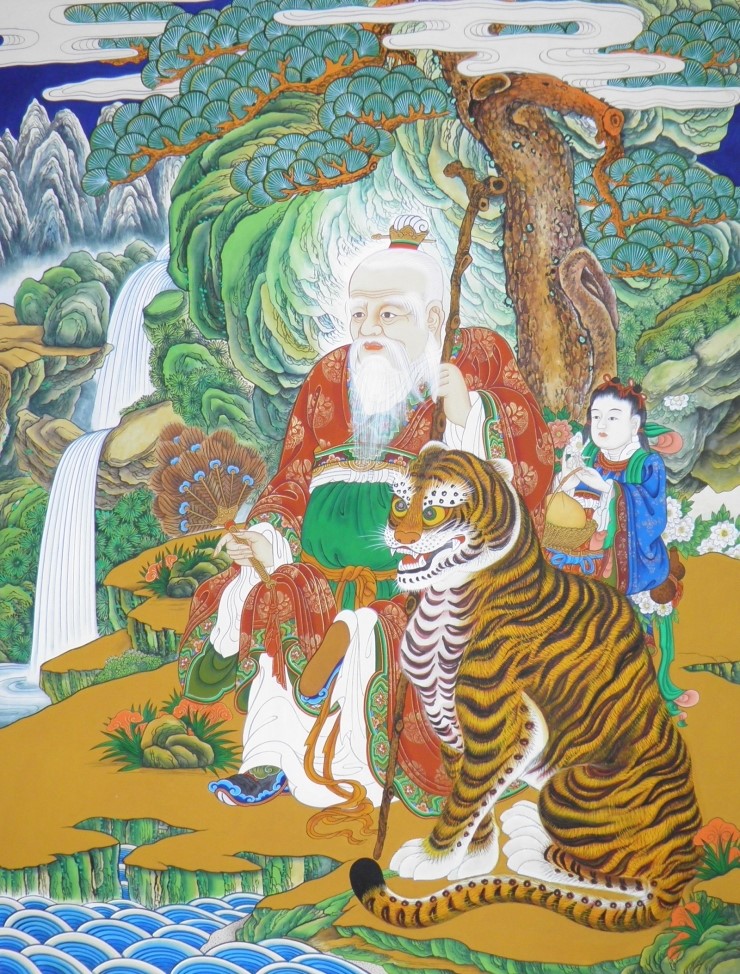
You’ll find a white-bearded old man sitting in the mountains, one hand resting on the back of a Korean tiger.
To a first-time visitor, this is genuinely strange. You came to a Buddhist temple. Buddhism is a world religion with a clear founder, scriptures, and philosophy — and tucked into the back of the property, getting its own dedicated shrine, is a folk mountain god with a pet tiger who has nothing to do with any of that. It can look like finding a completely different religion squatting in the corner of a church.
Here’s the thing, though. If you ask a Korean about it, you’ll probably get a shrug. Most of us grew up with this old man. We are not surprised to see him here. And the reason we’re not surprised turns out to be one of the most interesting things about how religion actually works in Korea.
A Country of Mountains Needed a God of Mountains
To understand why this old man feels so familiar to Koreans, you have to start with the land itself.
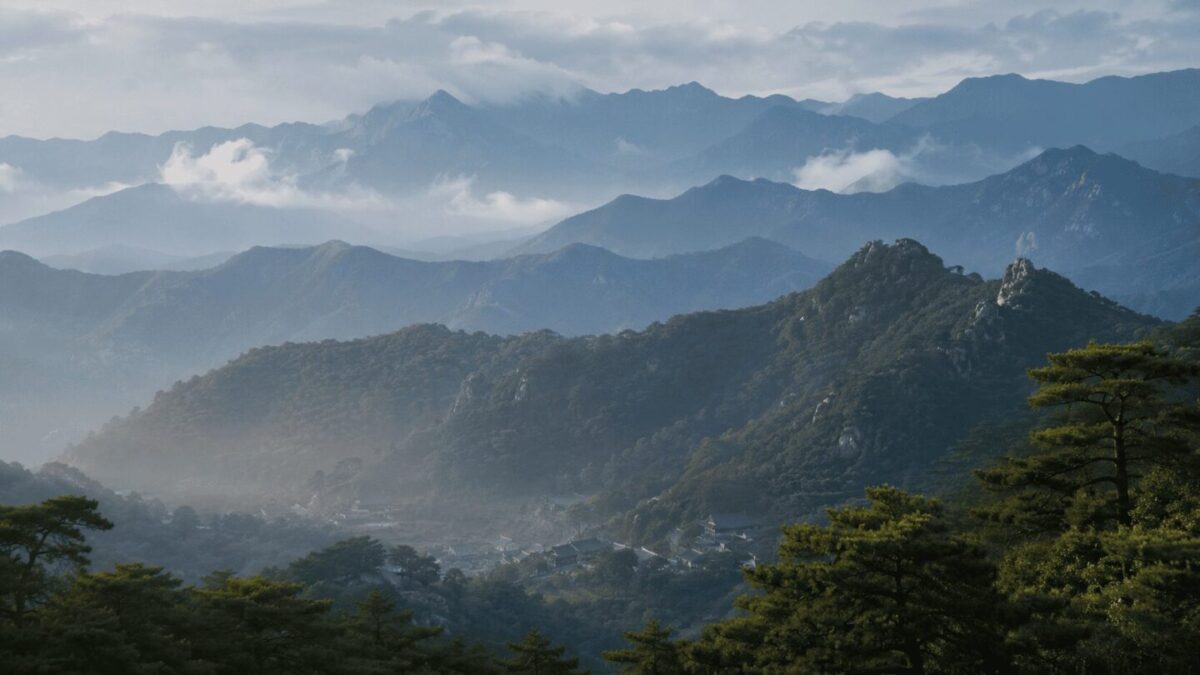
Korea is overwhelmingly mountainous — something like 70 percent of the peninsula is hills and ridges. There’s no single Everest looming over the country; instead, almost every town, every village, every neighborhood has its own mountain rising up behind it. And for most of Korean history, those mountains were not empty scenery. They were alive. Each one was understood to have a guardian — a spirit who owned that peak, protected the people living beneath it, and judged how they behaved.
That spirit is called Sansin (산신) — literally “mountain god.”
This is why Koreans meet him so early. Long before anyone walks into a temple and notices a strange painting, they’ve already met the mountain god in childhood. He turns up in the bedtime stories every Korean kid knows — the kind of folktale where a poor woodcutter drops his axe into a pond, and a mountain spirit rises up to test his honesty with a gold axe and a silver one. He’s the old man who lives in the woods and watches what you do. If you grew up with Western fairy tales, think of Old Man Winter, or Mother Nature personified — the same instinct to give the wilderness a face and a will.
So by the time a Korean sees Sansin enshrined in a temple, he isn’t a stranger. He’s a character they’ve known their whole life, just dressed in finer robes.
Why the Tiger Is Always There
Look at any image of Sansin and you’ll notice he is never alone. Beside him, almost always, sits a tiger.
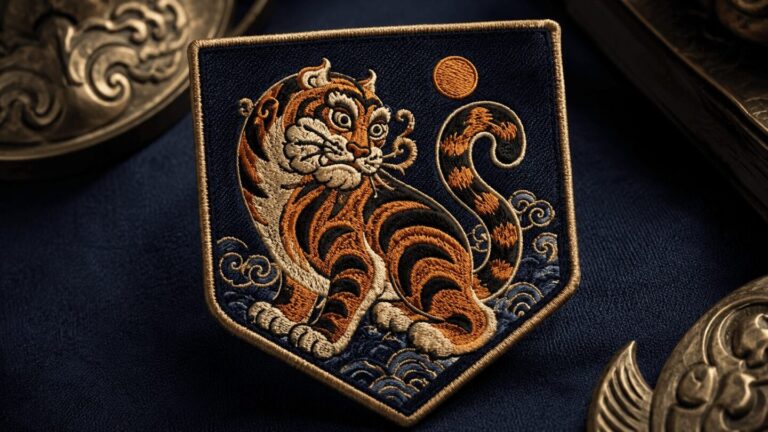
For most of Korean history, the Korean tiger was the most powerful and feared animal on the peninsula — so dominant in the landscape and the imagination that old Korea was sometimes called “the land of tigers.” It made perfect sense, then, that the tiger became the mountain god’s companion and enforcer: the living muscle of the mountain’s will. In the old belief, an angry mountain god could send his tiger down to punish a village that had neglected him — to take livestock, or worse. The tiger wasn’t just the god’s pet. It was his judgment, walking on four legs.
But the Korean tiger is also strangely lovable, and that’s where it gets interesting. In folk paintings — a whole genre called Kkachi Horangi, or “Magpie and Tiger” — the fearsome beast is often painted as a cross-eyed, almost goofy creature, while a small magpie scolds it from a pine branch above. These were hung at New Year’s to drive off bad luck: the tiger to chase away evil and misfortune, the magpie to carry in good news. Over time, ordinary people turned the terrifying mountain enforcer into a bumbling, almost cartoonish figure — a way of taking the most dangerous thing in the forest and making it something you could laugh at, and live alongside.
That double identity — sacred guardian and lovable fool —is a big part of why the tiger never left Korean culture, even long after the real animals were gone from the mountains. (That disappearance is its own dark story, and a more recent one than you’d think — but that’s for another article.)
The Real Secret: The Painting Adopted Him
Here’s the question that actually matters. Korea isn’t the only place where Buddhism met an older local religion — that happened almost everywhere Buddhism spread. So why, in Korea, did the mountain god end up with his own permanent room inside Buddhist temples, instead of being pushed out as a rival?
Part of the answer is practical. Korean Buddhist temples were almost all built on mountains — and you don’t move onto someone else’s mountain without paying respects to the spirit who was there first. The temple, in a sense, acknowledged Sansin as the original landlord. Giving him a small shrine out back was a kind of rent.
But the deeper answer is visual, and it’s the part Koreans feel without ever quite articulating.
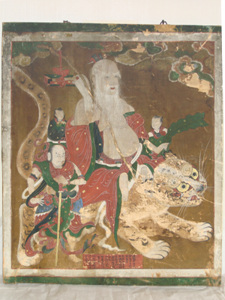
Look closely at a Sansin painting and you’ll see it’s painted in exactly the same visual language as Buddhist sacred art: the same style of brushwork, the same mineral pigments, the same stylized clouds and pine trees and flowing robes, the same way a holy figure is centered and framed. To Korean eyes, that visual grammar reads instantly as “this belongs here.” The mountain god looks like he belongs in a temple because he’s painted in the language of the temple.
Here’s the test that proves it. Imagine that exact same mountain god — the old man, the tiger, the pine tree — but painted in Japanese ukiyo-e style, all flat woodblock lines and floating-world color. A Korean would immediately feel that something was off, like a guest had wandered into the wrong house. Same god, same tiger, same story — but the wrong visual grammar, and suddenly he doesn’t belong. The thing that lets Sansin sit comfortably inside a Buddhist temple was never theology. It was the brush. The frame made him family.
That’s the quiet genius of it. Korean Buddhism didn’t have to argue that the mountain god was secretly Buddhist, or convert him, or explain him away. It just had to paint him in the right style and give him a seat. Once he looked like he belonged, he belonged.
A Quick Note: Sansin Is Not the “Four Gods”
One point of confusion worth clearing up, because the names sound similar in English.
If you go searching, you may run into the “Four Gods” or “Four Guardians” of Korea — the Blue Dragon, White Tiger, Red Phoenix, and Black Tortoise. These are real, and that white tiger is a genuinely important figure — but they’re a completely different concept. The Four Guardians are directional spirits, each protecting one compass direction (the White Tiger guards the west), borrowed from a broader East Asian cosmology and used in things like tomb murals and palace orientation.
Sansin is something else entirely: not a direction, but a place. He’s the specific, local, personal spirit of one particular mountain. His tiger isn’t a cosmic guardian of the west — it’s the muscle of the peak behind your village. Easy to mix up by name; very different in spirit.
Why This Makes Korean Religion So Korean
Step back, and the little shrine out behind the temple stops looking strange and starts looking like a perfect summary of how religion tends to work in Korea.
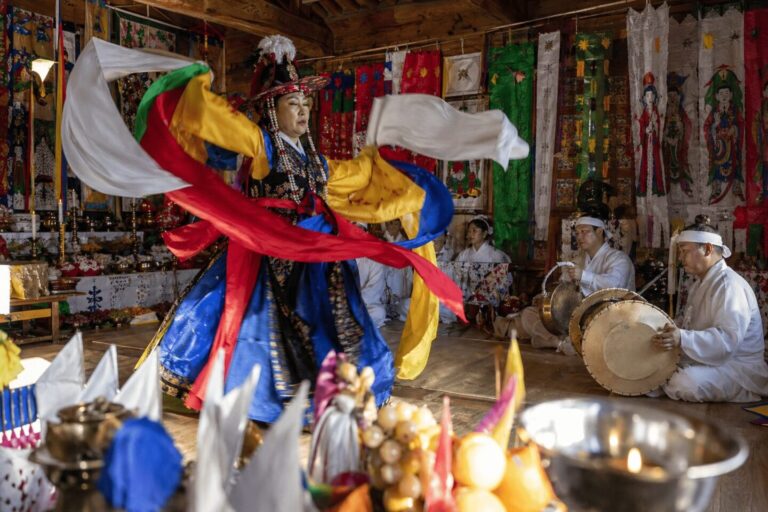
This isn’t really a story about Buddhism conquering folk belief, or folk belief sneaking into Buddhism. It’s about a pattern you see again and again in Korean religious life: when something new arrives, the old gods don’t get expelled. They get dressed in whatever visual and cultural language is already trusted, and quietly given a seat at the table. Shamanism, Buddhism, Confucian ideas, even older nature worship — in Korea these things tend to layer rather than fight, sharing walls and sometimes sharing the very same paintings.
Sansin never had to convert to anything. He didn’t have to win a theological argument. He just had to get the right outfit — and a country that had known him since childhood was always going to make room.
So the next time you’re at a Korean temple, take the extra two minutes. Walk past the Buddha, head uphill, and find the little building everyone else skips. The old man and his tiger will be waiting — and now you’ll know exactly why they’re allowed to be there.
A Note Before You Go
A few quick answers, in case you came here with specific questions.
What is the mountain spirit in Korean? The mountain spirit is called Sansin (산신), literally “mountain god.” He’s the guardian spirit believed to own and protect a specific mountain, traditionally pictured as a white-bearded old man seated in the mountains with a tiger at his side.
What is the mountain spirit myth? There’s no single myth — Sansin appears across centuries of Korean folk belief, from village rituals to bedtime stories like the honest woodcutter and the gold axe. He’s tied to Korea’s founding mythology too: in the Dangun legend, the nation’s mythic founder is said to become a mountain god at the end of his life, linking Sansin directly to Korean origins.
What does the tiger symbolize in Korean culture? Power, fearlessness, and protection. The Korean tiger was the peninsula’s apex predator and became both the mountain god’s enforcer and a charm against evil — fierce enough to drive off misfortune, yet so beloved that folk painters reimagined it as an almost comical, friendly figure.
Is there a Korean version of the kitsune? Not exactly — but Korea has its own famous shape-shifting fox spirit, the gumiho, which is a separate tradition from the mountain god. (We’ve written about her separately, if you want the full story.)
Who are the “Four Gods” of Korea? The Blue Dragon, White Tiger, Red Phoenix, and Black Tortoise — four directional guardian spirits from East Asian cosmology. They’re distinct from Sansin: the Four Guardians protect compass directions, while Sansin is the personal spirit of one specific mountain.
So the next time someone shows you a Korean painting of an old man with a tiger, you’ll know he’s not a Buddhist deity at all — he’s the older owner of the mountain, given a seat at the temple because he looked like he belonged. And in Korea, looking like you belong has always been enough.