You Die. Then What? Inside Korea’s Afterlife Court
In Korea, death is not the end of the story. It is the beginning of a trial. What awaits is the Korean afterlife — not a place, but a process.
The Moment After

The cremation is over.
What happens next depends on the family. Some place the ashes in a columbarium. Some scatter them over a mountain. Some release them into a river. The rituals differ, but the moment is the same — the moment when someone who was a person becomes ash, and the people left behind say goodbye.
In Korean, that goodbye often sounds like this: ‘잘 가셨다’ (or ‘잘 가셨을 거다’). ‘They passed away peacefully,’ or ‘I hope they had a peaceful journey.
Not they are gone. Not they are at peace. But they went — as if the dying is not an ending but a departure. As if there is somewhere to go, and a road to travel to get there.
That assumption — that death is a journey, not a destination — is the foundation of one of Korea’s most elaborate and quietly persistent beliefs about what happens after we die.
The Trial Begins
In many parts of the world, death is a single event. You live, you die, and whatever judgment or peace awaits — it arrives once, and it is final.
Korea’s traditional belief works differently.
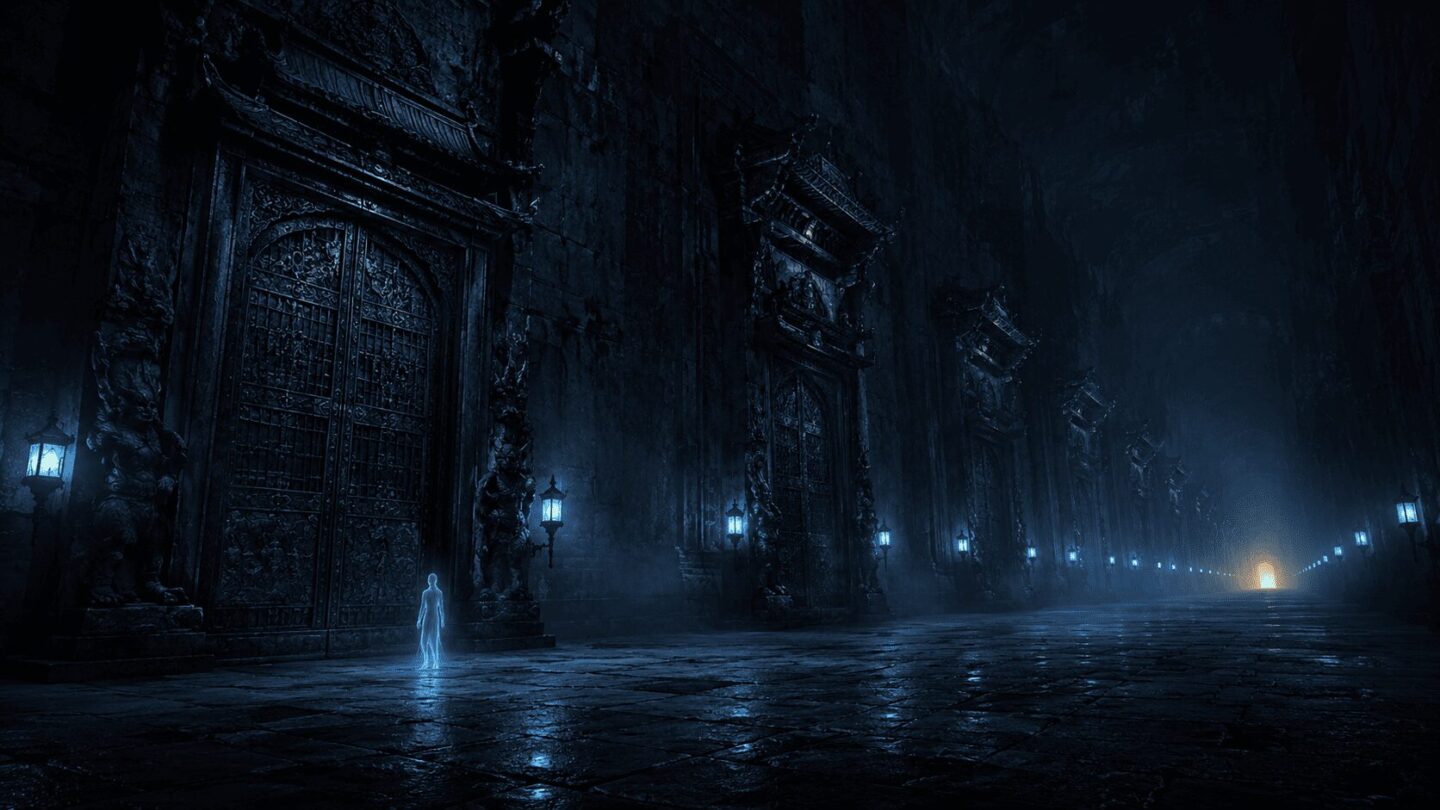
The moment you die, a journey begins. Not a peaceful passage into rest, but a legal proceeding — structured, bureaucratic, and unforgiving. You will stand before ten judges. Each one presides over a different court. Each one examines a different part of your life. And each one has the authority to send you directly to their assigned hell if they find you guilty.
You do not get to wait for the final verdict. Every court is its own verdict.
This structure has a name: 시왕 (Siwang) — the Ten Kings of the underworld. And the timeline they operate on is the same timeline that shapes one of Korea’s most recognized mourning traditions: the 49-day period following death.
Seven days. One king. Seven days. Another king. Seven rounds of judgment, each one its own threshold, its own risk.
If you pass all seven, you are fortunate. Most people’s fates are decided here, within these 49 days.
If you do not — the trial continues. One hundred days. One year. Three years. The kings keep waiting.
The King You Already Know
If you have read Part 2 of this series, you have already met the fifth king.
Yeomra — 염라대왕 — is the most famous of the Ten Kings, and the one Gangnim Doryeong was sent to summon from the underworld itself. In Part 2, Yeomra was the authority that a mortal official had to face, outwit, and drag back to the living world.
Now the positions are reversed. You are not the one doing the summoning. You are the one being summoned.
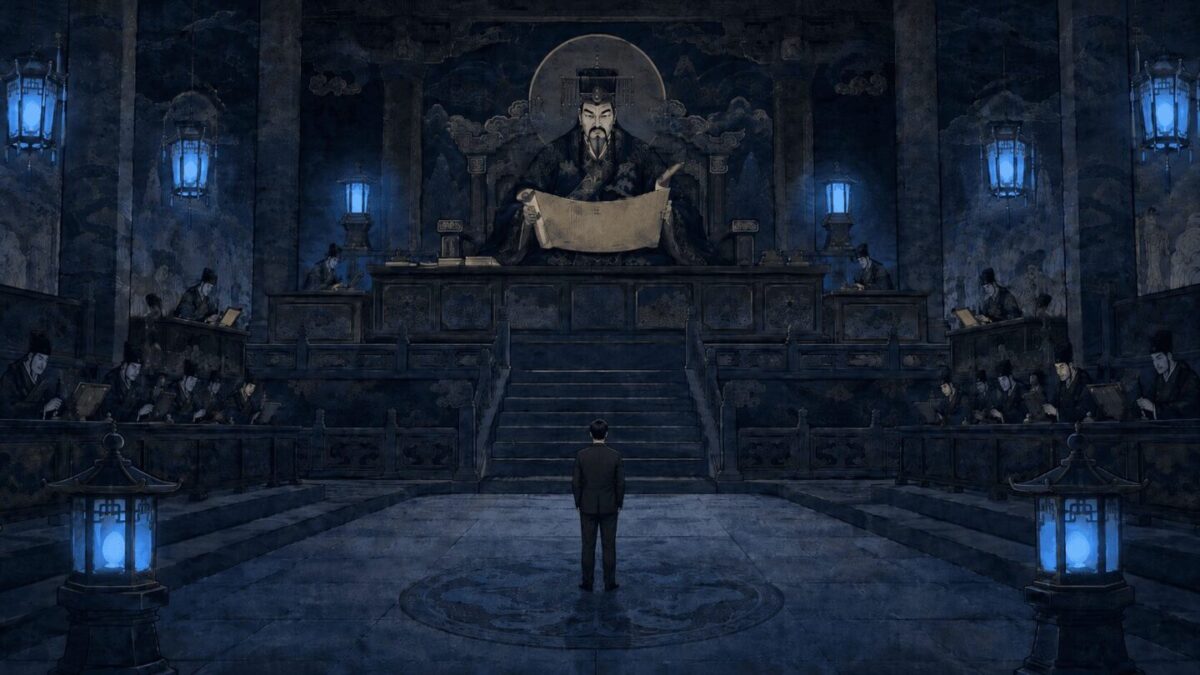
Yeomra presides over the fifth court — the court you reach on the 35th day after death. His judgment focuses on a specific category of sin: the sins of the mouth. Flattery. Slander. Rumors spread with the knowledge that they were false. Words used as weapons.
The punishment he assigns is called 발설지옥 — the hell where your tongue is pulled out.
It sounds extreme. But consider what it is responding to.
The court immediately before Yeomra’s — the fourth court — also judges the sins of the mouth. Lies. Manipulation. Words used to deceive. Two consecutive kings, examining the same part of you.
In a system of ten judges covering the full span of human wrongdoing, two of them are dedicated entirely to what came out of your mouth. That is not a coincidence. In Korean culture, words carry a weight that is difficult to overstate. What you say — and what you should not have said — follows you. Apparently, all the way to the afterlife.
The Living Can Still Help
Here is where Korean belief diverges most sharply from many other traditions.
In most frameworks, once someone dies, the living are witnesses. They grieve, they remember, they pray — but the outcome for the dead is already beyond their reach. The verdict has been rendered or will be rendered without them.
Korean tradition says otherwise.
The 49-day mourning period — 49재 — is not only a time for the living to grieve. It is a time for the living to act. Families perform rituals, offer prayers, and accumulate merit on behalf of the dead. This accumulated merit can influence the judgment. It can reduce the sentence. In some interpretations, it can tip a verdict entirely.
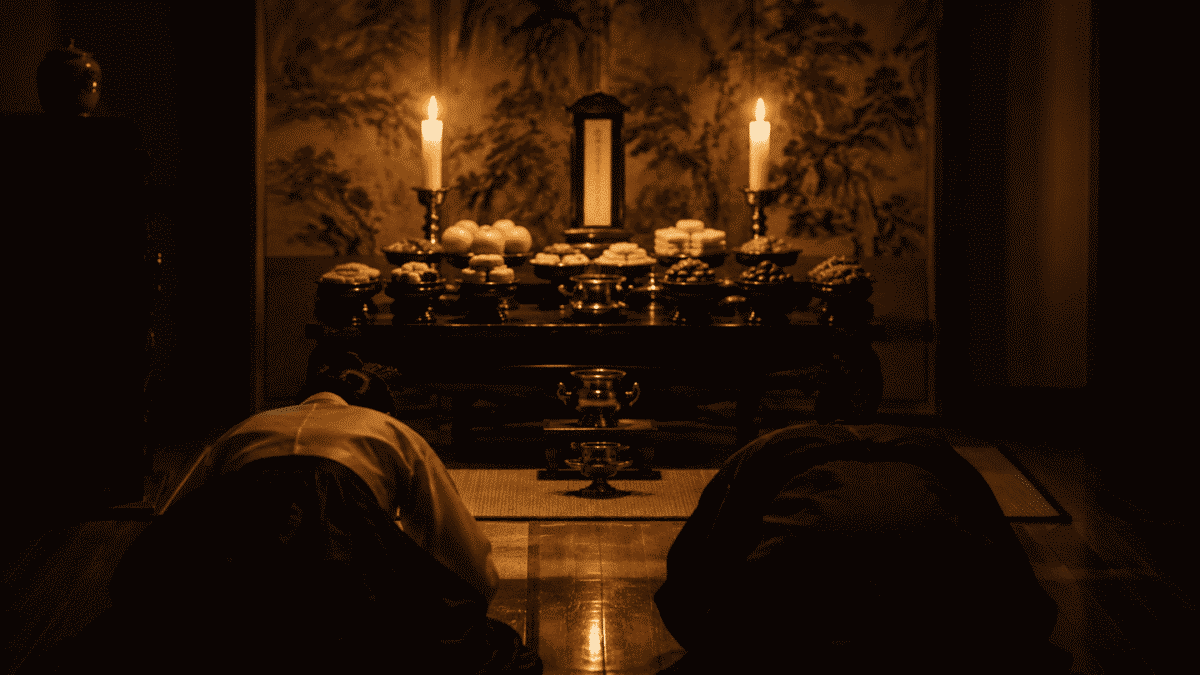
The person who died is standing in court. Their family is still outside, doing everything they can to help.
This is why Korean families hold memorial rites — 제사 — long after the 49 days have ended. Even years later. Even for grandparents who died before you were born. The thread between the living and the dead does not snap at the moment of death. It holds, and it carries weight in both directions.
What Happens in the Korean Afterlife After 49 Days
Most fates are decided within the 49 days. But the system does not end there.
Those whose cases remain unresolved — whose sins were too many, or whose merits too few — face three more courts. The eighth king on the hundredth day. The ninth king on the first anniversary of death. The tenth king on the third anniversary.
The tenth king is the last. His judgment is final. But his verdict is not what most people expect.
There is no permanent heaven. There is no eternal hell.
What the tenth king decides is where you go next. Which of the six realms of existence you will be reborn into. Whether you return as a human, or something else entirely. Whether you climb, or fall, or begin again somewhere in between.
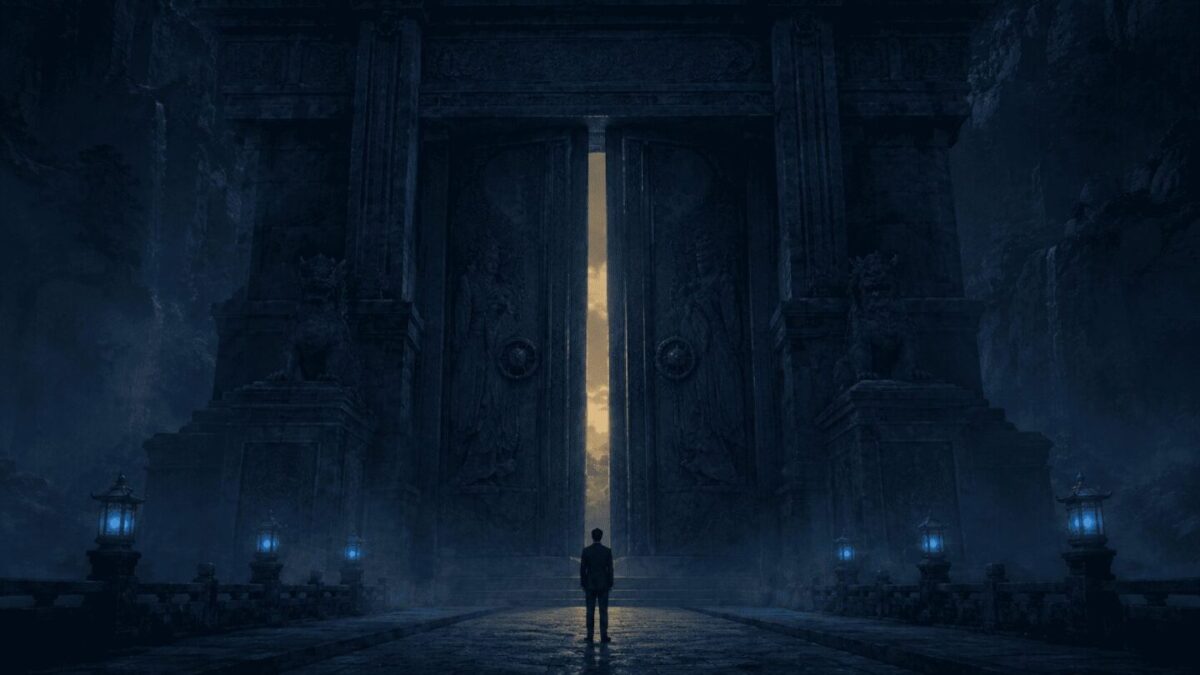
Most Korean families today do not observe the full 49 days. Three days is the norm. Four years ago, when my grandfather passed away, we held a three-day funeral — the first day keeping vigil at the memorial hall, the second day the burial preparation, the third day the farewell.
Three days, not forty-nine. But a three-day funeral is not the absence of 49재. It is its compression. The structure is the same: the people left behind do what they can for the person who has gone.
On the last day, we scattered his ashes on Odaesan — a mountain in Gangwon Province. And we said our goodbye.
I believe my grandfather passed through all ten courts without trouble.