What Does Gungnyul Mean? Korea’s Unwritten National Rule, Explained
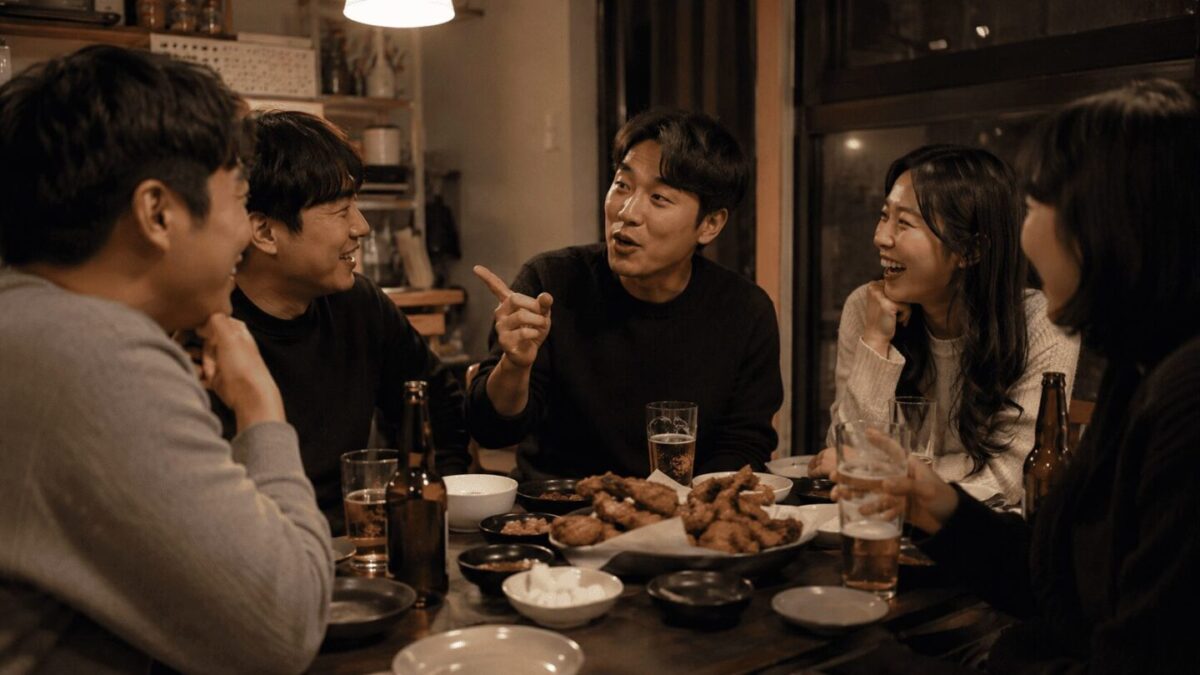
What does gungnyul mean? It’s the kind of word you pick up fast if you spend any time around Koreans, usually somewhere between someone shouting “beer is gungnyul!” over fried chicken and you nodding along without fully understanding why that’s a rule at all.
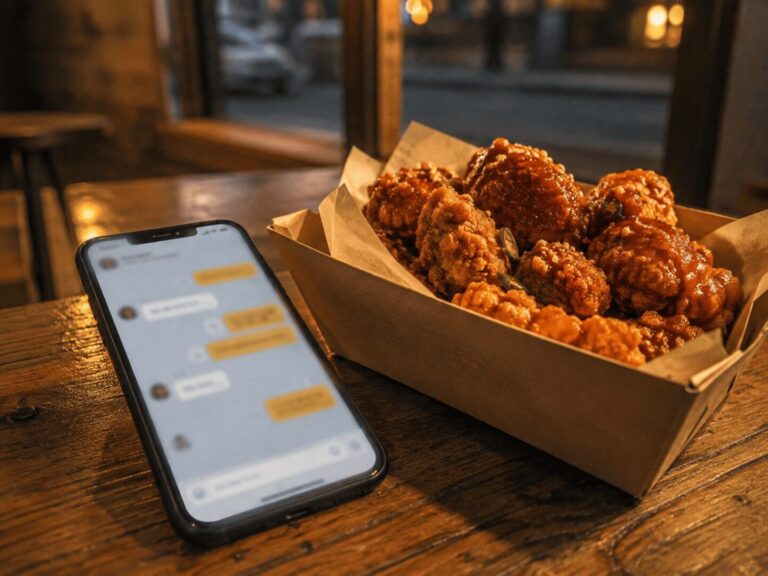
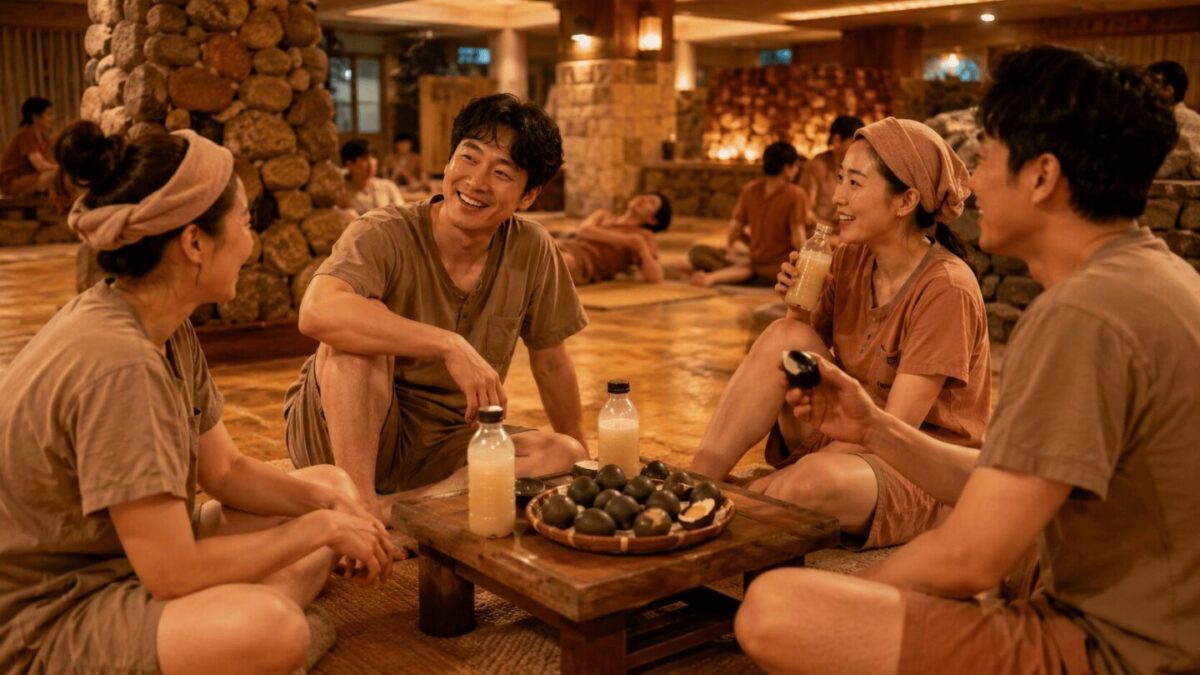
My friends still say it constantly. Order chicken, and someone will announce, without a hint of irony, that beer is gungnyul — as if it’s not a preference but a rule everyone already agreed to. Walk into a jjimjilbang (Korean sauna), and it’s gungnyul that you finish the night with a cold bottle of sikhye and a charcoal-baked egg. Nobody voted on either of these things. There’s no law, no official memo, no government office that issued a ruling. And yet, somehow, everyone already knows.
And who, if anyone, is actually in charge of deciding it?
What Does Gungnyul Mean, Really?
Gungnyul (국룰) describes an unwritten rule — something so universally agreed upon that nobody remembers deciding it, but everybody follows it anyway. It’s lighthearted, a little sarcastic, and almost always used about something completely trivial: food pairings, amusement park strategy, how you’re supposed to eat a particular dish. It’s the opposite of a “local rule” (동네 룰), which only applies to your specific friend group or hometown. Gungnyul is the version everyone nationwide somehow arrived at independently.
Think of it as consensus without a committee.
The Word Everyone Gets Wrong
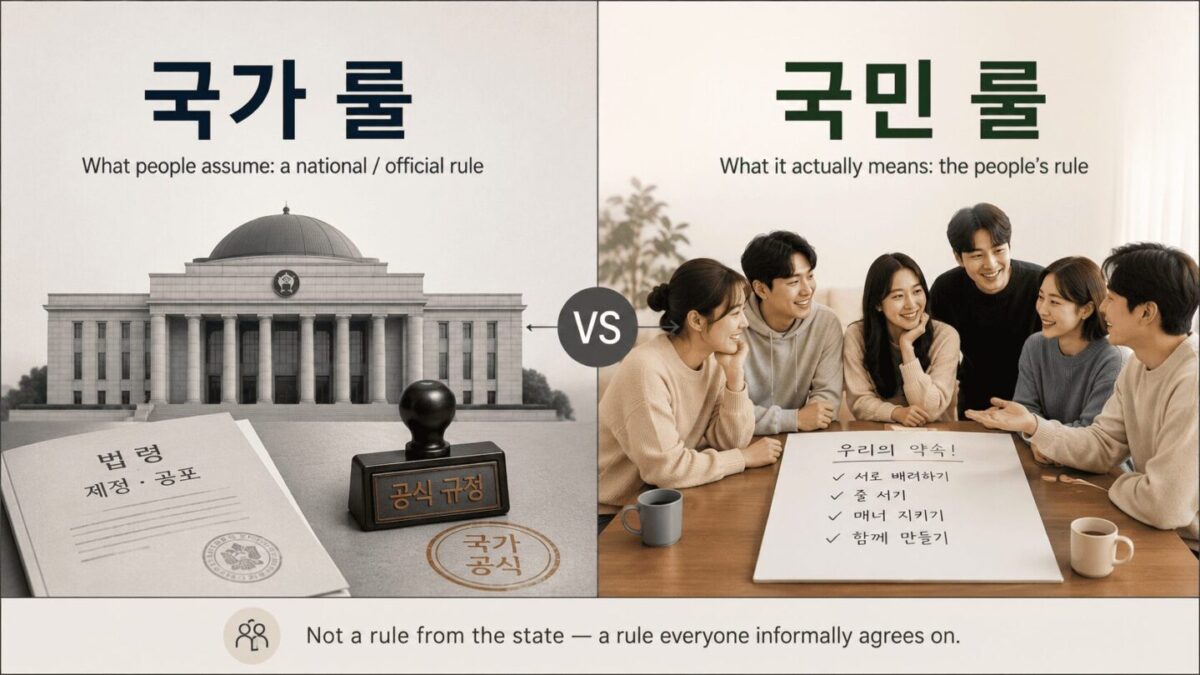
Here’s where most people — Koreans included — get it slightly wrong. If you ask around, plenty of people will tell you gungnyul comes from “국가 룰” or “국제 룰”: a national rule, or even an international one. It sounds official. It sounds like there ought to be a rulebook somewhere.
There isn’t one. According to South Korea’s National Institute of Korean Language, gungnyul is actually short for “국민 룰” — literally, “the people’s rule.” Not a rule handed down by the state, but one that ordinary people arrived at on their own, without anyone in charge. That distinction matters more than it seems: gungnyul isn’t an authority telling you what to do. It’s the opposite — it’s what happens when nobody’s in charge and everyone still ends up agreeing.
(For what it’s worth, the word has a surprisingly unglamorous origin story: language researchers trace its spread back to Korean gaming communities in the 2010s, including a Warcraft III custom map and, later, Twitch broadcasts of a StarCraft auction-style defense game. A slang term born in a video game chat somehow ended up being about as close to a national consensus mechanism as Korea has for arguing over fried chicken.)
Try explaining any of this to a foreign friend, and you’ll usually get stuck around the same point. There’s no vote. There’s no institution. There’s just a shared, invisible agreement that somehow the entire country signed without a pen. (It’s a different kind of language gap than the one between North and South Korea — but it’s a language gap all the same.)
How to Use It Like a Local
If you’re a foreigner visiting Korea and you actually want to use this word, there’s a low-risk, high-reward way to try it: at a Korean barbecue table.
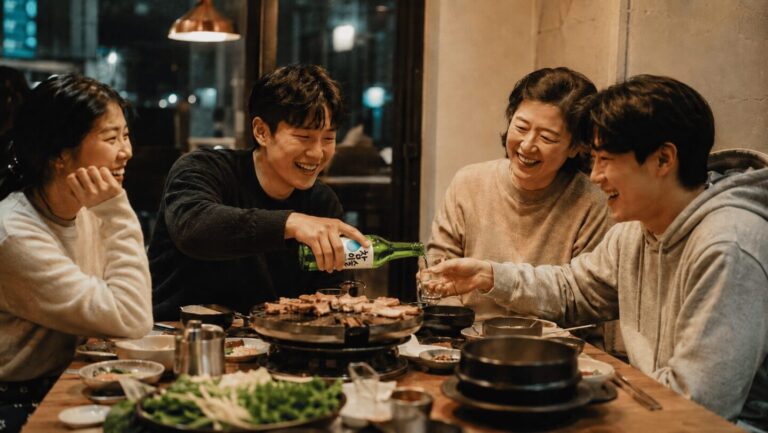
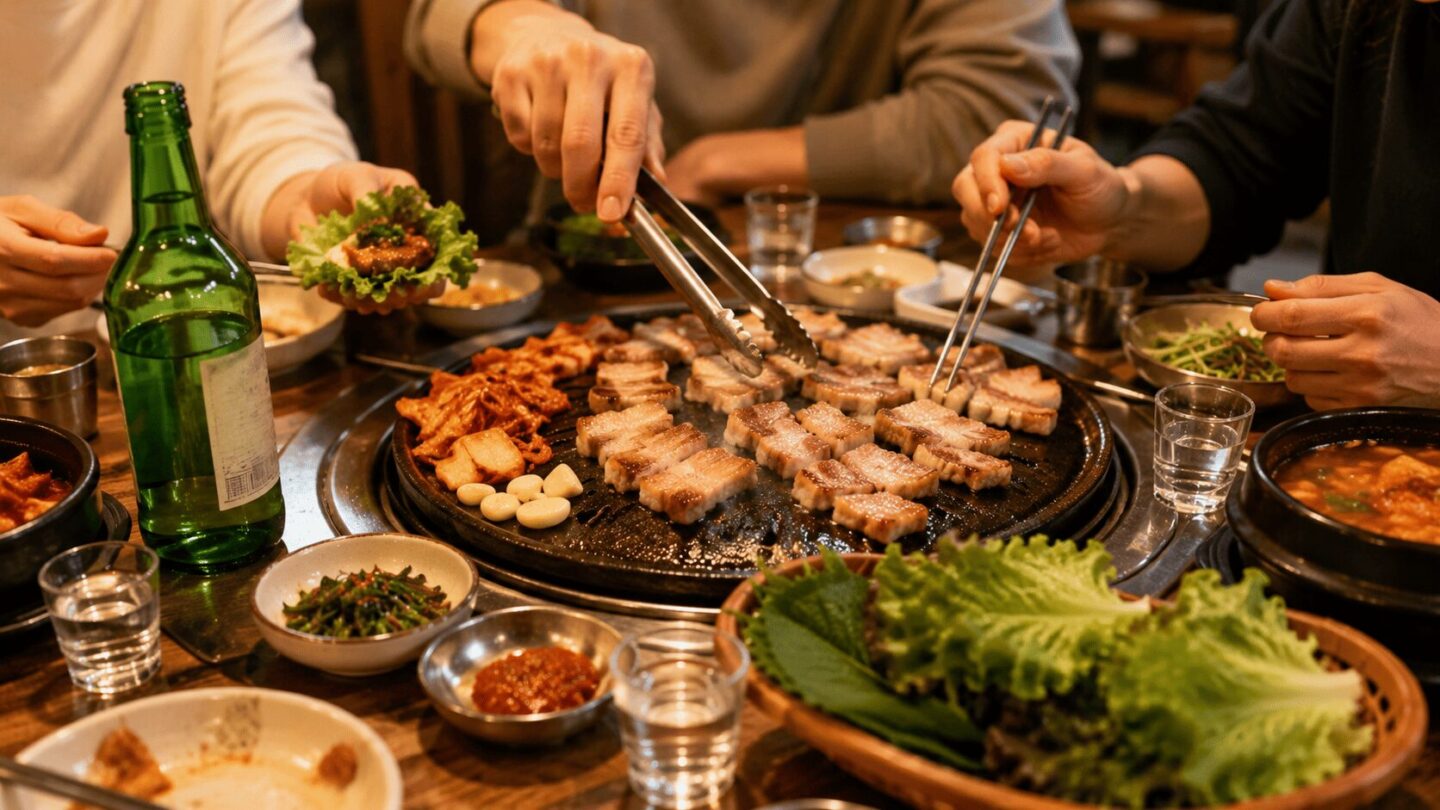
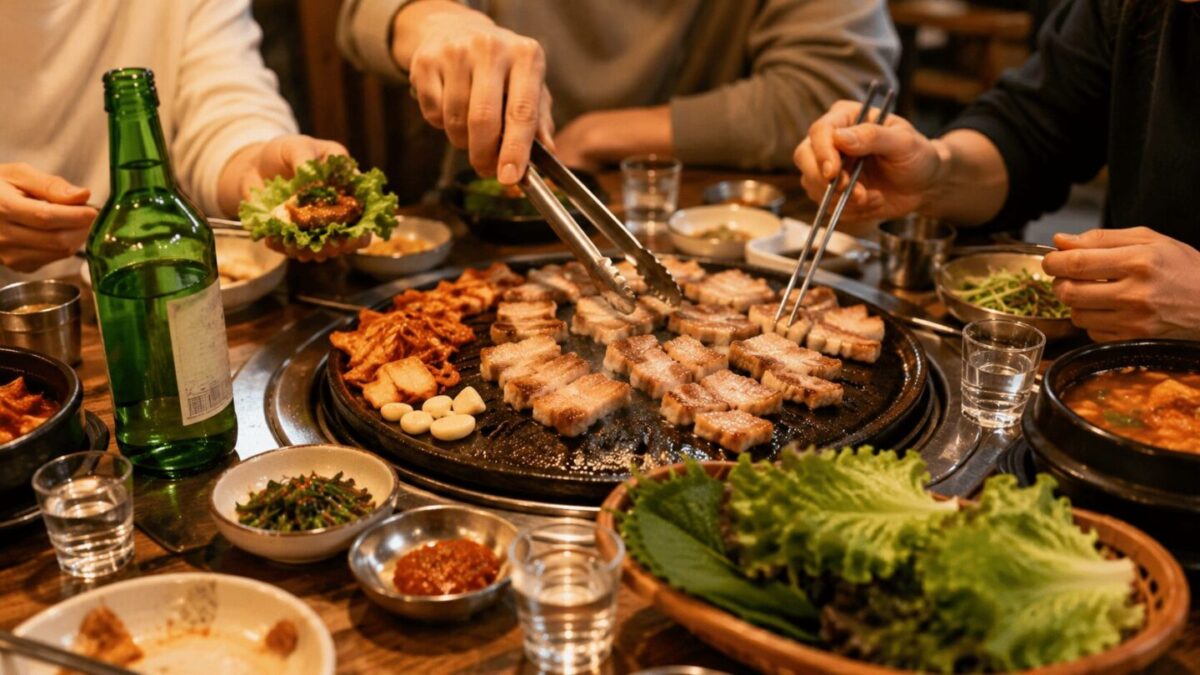
Grilled pork belly and soju is one of the most common pairings in Korean drinking culture — enough of a fixture that plenty of people casually call it gungnyul without a second thought. If you’re sitting across from a Korean friend, plates of pork belly on the grill and a bottle of soju between you, try saying it yourself: “This is gungnyul, right?”
It’s a small thing, but it lands. You’re not just repeating a slang word you picked up — you’re showing you understand something specific about how Koreans talk about consensus, humor, and food, all at once. That’s usually worth more than getting the grammar right.
Every Country Has One
Korea doesn’t have a monopoly on this phenomenon — it just has a word for it. Americans never voted on tipping 20% at a restaurant, or on stuffing going next to the turkey instead of inside a burrito. Nobody legislated it. Everyone just quietly agreed, the same way Koreans quietly agreed that beer goes with chicken and a sauna night ends with sikhye and a charcoal-baked egg.
Next time someone tells you something is gungnyul, you’ll know exactly what they mean — and maybe you’ll start noticing your own country’s unwritten rules a little more, too.