Jayuro Ghost: Korea’s Vanishing Hitchhiker on Freedom Road
If you’re ever driving north out of Seoul late at night, in thick fog, and you see a woman in sunglasses standing on the shoulder with her thumb out — keep driving. Don’t slow down. Don’t be polite. Koreans have a name for her. She’s the Jayuro Ghost, and those aren’t sunglasses.
Consider this your second Korean campfire story of the season. Same rules as last time: pull up a chair, and I’ll keep the lights on.
The Road Where the Fog Lives
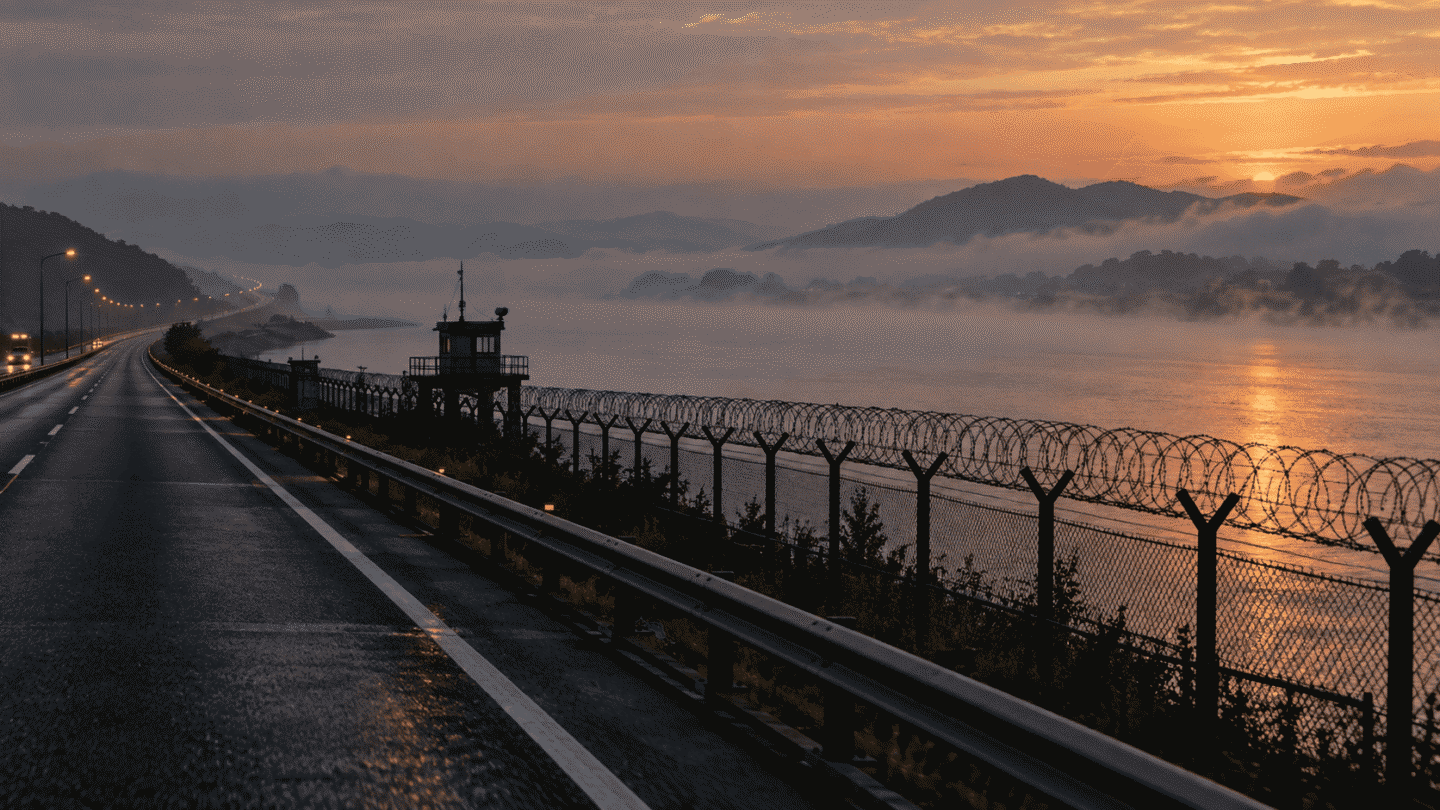
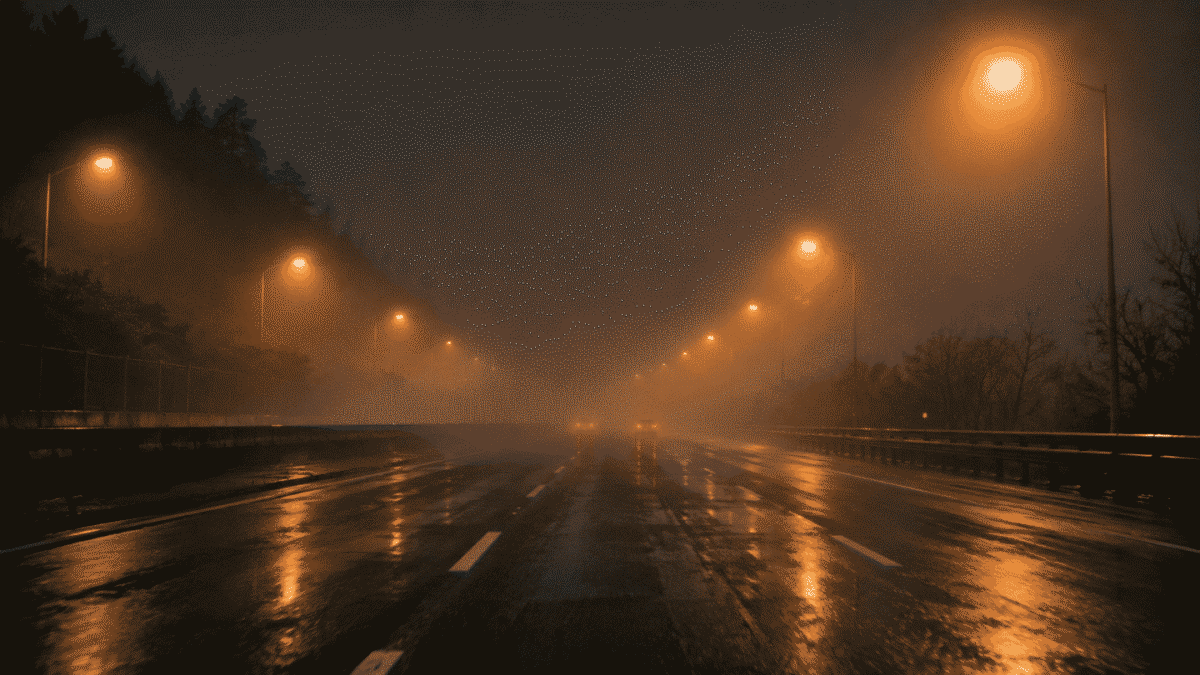
Jayuro is a real highway — a long commuter road that runs northwest out of Seoul, hugging the bank of the Han River through the suburbs of Goyang and up toward Paju. Thousands of people drive it every day to get to work. It is, on most afternoons, extremely boring.
At night, it’s a different road. Jayuro sits right along the river, and the river makes fog — the thick, low, headlights-don’t-help kind. Some stretches are dimly lit. The road has long had a reputation for accidents, and whenever a road like that exists, a story tends to grow up beside it to explain why.
I’ve driven Jayuro myself. I wish I had a spooky story for you, but the truth is it was a perfectly ordinary drive: traffic, brake lights, a podcast. Nothing on the shoulder. Which, if you know how ghost stories work, is exactly what everyone says right before their turn comes.
Meet the Jayuro Ghost
Like any good urban legend, the Jayuro Ghost comes in several versions. Here are the big three.
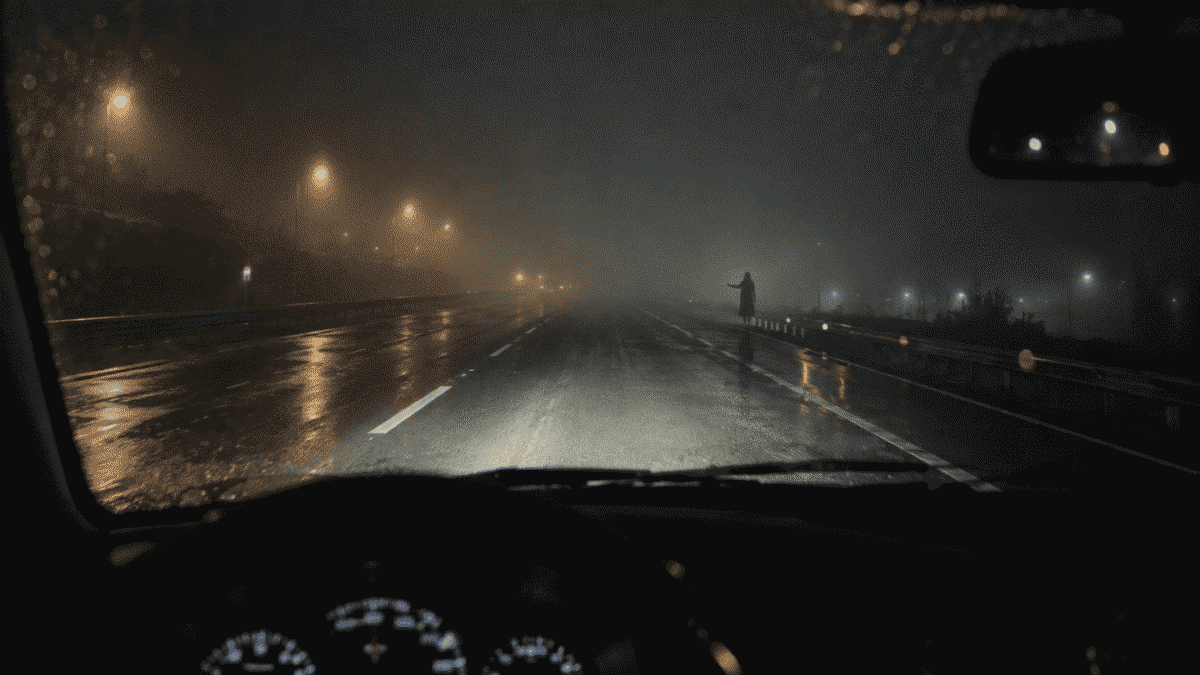
The classic. A driver is heading down Jayuro in the fog and spots a young woman standing alone on the shoulder, hitchhiking. She’s wearing dark sunglasses — at night, which should have been the first clue. Feeling sorry for her, the driver slows down and pulls closer. And that’s when they see it: she isn’t wearing sunglasses at all. Where her eyes should be, there’s only darkness. The driver floors it. Nobody stops to ask follow-up questions.
The passenger. In this one, the driver actually lets her in. She sits quietly in the back, gives an address, says almost nothing. When the car arrives, the driver turns around to tell her they’re here — and the back seat is empty. In some tellings, the address turns out to be a cemetery.
The taxi. The modern remix. A cab driver picks up a woman on a rainy night near Jayuro. She gives an address, he punches it into the GPS, and he follows the directions — turn after turn, farther and farther from anywhere — until he realizes he’s somewhere remote and dark, and the passenger is gone.
Notice something about all three? The ghost never actually does anything. She doesn’t attack. She doesn’t chase. She just appears where she shouldn’t be, on a road where panic is the most dangerous thing you can bring. Which, if you think about it, is a pretty efficient way to make people drive carefully in the fog.
Wait — Americans Already Know This One
If this story is giving you déjà vu, it should.
The ghost who hitches a ride and then vanishes is one of the most famous urban legends on the planet. Folklorists call it “the vanishing hitchhiker,” and the American folklorist Jan Harold Brunvand made it the title of his 1981 book on urban legends, because versions of it turn up almost everywhere people drive at night.
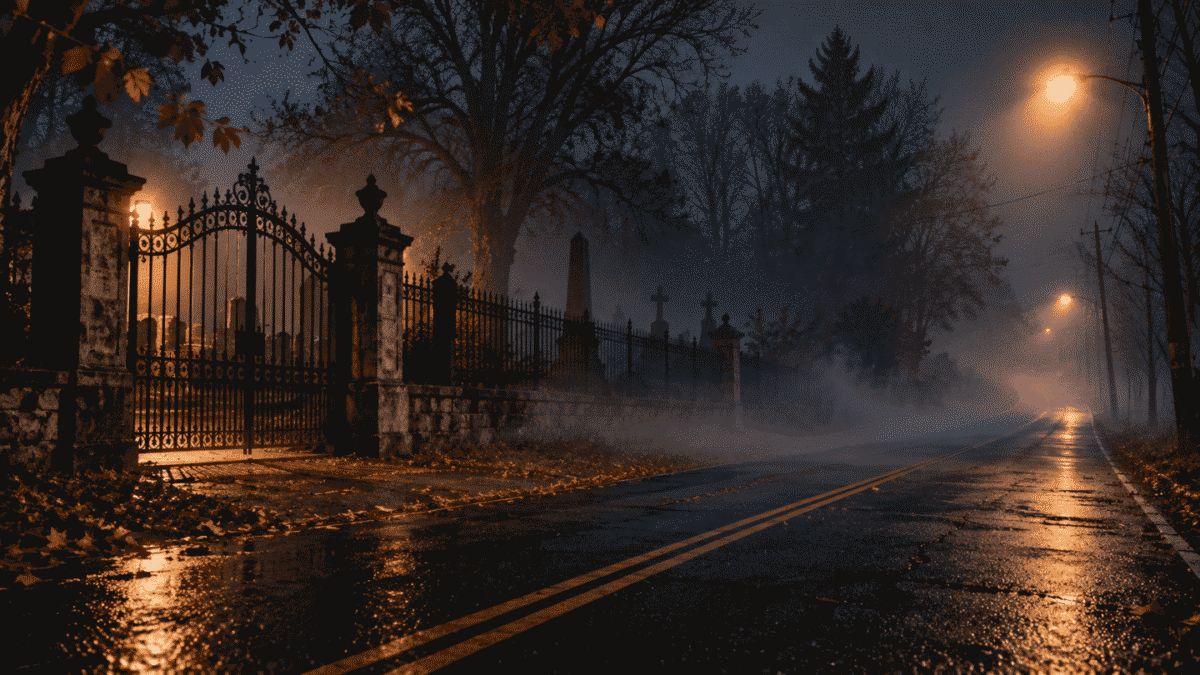
Chicago has probably the most famous American one: Resurrection Mary, the young woman in a white dress said to hitch rides along Archer Avenue, only to vanish near the gates of Resurrection Cemetery. Swap Archer Avenue for a foggy Korean riverside highway, swap the white dress for a coat and sunglasses, and you’ve basically got the Jayuro Ghost.
So why does every country end up with the same ghost? My theory: the car is one of the few places where a modern person is truly alone with a stranger, in the dark, moving too fast to get out. Every culture that builds roads eventually builds a ghost to stand beside them.
Korea’s contribution to the genre is the sunglasses. I respect it. Even our ghosts accessorize.
Why This Road?
The Jayuro Ghost isn’t an ancient legend. Stories about her started circulating in the mid-2000s, spreading the way Korean ghost stories spread now — online forums first, then TV, then everywhere. Like the Jangsan Tiger, the white-haired mountain creature I wrote about recently, she belongs to a new generation of Korean legends born on the internet rather than inherited from grandma.
And she landed on exactly the right road for it. Fog, dim stretches, a reputation for crashes, and long quiet hours after midnight. Urban legends are basically a society’s way of pinning a face on a danger. “The fog on Jayuro is dangerous” is a safety warning. “There’s a woman with no eyes on Jayuro” is a story people actually remember.
But there’s one more thing about this road that most versions of the story skip — and honestly, it’s the part I find strangest.
Freedom Road, Pointing North
Jayuro (자유로) translates literally as “Freedom Road.”
Now look at where it goes.
Jayuro runs north along the Han River toward Paju, and the farther you drive, the less it looks like a commuter road. Barbed-wire fences start lining the riverbank beside you. Military guard posts appear along the water. From one stretch of the road, you can look across the river and see North Korea. And at its far northern end, the highway leads toward the Demilitarized Zone — the most heavily fortified border on Earth.
So: a road named Freedom, running straight toward the least free place most people will ever stand near. And on the shoulder of that road, a ghost who can’t go anywhere either — hitchhiking forever, never arriving.
I’m not saying the legend was invented as a metaphor. Nobody on a 2005 internet forum was writing an essay about national division. But stories don’t need to intend their meanings to have them. Sometimes a country tells on itself by accident.
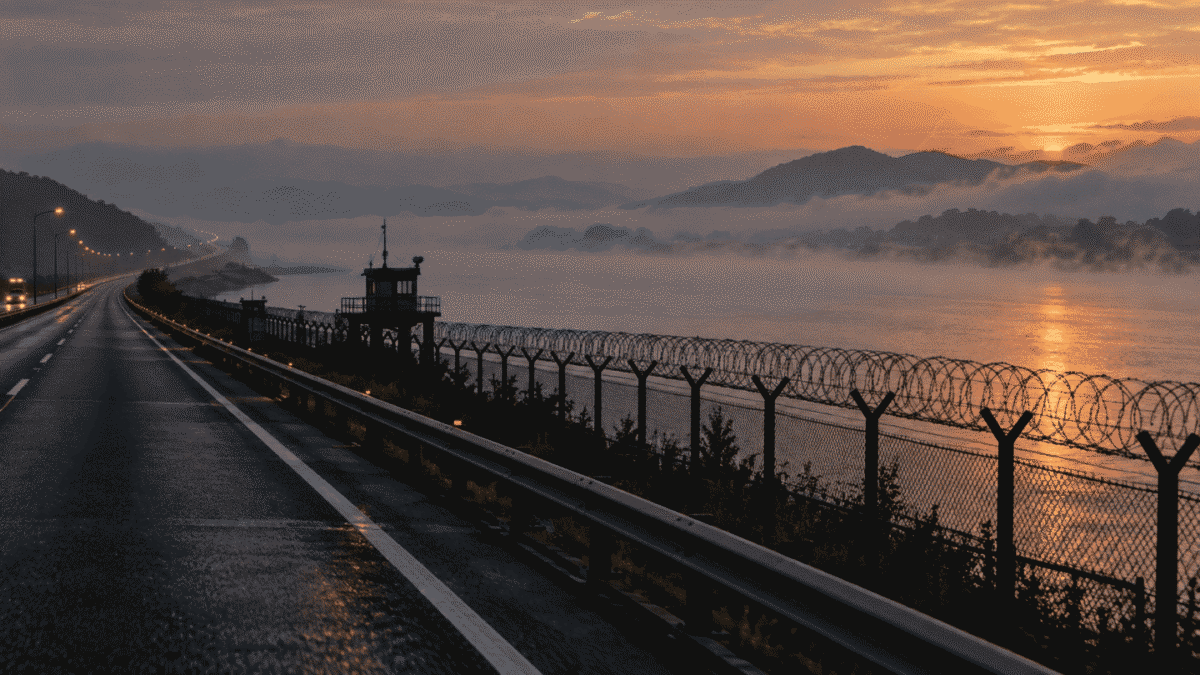
What Division Leaves Behind
Here’s what I keep thinking about.
Seventy-plus years of division have left Korea with a lot of strange inheritances. A fence along a river. A border you can see from a commuter highway. Not long ago I wrote about how North Korea now treats sounding South Korean as a crime — a border running through the dictionary itself.
And apparently, division has left us a ghost, too. Not a ghost of the war — nobody says the Jayuro Ghost is a soldier or a refugee. Just a woman standing on the shoulder of Freedom Road, going nowhere, on a highway that ends where the country does.
So if you ever find yourself on Jayuro after midnight, in the fog: roll up the window, keep both hands on the wheel, and don’t stop for anyone in sunglasses.
And if you drive far enough north to see the fences — wave at the far bank. Somebody over there has been waiting a long time for a ride, too.
The Jayuro Ghost (자유로 귀신) is a modern Korean urban legend associated with Jayuro (“Freedom Road”), a highway running from Seoul along the Han River toward Paju and the DMZ. Emerging in the mid-2000s, it describes a woman seen hitchhiking in the fog whose “sunglasses” turn out to be empty eye sockets, and is considered a Korean variant of the worldwide “vanishing hitchhiker” legend.