The Real Dokkaebi: Korea’s Trickster Spirit Is Nothing Like the Drama
If you’ve watched Korean dramas, you know the Dokkaebi as a brooding immortal in a long coat — handsome, melancholy, cursed to live forever until the one person who can end his suffering finally appears.
That version is compelling. It’s also almost entirely invented.
The Dokkaebi that Korean children grew up with was something else entirely. He didn’t haunt grand estates or fall in love with bright-eyed women across centuries of longing. He showed up uninvited, challenged strangers to wrestling matches, played pranks on anyone who seemed too serious, and occasionally — if you caught him in a good mood — gave you exactly what you needed.
He wasn’t tragic. He was a nuisance. And somehow, that made him one of the most beloved figures in Korean folklore.
What the Dokkaebi Actually Is
The Dokkaebi is not a ghost. He was never a person.
This is the first thing that separates him from most supernatural figures in Korean folklore. The Gwishin is the spirit of someone who died with unresolved grief. The Gumiho is a fox that lived long enough to want something more. But the Dokkaebi doesn’t come from a human life at all.
He comes from objects.
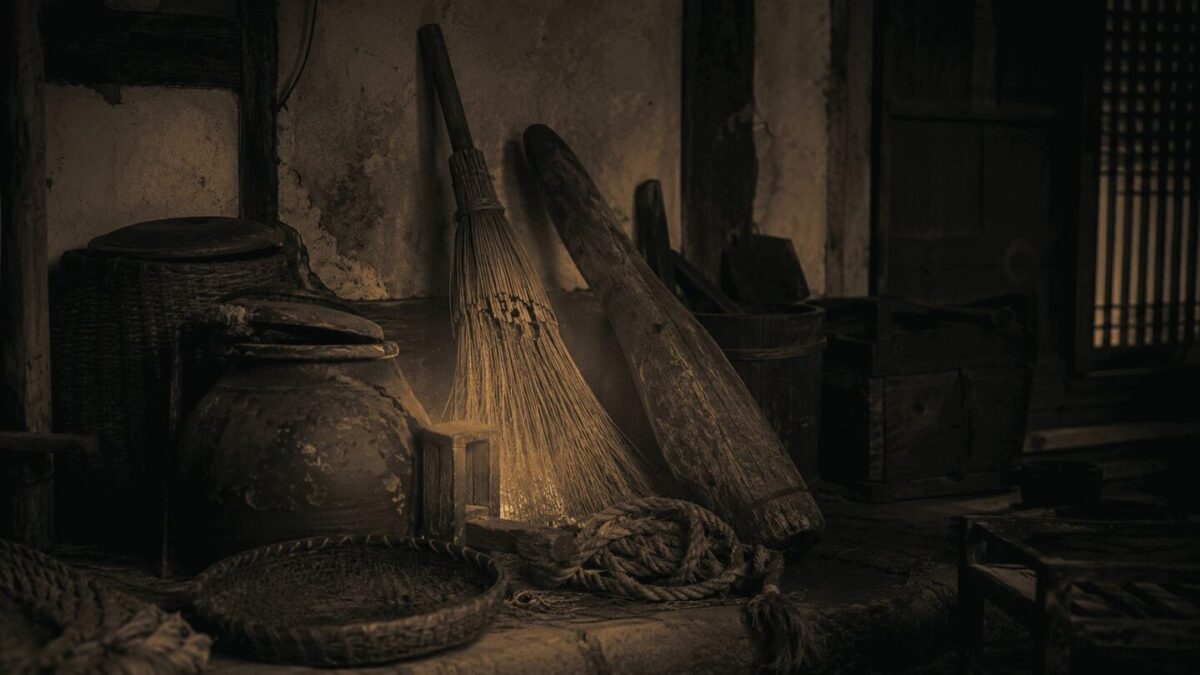
In Korean folk belief, everyday things — a worn-out broom, an old club, a discarded tool — could absorb energy over years of use and eventually take on a spirit of their own. The object didn’t need to be special. It just needed to be old enough, used enough, forgotten enough. At some point, something woke up inside it.
That something was a Dokkaebi.
This belief wasn’t abstract mythology for most Korean families — it was practical advice. My grandmother told me you shouldn’t throw away old things carelessly. You shouldn’t pick up objects someone else has discarded. The logic wasn’t sentimental. It was precautionary. Things that had been used long enough had weight to them, a presence. You treated them with respect because something might be paying attention.
The Dokkaebi Who Wanted to Play
Once he woke up, the Dokkaebi had one consistent priority: he wanted company.
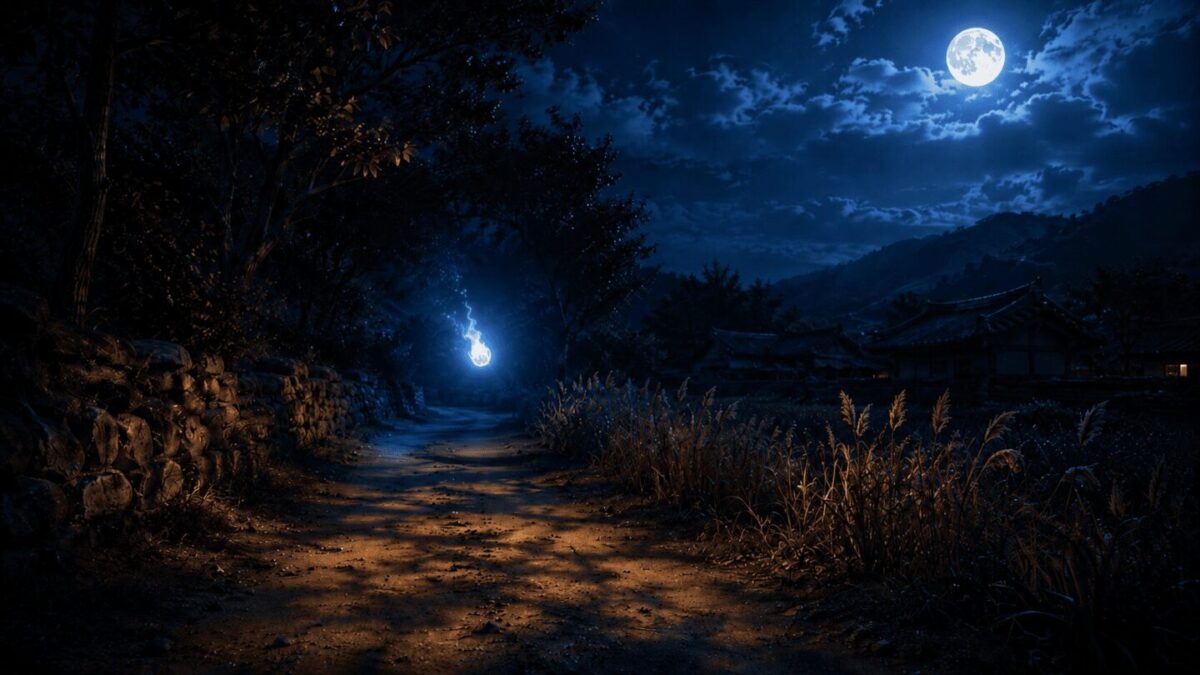
Not in a threatening way. In the way of someone who has been alone for a very long time and is genuinely delighted to finally have someone to bother. He would appear on dark roads and challenge travelers to wrestling matches. He would move things around in houses at night and laugh at the confusion. He would follow people home and make himself thoroughly inconvenient.
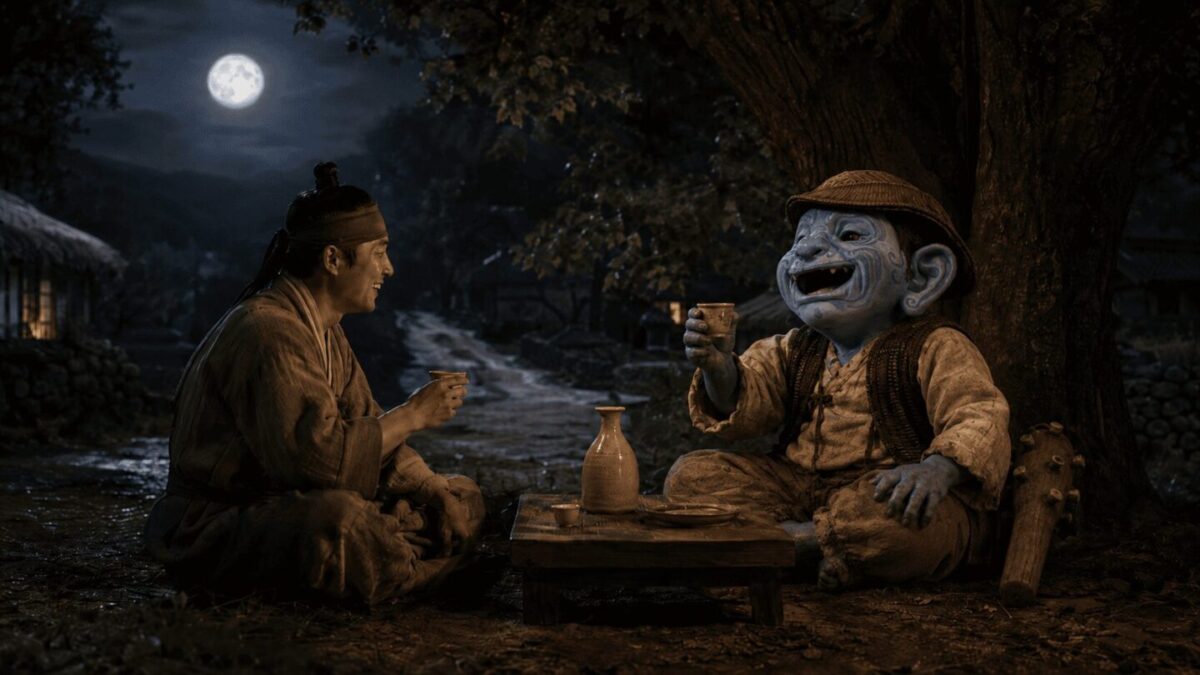
But here is the thing about the Dokkaebi that makes him unlike almost any supernatural figure in Western tradition: he wasn’t malicious. He played tricks not to harm but to engage. He wrestled not to hurt but to test. If you met him with good humor — if you laughed with him, complimented him, sat down and shared a drink — he was capable of extraordinary generosity.
The Dokkaebi gave blessings to people who treated him well. Not reluctantly, not as a transaction, but with the uncomplicated enthusiasm of someone who just wanted to be appreciated.
He was, in the end, a lot like a very large, very unpredictable neighbor who could either make your life miserable or bring you incredible luck — and the difference depended almost entirely on how you chose to greet him.
The Magic Club and the Man Who Watched Too Long
There is a story I remember from childhood — not clearly, but in the way that childhood stories stay with you in fragments.
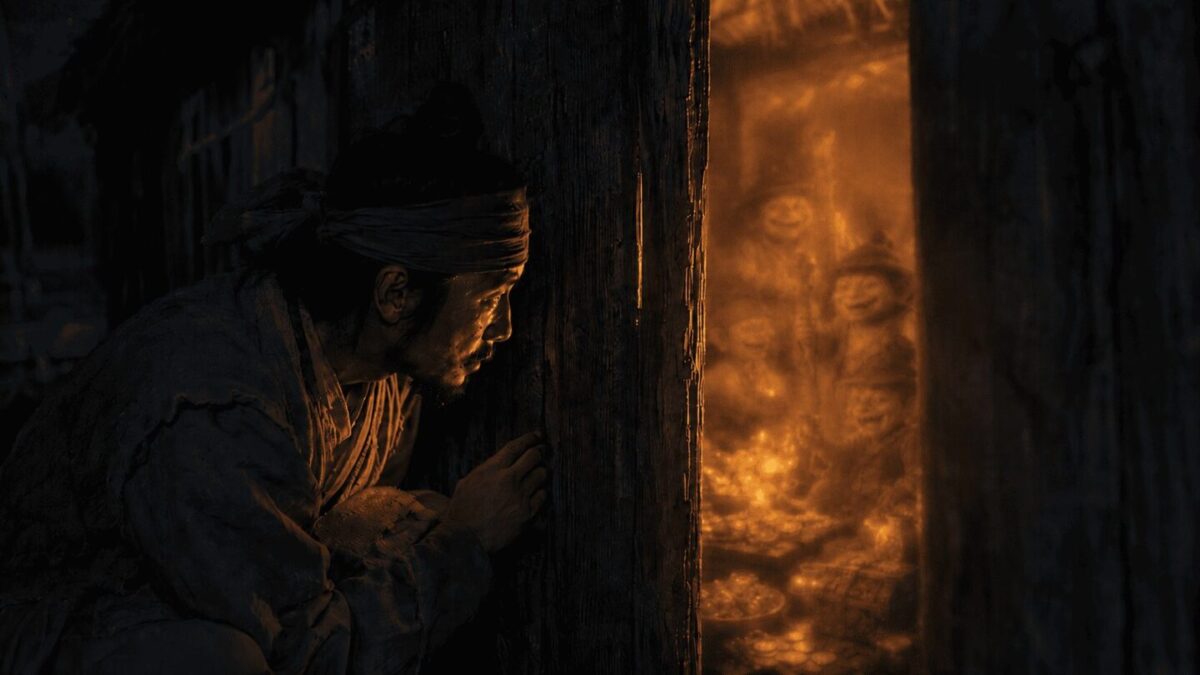
A man was walking at night and noticed a light coming from an old abandoned building. He crept closer and looked through a gap in the wall. Inside, a group of Dokkaebi were gathered, holding their magic clubs, calling out their commands — and things appeared. Food. Gold. Whatever they wanted.
The man watched for too long. And the Dokkaebi noticed.
He ran. He managed to steal a club in the chaos of his escape. With it, he became wealthy — everything the club summoned, he kept. For a while, it worked.
But the club wasn’t his. The Dokkaebi came back for it, and they were not in a generous mood.
What stays with me about this story isn’t the magic. It’s the structure of it. The man didn’t earn the club. He took something that belonged to someone else — something with a spirit, a will, a relationship with its original owner. And the consequence wasn’t a curse in the dramatic sense. It was simply that the debt had to be paid.
In Korean folk belief, objects aren’t passive. Taking what isn’t yours, using what you didn’t earn, ignoring the spirit in things — all of it has weight. The Dokkaebi story is a lesson wrapped in entertainment, the way the best Korean folklore always is.
The Horns Were Never His
Here is the part that changes how you see every Dokkaebi image you’ve encountered.
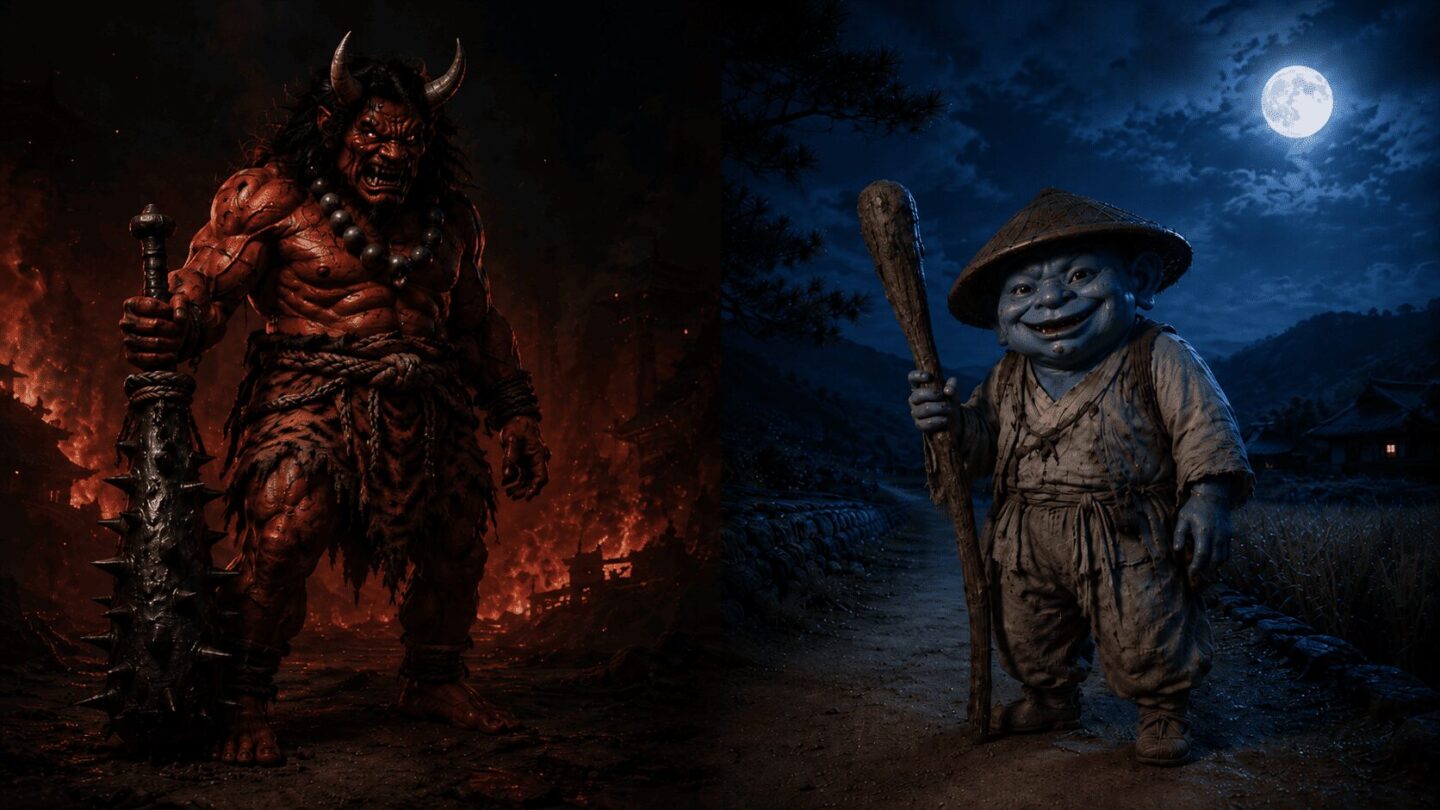
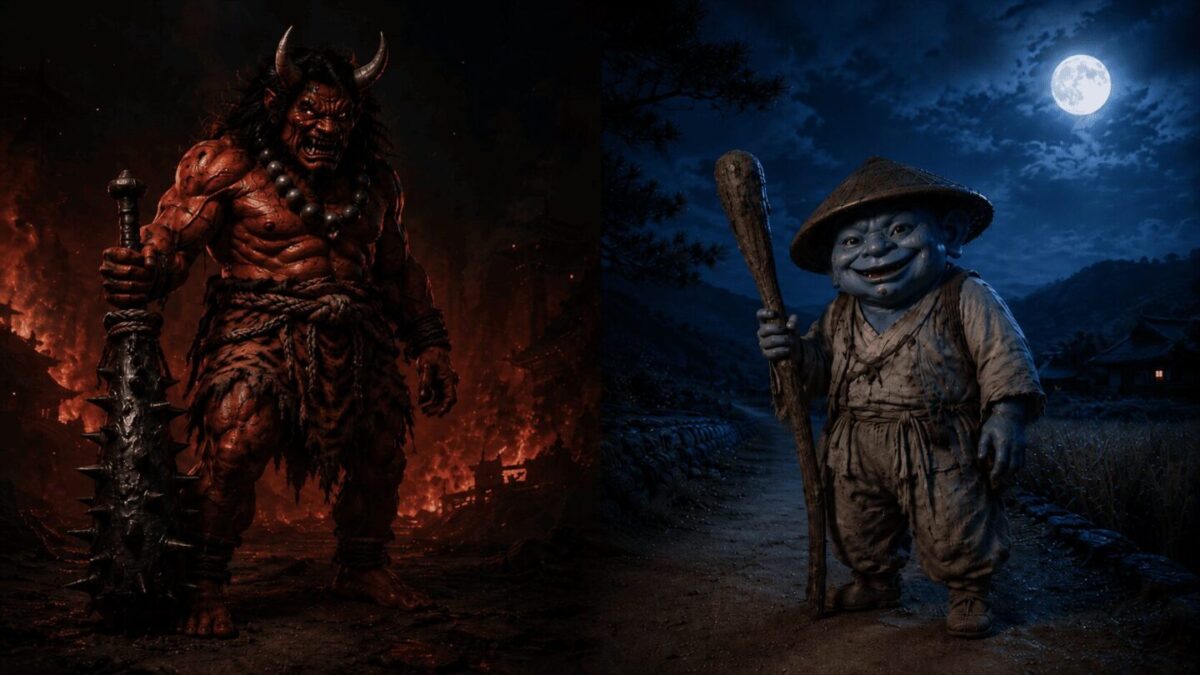
The Dokkaebi you picture right now — horns, tiger-skin clothes, spiked club — that is not the Korean Dokkaebi. That is the Japanese Oni.
During the Japanese colonial period, Japanese supernatural imagery entered Korean schools, textbooks, and popular culture. The Oni — a genuinely frightening creature, violent and destructive — was translated into Korean as “Dokkaebi.” The two words got tangled together, and the Oni’s image came along with the name.
By the time Korean children in the twentieth century were reading folk tales, the Dokkaebi in the illustrations looked like the Oni. The character in the story was playful and generous and strange. The picture on the page had horns and a spiked club.
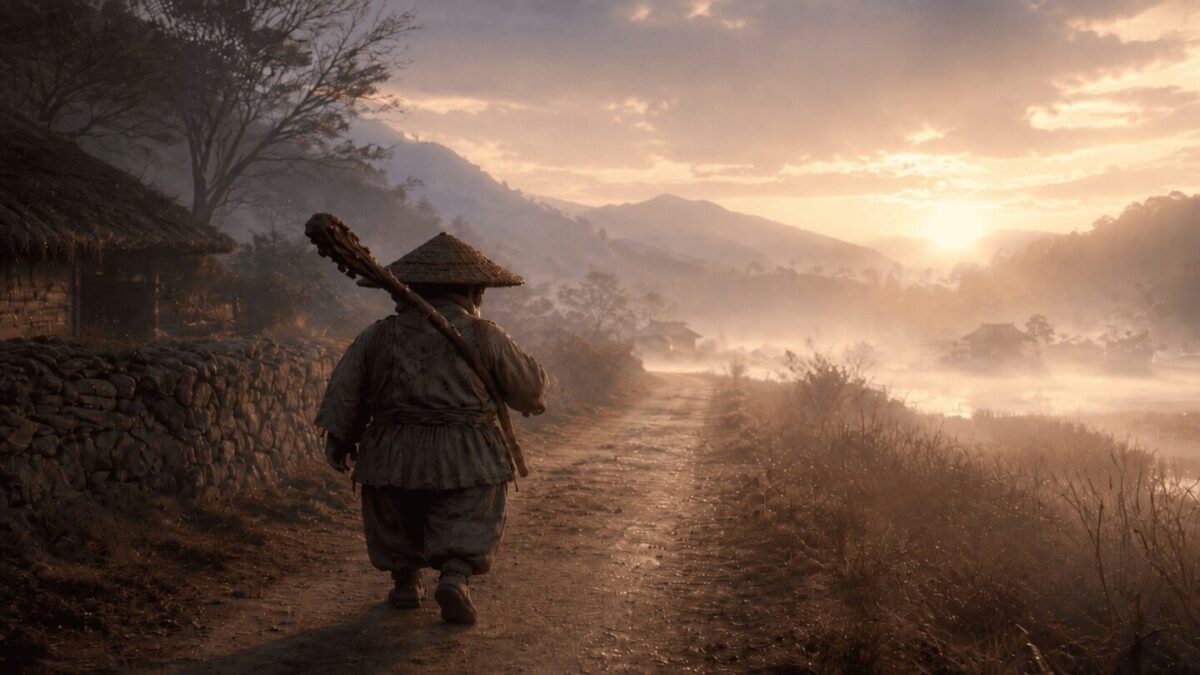
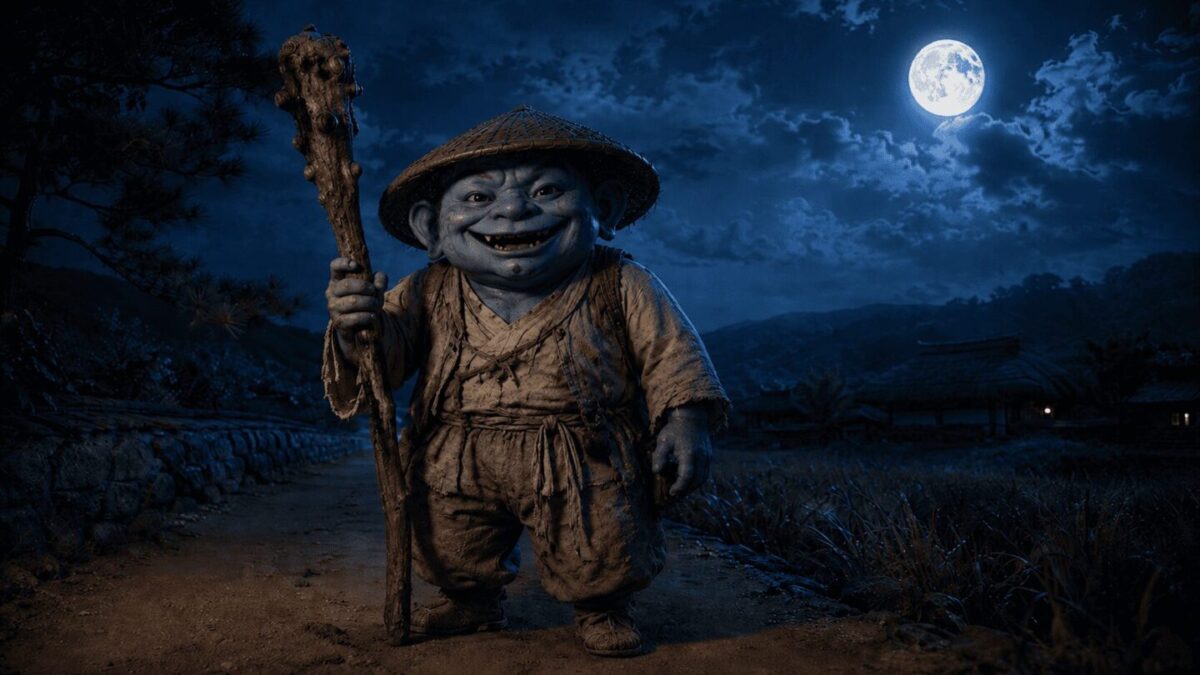
The real Dokkaebi had no fixed appearance. He looked like a person — roughly, imprecisely, with something slightly wrong about him that you couldn’t quite identify. Some stories described him in old Korean clothes, wearing a traditional hat. He was stout and awkward and enthusiastic. He was not frightening to look at.
He was frightening because he was there — in the road, in the house, in the corner of the room — when he shouldn’t have been.
What the Drama Got Right — Without Knowing It
The 2016 drama Goblin gave the Dokkaebi a new face for a global audience. Immortal, powerful, lonely — it is a beautiful piece of television that has almost nothing to do with traditional Korean folklore.
But one thing it kept, perhaps without realizing it, was the essential loneliness of a creature that exists between worlds. The traditional Dokkaebi woke up in an old object and found himself alone — not human, not quite spirit, not sure what he was supposed to do with his existence. He sought out people because people were all he had. He was annoying and generous and strange because that combination was the only way he knew how to connect.
The drama gave him tragedy. The original gave him something more interesting: he didn’t know he was supposed to be tragic. He just showed up on your road, challenged you to a wrestling match, and hoped you’d say yes.
That gap — between a creature who knows he is suffering and a creature too present, too alive, too there to notice — is the distance between a K-drama and a folk story.
Both are worth knowing.
He Was Never Just a Monster
The Dokkaebi endures because he was never only a supernatural creature.
He was the spirit of things that had been used and forgotten. The energy in objects that outlived their usefulness. The presence that accumulates in places where human life has been lived long enough to leave a mark.
He is frightening in the way that things you can’t quite explain are frightening — not because he wants to harm you, but because he refuses to be ignored. He woke up. He found you. And now he wants to wrestle.
The right answer, in the old stories, was never to run.
It was to sit down, pour him a drink, and see what he had to offer.
He was never the monster in the story. He was what happened when the world you forgot about decided to come back and introduce itself.