Korean CIA: Why the KCIA Was Scarier Than the Real CIA
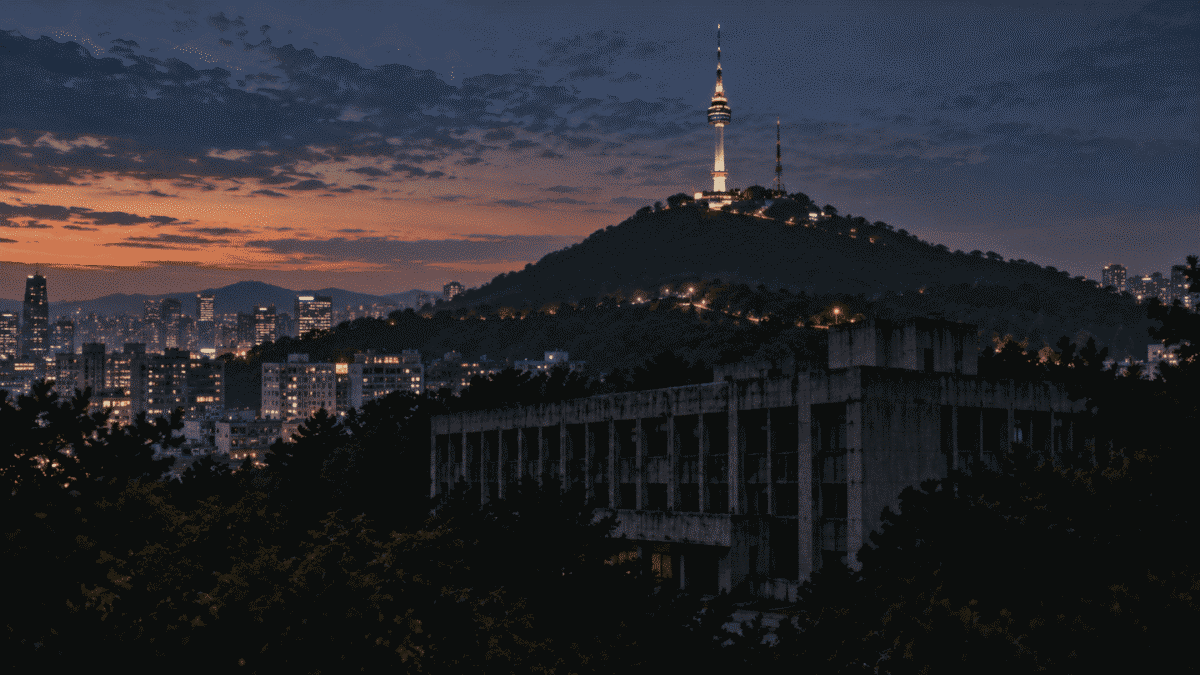
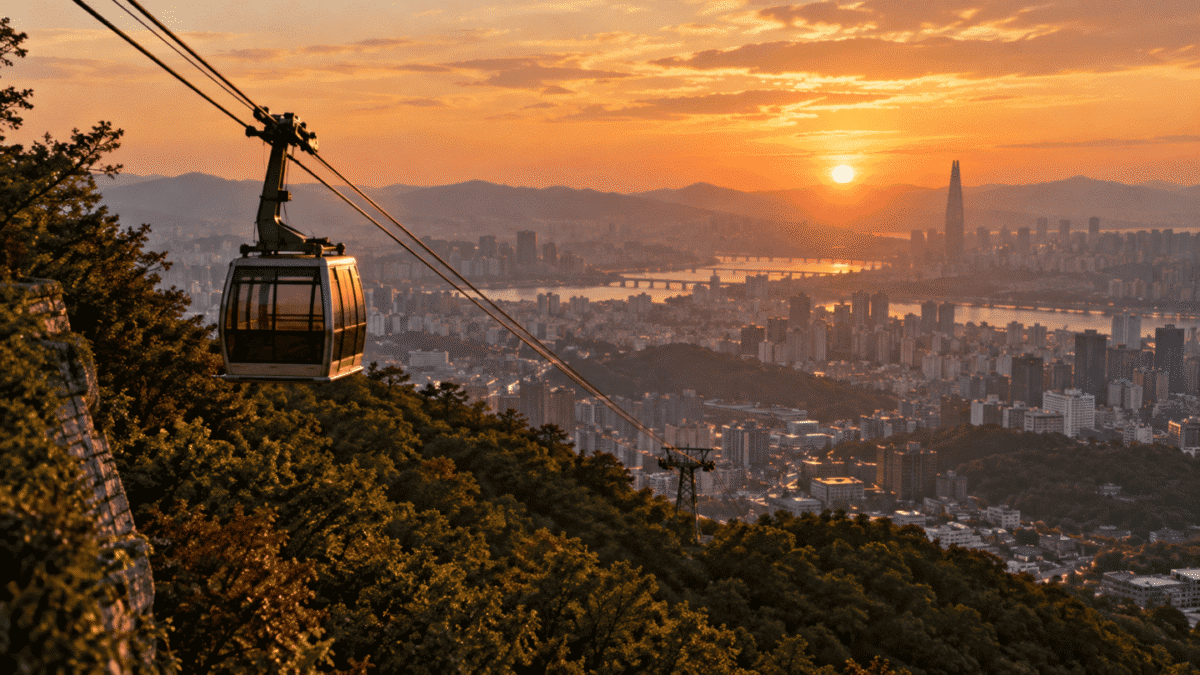
If you visit Seoul, you’ll probably end up on Namsan — the green mountain in the middle of the city with N Seoul Tower on top. Couples hang “love locks” on the railings. Tourists ride the cable car up for the night view. It’s one of the most romantic spots in Korea — and very few of the people up there know that this same mountain was once home to the Korean CIA.
My parents’ generation heard the word “Namsan” very differently. In the 1970s, “being taken to Namsan” meant one thing: you were being hauled in by the KCIA, the most feared institution in the country. Koreans still repeat what people used to say about it — that if you got taken to Namsan, you came back broken.
The Korean Central Intelligence Agency, or KCIA, was built in 1961 and named after the American CIA. But it grew into something the American agency was never allowed to become. Here’s how — and why it went from spying on Koreans to reaching all the way into the US Congress.
Same Name, Very Different Animal
On paper, the two agencies look like cousins. In practice, they were barely the same species.
When the United States created the CIA in 1947, Congress deliberately kept it pointed outward. The law said the CIA would have no police powers and no “internal security functions.” It could spy on other countries. It could not arrest Americans. Domestic crime belonged to the FBI.
The KCIA had no such line. It ran foreign intelligence and domestic security. It could investigate, arrest, and interrogate Koreans. It watched politicians, journalists, professors, and students. In the agency’s darkest decades, its agents even sat inside the National Assembly, keeping an eye on lawmakers.
Here’s the difference at a glance:
| American CIA | Korean CIA (KCIA) | |
|---|---|---|
| Founded | 1947, by an act of Congress | 1961, weeks after a military coup |
| Main focus | Foreign intelligence | Foreign intelligence + domestic politics |
| Could arrest citizens at home? | No — barred by law | Yes |
| Answered to | The President, with growing oversight from Congress | Essentially one man: the President |
| Watched by | Congressional committees (from the mid-1970s) | Almost no one |
| Headquarters nickname | “Langley” | “Namsan” |
If you’re American, try this: imagine the CIA and the FBI merged into one agency, with the power to investigate anyone — and it answered to nobody but the president.
That was the Korean CIA.
Why the Korean CIA Got So Powerful
When I explain the KCIA to friends from other countries, they always ask the same question: how did one agency get that much power? There are four reasons, and they stack on top of each other.
1. It was born in a coup. In May 1961, a group of army officers led by General Park Chung-hee seized power. Within weeks, one of the coup’s planners, Kim Jong-pil, set up the KCIA. It wasn’t designed by a parliament to protect the country from outside threats. It was designed by the new rulers to protect the new rulers.
2. It had police powers. This is the single biggest difference from the American CIA. The KCIA didn’t just gather information. It could act on it — bring people in, question them, and build cases against them.
3. It answered to one person. Park Chung-hee ruled South Korea for 18 years, and the KCIA reported to him. There was no independent committee asking hard questions and no court strong enough to say no. An agency that answers to one man becomes that man’s tool.
4. It had the perfect excuse: North Korea. South Korea was, and technically still is, at war with the North. Spies from the North were real. That gave the KCIA a magic phrase: national security. Arrest a critic? He might be a communist spy. Tap a phone? National security. For decades, it was very hard to argue with that.
The threat was never imaginary — this is the same North that runs a regime that treats sounding South Korean as a crime. But the KCIA learned that “the North” could justify almost anything at home.
What “Namsan” Really Meant
So what happened to people who were taken to Namsan? Two cases show the range.
A professor who never came home. In October 1973, Choe Jong-gil, a law professor at Seoul National University, walked into KCIA headquarters to answer questions in a spy investigation. Days later, he was dead. The government said he had jumped from a seventh-floor window. Almost thirty years later, a presidential truth commission concluded that he died during KCIA interrogation, and in 2006 a Korean court ordered the government to pay his family damages.
An opposition leader snatched abroad. That same year, KCIA agents kidnapped Kim Dae-jung — the opposition politician who had nearly beaten Park in the 1971 presidential election — from a hotel in Tokyo. They took him to a boat. In 2007, an investigation by Korea’s own intelligence service found evidence that the plan may have been, at least for a time, to kill him at sea. He survived, reportedly after American and Japanese officials learned of the plot. Twenty-five years later, Kim Dae-jung became president of South Korea and won the Nobel Peace Prize.
Think about what that means. The Korean CIA didn’t stop at the border. It could reach into a hotel in Japan.
It could also reach into Washington.
When the Korean CIA Came to Washington
Here’s where the story turns American.
In the mid-1970s, the United States was going through a reckoning with its own spies. In 1975, the Senate’s Church Committee exposed abuses by the CIA and FBI, including spying on Americans. The result was something new: permanent congressional oversight of US intelligence. America was putting a leash on its own agencies.
At almost exactly the same moment, Korea’s agency was doing the opposite.
The rice man. In 1976, The New York Times reported that a South Korean businessman named Tongsun Park had been spreading money around Capitol Hill. Park had made a fortune as the middleman for American rice sales to Korea, and investigators said that money was being used to buy goodwill for Seoul in Congress — at a time when Washington was talking about pulling US troops out of Korea. The scandal got a name every American recognized from Watergate: Koreagate.
Congress investigated. When Park finally testified publicly in 1978, he admitted giving cash to about thirty members of Congress. One California congressman, Richard Hanna, went to prison. Several others were formally reprimanded by the House.
The director who talked. The most dramatic witness, though, wasn’t Park. It was Kim Hyong-uk, who had run the KCIA itself through most of the 1960s. He had fallen out with the regime and fled to the United States. In June 1977, he sat before a congressional subcommittee and told American lawmakers how Seoul’s influence campaign worked. He said he had been offered a million dollars not to testify. He testified anyway.
Then he vanished. On October 7, 1979, Kim Hyong-uk was last seen at a casino in Paris. He never came back. For decades, his fate was a mystery wrapped in rumors. Then in 2005, a truth commission set up by Korea’s own intelligence service — the KCIA’s successor — reached a conclusion: the former director had been killed outside Paris, on the orders of the man then running the KCIA, Kim Jae-gyu.
Let that sink in. The Korean CIA was powerful enough to hunt down its own former boss in the middle of Europe.
What Happened Next
Kim Hyong-uk disappeared on October 7, 1979.
Less than three weeks later, on the night of October 26, Kim Jae-gyu — the same KCIA director — shot and killed President Park Chung-hee at a private dinner. The agency built to protect one man ended up taking his life. That night deserves its own story, and I’ll tell it in a future post.
The agency survived its founder. In 1981, it was renamed the Agency for National Security Planning, and in 1999 it became today’s National Intelligence Service, or NIS. It no longer has the powers it had in the 1970s, and today it answers to oversight from the National Assembly. The debate over how much power a spy agency should have in a democracy is still very much alive in Korea.
And Namsan? The agency moved out in 1995. Some of its old buildings still stand on the mountain. One former KCIA building became a youth hostel, and most of the travelers who sleep there have no idea what happened in its basement.
So the next time you ride the cable car up Namsan for the view, look down for a second. That beautiful mountain remembers a very different Korea — one where an agency named after the CIA became far more frightening than the original.