Princess Bari: The Abandoned Daughter Who Guides the Dead
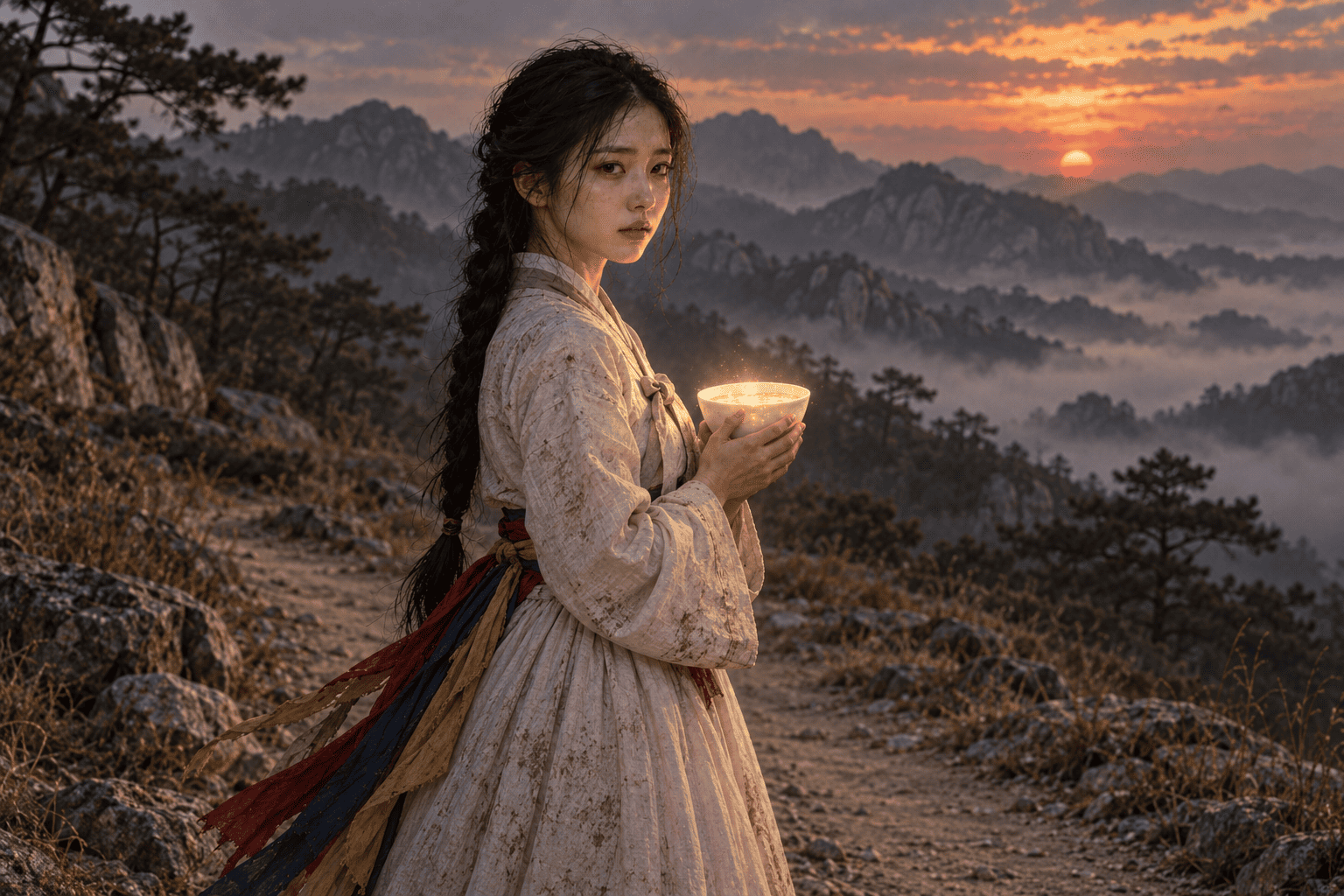
In Korea, there is a goddess who guides the souls of the dead. Her name is Princess Bari, and it is usually said to mean “the one who was thrown away.” Because on the day she was born, that is exactly what her father did.
Years later, she went to the land of the dead to save him.
Why she went — and what she chose when she came back — is the reason Koreans still sing her story today.
I first met her on a screen, as a shaman character in a Korean webtoon or game — the most powerful one of all. It took me years to learn that she wasn’t invented for pop culture. She is one of the oldest stories Korea has.

Who Is Princess Bari?
Princess Bari (also called Baridegi) is a goddess from Korean shamanism. In the myth, she is the seventh daughter of a king who abandons her at birth because he wanted a son. When the king falls deathly ill, she travels to the land of the dead to bring back healing water and saves his life. Afterward, she becomes the deity who guides the souls of the dead, and many Korean shamans honor her as the very first shaman. Her story is still sung today at Korean rituals for the dead.
That’s the short version. Here’s the story.
Thrown Away
Once, there was a king called King Ogu. He wanted a son more than anything — someone to inherit the throne.
His queen gave birth to a daughter. Then another. Then another. Six daughters in a row.
When the seventh child arrived, the whole palace held its breath. It was another girl.
The king was furious. He ordered the baby taken away. In the best-known versions, she is sealed in a box and set adrift on the water, sent off into a river that some versions say leads toward the land of the dead.
If that sounds familiar, it should. It’s the same image as baby Moses floating down the Nile. But Moses was hidden to save his life. Bari was sent away because her father didn’t want her.
She survived anyway. An old couple found the box and raised the girl as their own, far from the palace, never knowing she was a princess.

Six Sisters Said No
Years passed. Then the king and queen fell gravely ill.
No doctor could help them. Finally, a fortune-teller delivered the bad news: only one thing could save them. Healing water, from a spring at the far end of the world — past the land of the dead.
The king turned to his six daughters. The ones he had kept. The ones he had raised in the palace.
One by one, they said no. In the old songs, each has her own excuse. The journey is too far. Too dangerous. Someone else should go. Not one of them is willing to walk into the land of the dead, not even for the father who raised them.
So the king did the one thing left. He sent for the daughter he had thrown away.
And this is the question every reader asks: why would she go? She had never known these people. The only thing her father had ever done for her was get rid of her.
In one well-known version, her answer is simple. She says she owes them nothing for the kingdom, and nothing for raising her. But she spent months inside her mother’s body before she was born. For that alone, she will go.
It’s an answer that can sound beautiful or heartbreaking, depending on who you are. Many Korean readers hear deep devotion. Many Western readers hear something closer to: after everything they did to you?
Either way, she said the words that turned her into a legend: “I will go.”
The Price of the Healing Spring
Getting there was the hard part.
Princess Bari crossed the land of the dead, past rivers and mountains that no living person was supposed to cross. In some versions, she disguises herself as a man for the journey.
This is where her story meets one of the most famous myths in the Western world. In Greek mythology, Orpheus walks into the underworld to bring back his wife. But there’s a crucial difference. Orpheus went for the person he loved. Princess Bari went for the father who threw her away.
At the end of the road, she finally found the healing spring — and its guardian.
He did not just hand her the water. In the old versions, the price was almost everything she had: years of hard labor, then a marriage to the guardian himself, and children. Only after all of that did she leave with the water, and with her new family.
By then, much time had passed. She raced home.

Two Coffins on the Road
As she came close to home, she saw a line of mourners coming down the road toward her.
They were carrying two coffins.
Her parents had already died.
This is the moment the whole story has been building to. She stopped the funeral procession. She opened the coffins. And with the water from the end of the world, she brought her mother and father back to life.
The daughter they had thrown away was the only child who came back for them.
The One Who Guides the Dead
The king, alive again, finally understood what he had done. He offered his youngest daughter a reward — riches, land, even a share of his kingdom.
According to many versions, she turned all of it down.
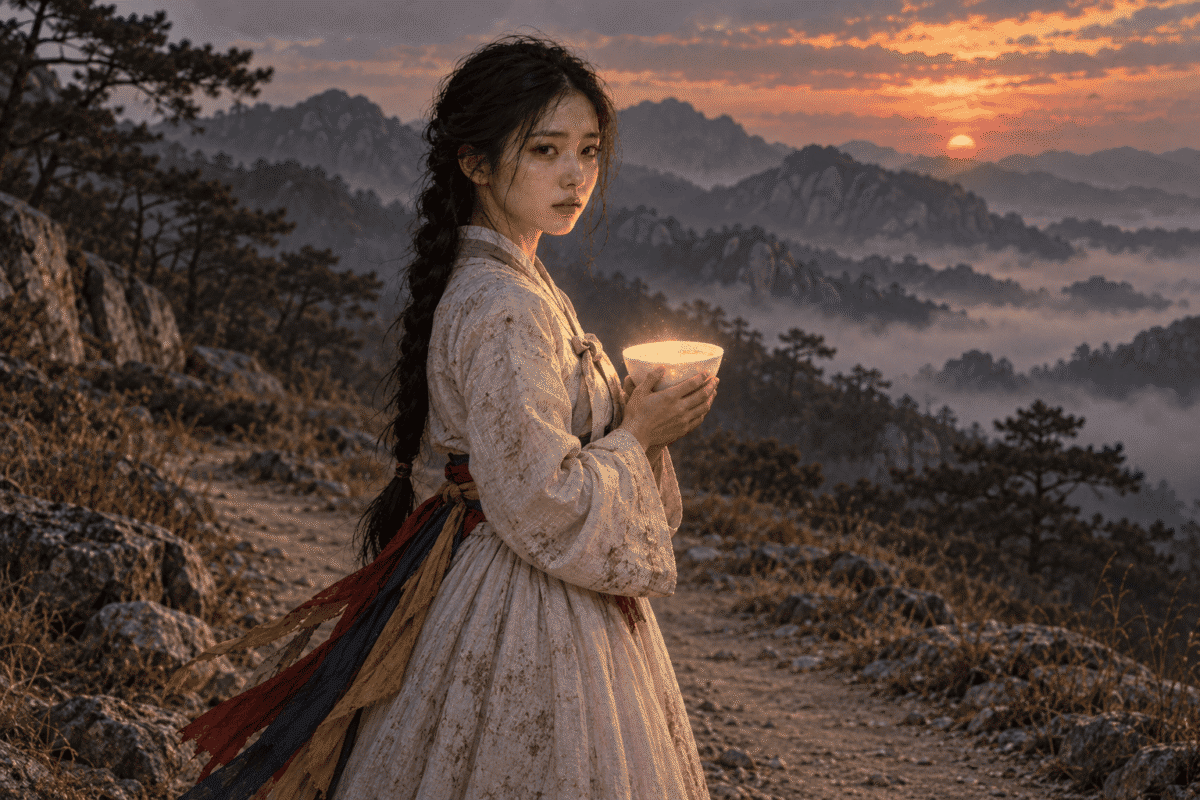
She had already walked the road between life and death. She knew how dark it was, and how easy it would be to get lost. So instead of a kingdom, she chose a job: to guide the souls of the dead safely to the other side.
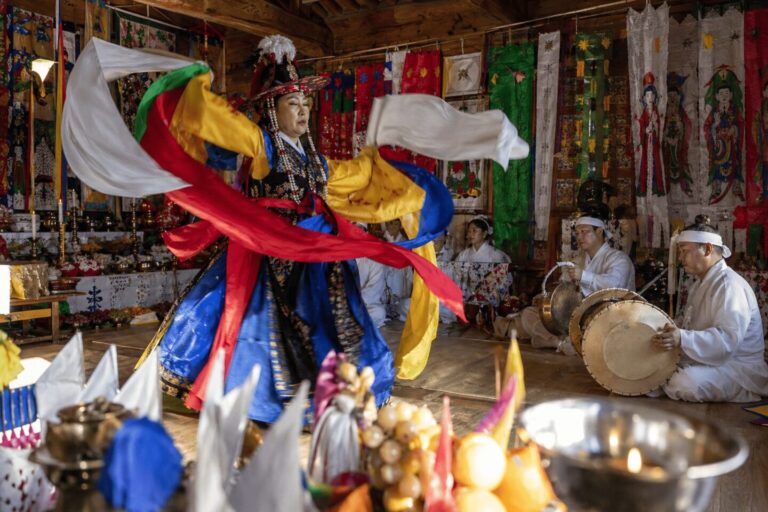
That is why, in Korean shamanism, she became a goddess. And that’s why many Korean shamans call her the very first shaman — the one who showed how a living person can travel between worlds and come back. In Korea, shamans, who are mostly women, still perform rituals for the dead today.
Korean mythology has another famous figure connected to death: the Grim Reaper of Korea, who comes to collect souls when their time is up. Princess Bari is the opposite. The reaper comes to take you. Princess Bari comes to make sure you don’t get lost.
Many versions, one story. Because her myth was passed down by shamans singing it out loud, not written in books, it changes from region to region. More than a hundred versions have been recorded across Korea. In some, she wears a man’s clothes on her journey. In some North Korean versions, she dies after saving her parents. But in almost every version, the heart of the story stays the same: the thrown-away daughter is the one who comes back.
When someone dies in Korea, her story may still be sung at the ritual held for them — sometimes for hours — so that the soul knows the way.
The princess nobody wanted became the one who walks with everyone at the end.

Princess Bari: Quick Answers
Who is Princess Bari in Korean mythology? Princess Bari is a goddess of Korean shamanism. She is the seventh daughter of a king who abandoned her at birth. She later saved her parents by bringing healing water from beyond the land of the dead, and became the deity who guides souls to the afterlife.
What does the name “Bari” mean? Her name is traditionally explained as coming from the Korean word for “to throw away,” reflecting how she was abandoned as a baby. She is also known as Baridegi.
Why is Princess Bari called the first shaman? Because she traveled between the world of the living and the world of the dead and came back, many Korean shamans honor her as their ancestor and the very first shaman.
Where is the story of Princess Bari performed? Her story is sung by Korean shamans during rituals for the dead, which are held to help a person’s soul travel safely to the afterlife. More than a hundred versions have been recorded across Korea.