The Forgotten Tomb of Korea’s Most Infamous King
In the middle of a residential neighborhood in northern Seoul, Korea’s most notorious ruler lies buried. No tour buses. No crowds. Almost no one knows it’s there.
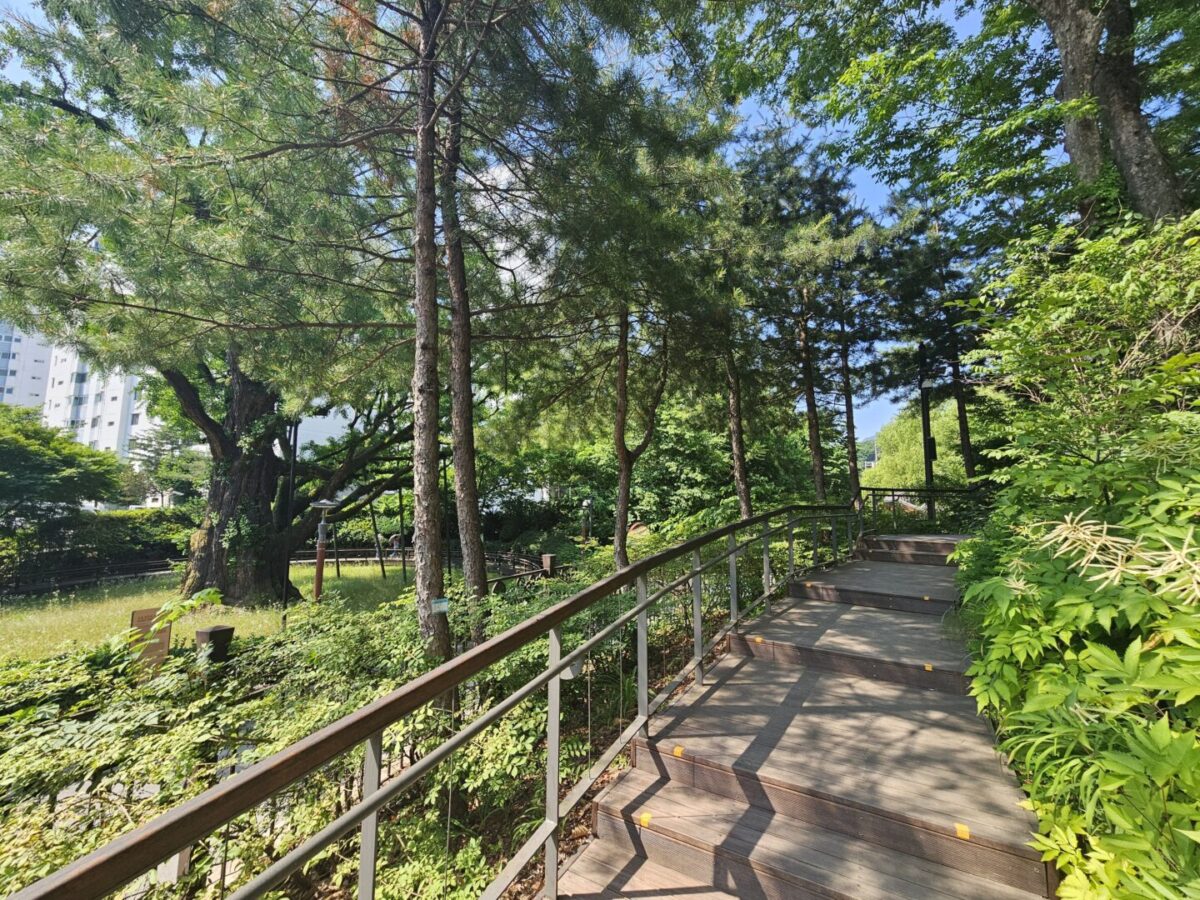
Walk down a wooden boardwalk in Dobong-gu, northern Seoul. Apartment buildings rise on your left. Trees line the path on your right. Residents pass by on their way to the bus stop, to the convenience store, to wherever they’re going.
Almost none of them stop.
At the end of that path is the tomb of Yeonsan-gun — the tenth king of the Joseon dynasty, and the most notorious ruler in Korean history. Not a grand UNESCO-listed mausoleum. Not a cultural landmark surrounded by tour groups and audio guides. Just a quiet hillside, two grass mounds, and a tree that has been standing here for six hundred years.
If you’re looking for the kind of Seoul that most visitors never find, this is it.
Who Is Buried Here
Yeonsan-gun reigned as king from 1494 to 1506. He is remembered for two brutal political purges, for turning the royal Confucian academy into a personal entertainment venue, and for banning the Korean alphabet after criticism of him circulated in writing. In 1506, a coup by his own officials removed him from power. He died in exile two months later. He was thirty-one years old.
Because he was deposed, he was denied the burial rites given to Joseon’s legitimate rulers. Korean kings who ruled until their death receive the suffix jo or jong after their name. A deposed king receives gun — a lesser designation. That is why history knows him not as a king, but as Yeonsan-gun.
The full story of who he was — and why the story is more complicated than it first appears — is told in detail here: → [Yeonsan-gun: The Story Behind Korea’s Most Infamous King]
The Tree That Was Already Old When He Was Born
Before you reach the tomb, you pass the tree.
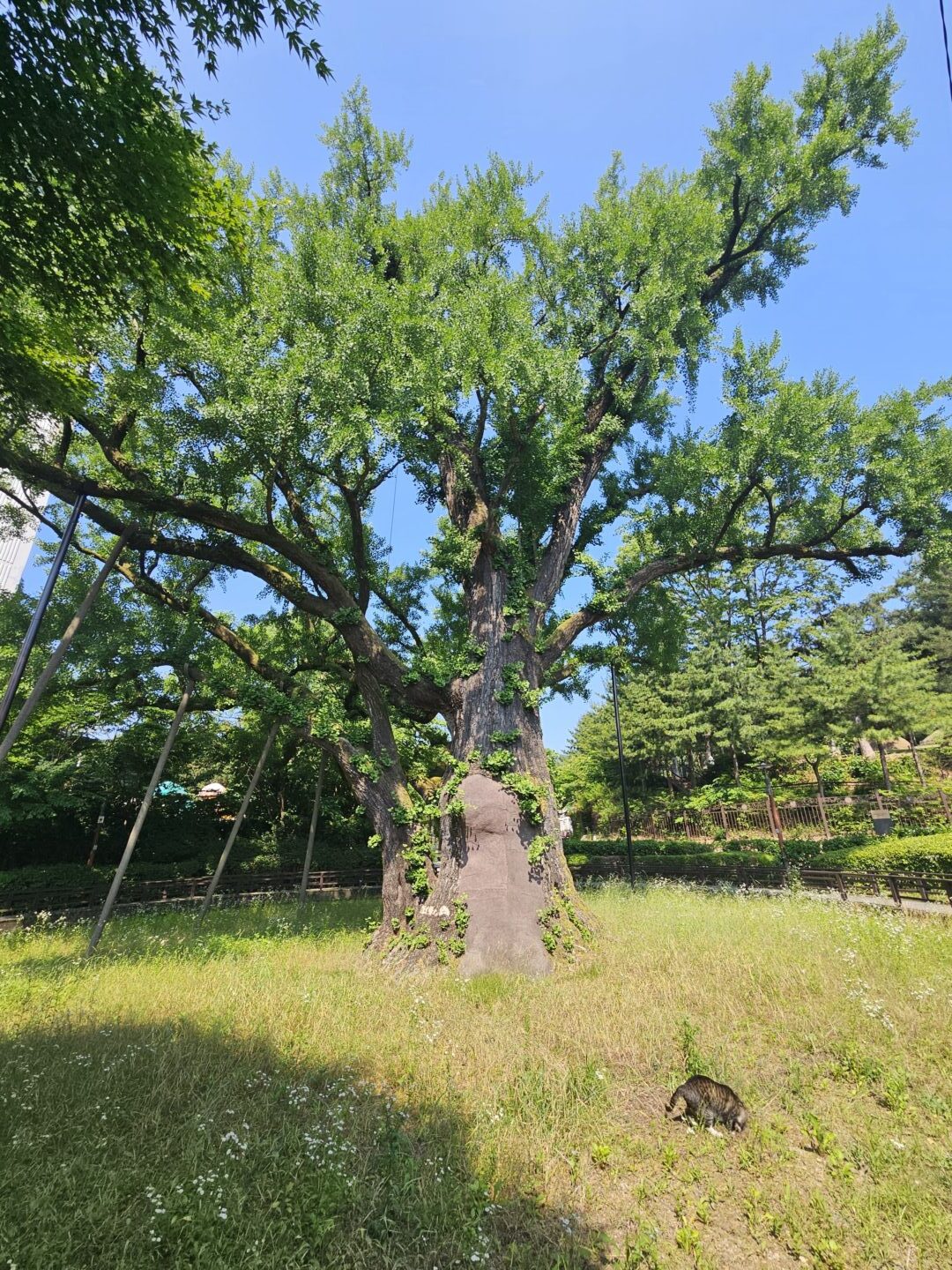
It stands in a small open field just outside the tomb complex: a ginkgo tree designated as Seoul Natural Heritage, estimated to be around 550 years old. Height of 25 meters. Trunk circumference of nearly 11 meters.
The numbers don’t prepare you for standing in front of it.
This tree was here when Yeonsan-gun was alive. It was here when he was dragged from power and sent to a remote island. It was here when his body was brought back and buried nearby. It has been here through every dynasty, every war, and every decade of Seoul’s transformation from a Joseon capital into a city of ten million people.
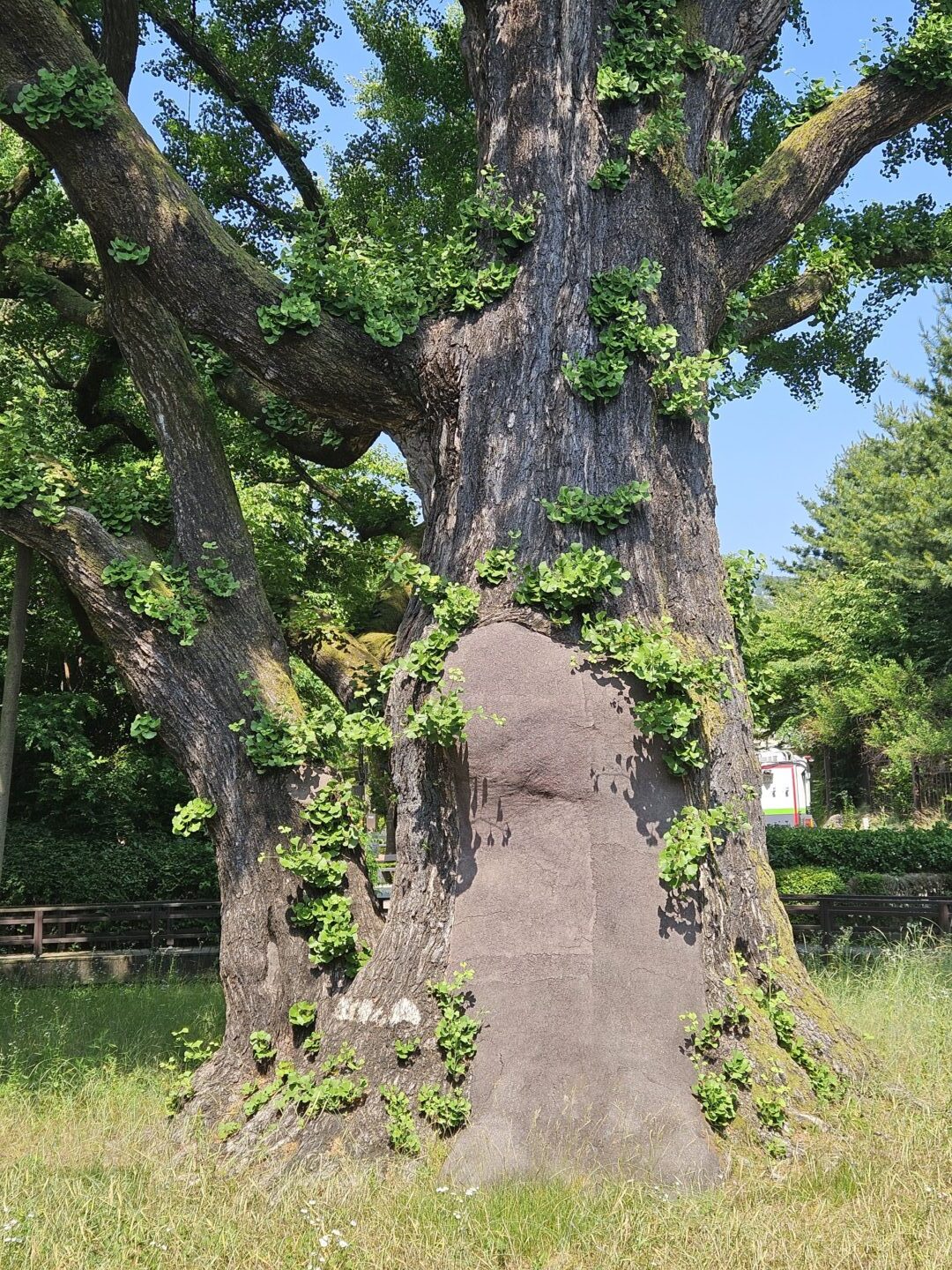
Walk up close and look at the trunk. Centuries of growth have split the outer bark open, revealing the ancient heartwood beneath — layers of wood that have been forming since the Joseon dynasty. From the ancient bark itself, small clusters of new ginkgo leaves push out every spring, bright green against the grey and brown of six hundred years.
Every year on the first full moon of the lunar calendar, residents of the Banghak-dong neighborhood gather here for a ritual. They have been doing this for generations. The tree, it seems, is not just old — it is still a part of the community.
Inside the Tomb Complex
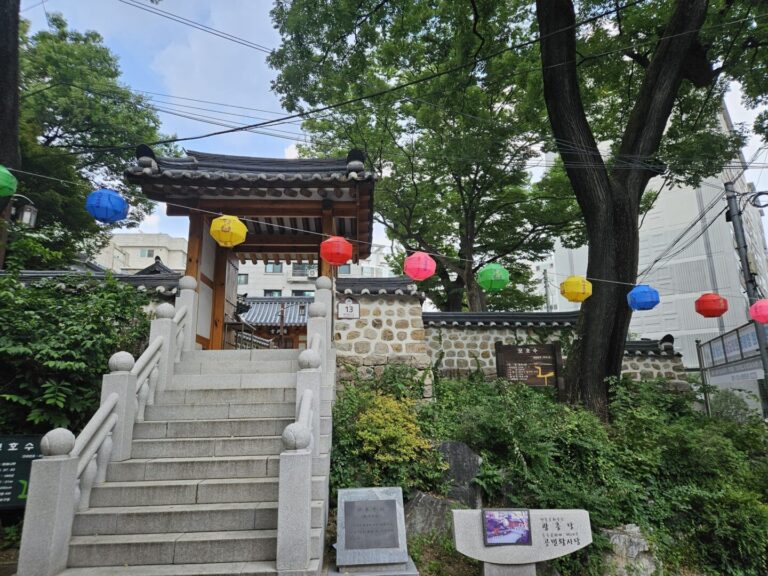
Past the tree, a short path leads into the tomb complex. There is no entrance fee. There is almost certainly no one else there when you arrive.
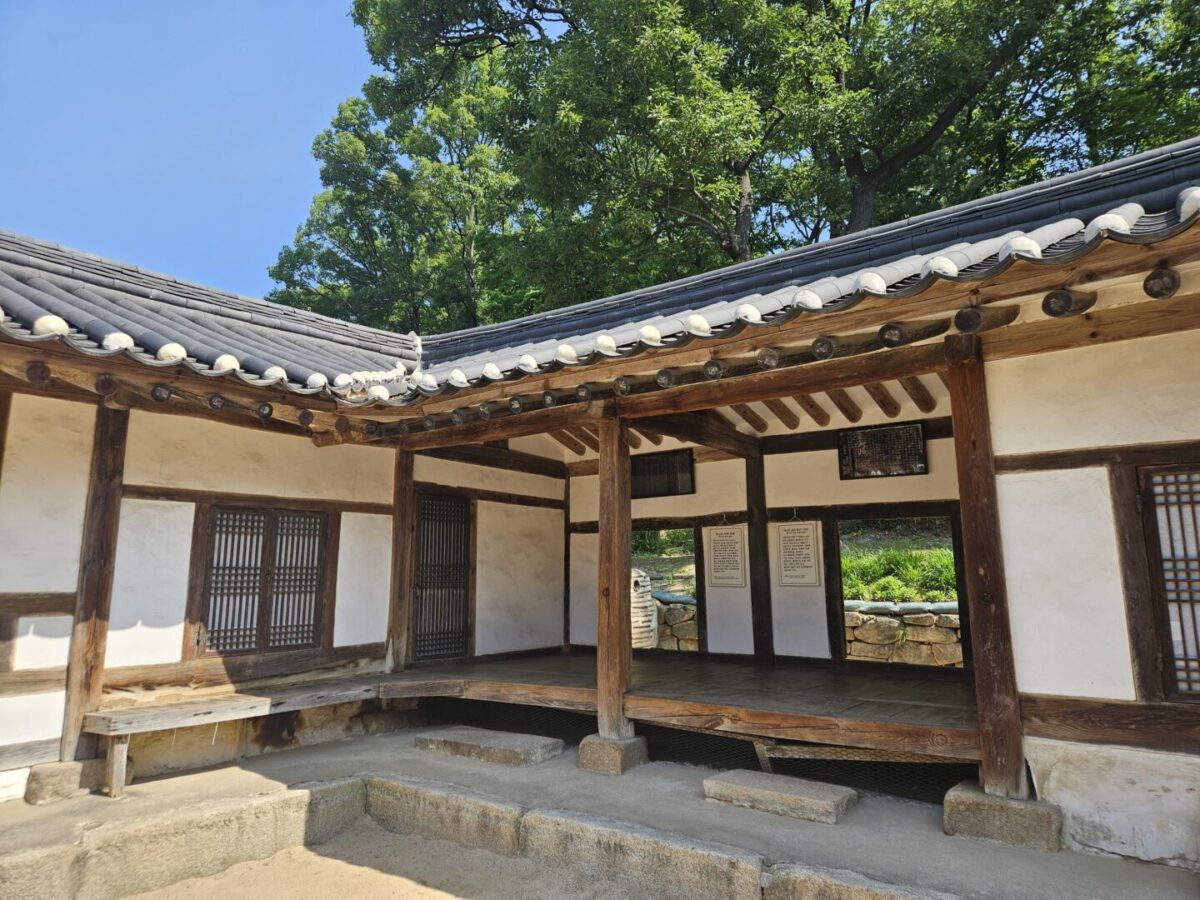
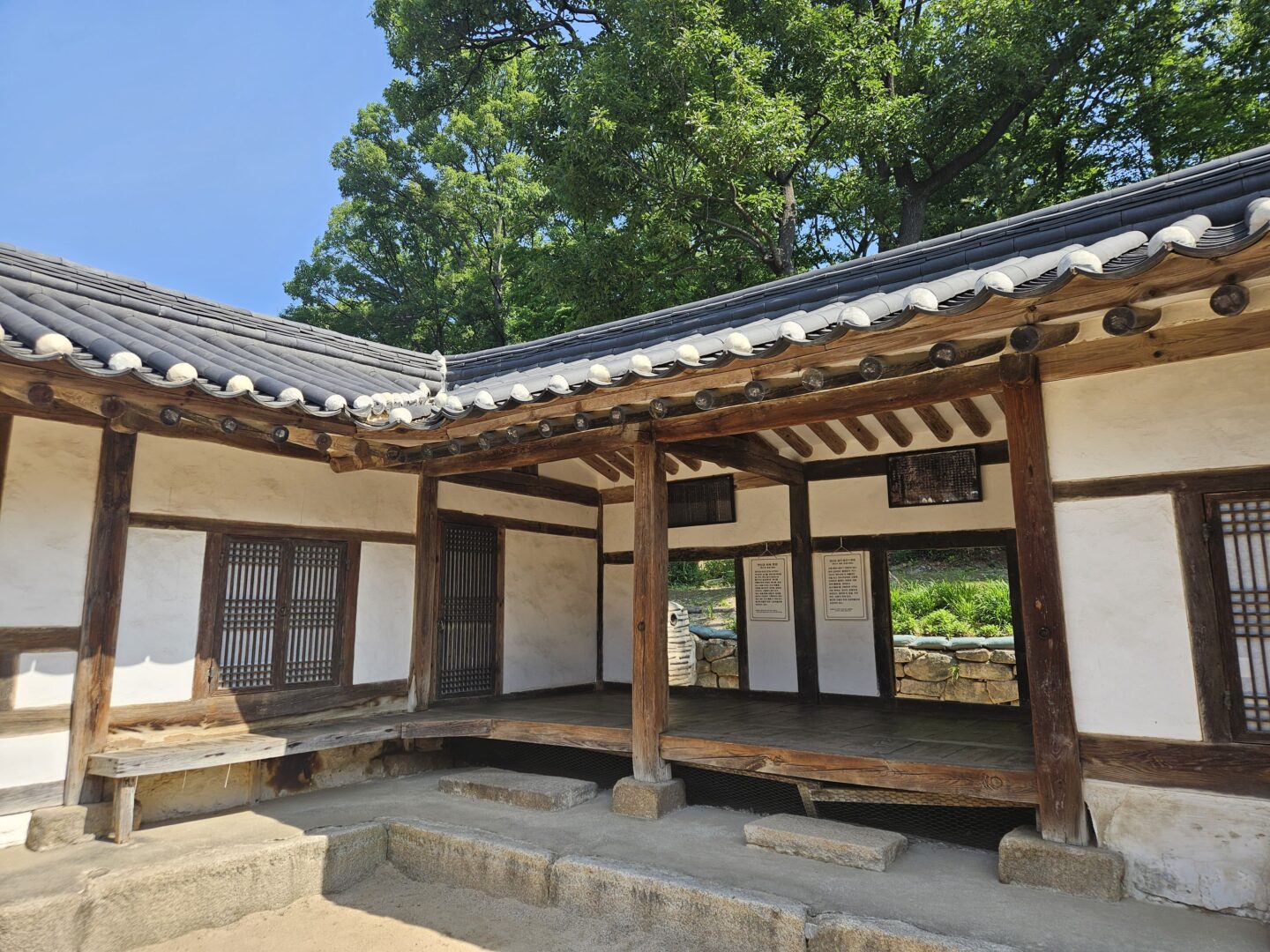
The first thing you encounter is the jaesil — the tomb keeper’s house, a traditional Korean hanok building where the custodian of the tomb once lived and where memorial rites were prepared. The wooden beams, the tiled roof, the stone-floored courtyard — it has the quiet, weathered look of something that has been standing for a very long time and has no intention of stopping.
Inside the covered corridor, two stone tablets mounted on the wall record the history of Yeonsan-gun’s reign and tomb. The text is in classical Korean script, dense and darkened with age. You probably won’t be able to read it. That’s fine. The building is worth looking at anyway.
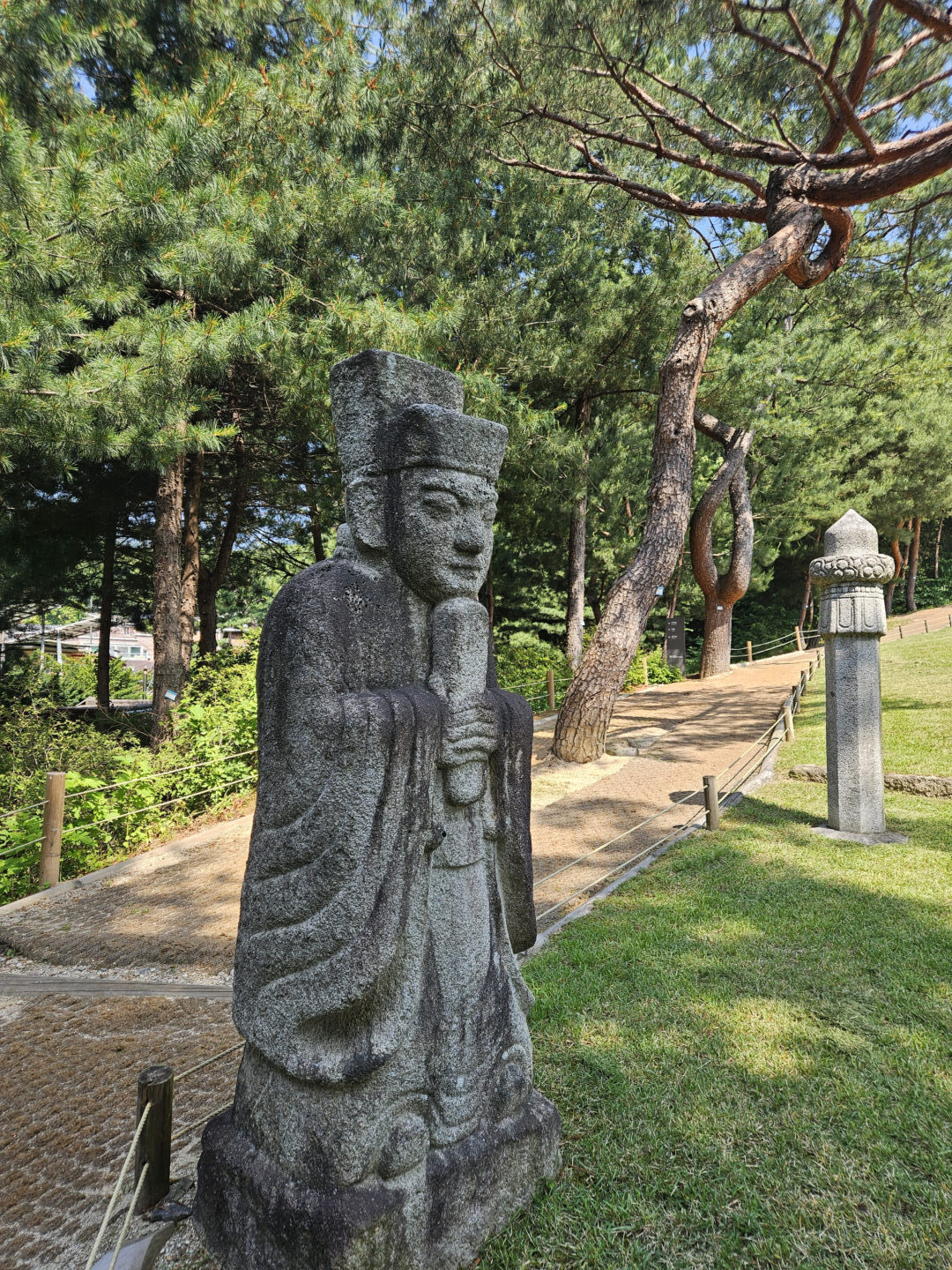
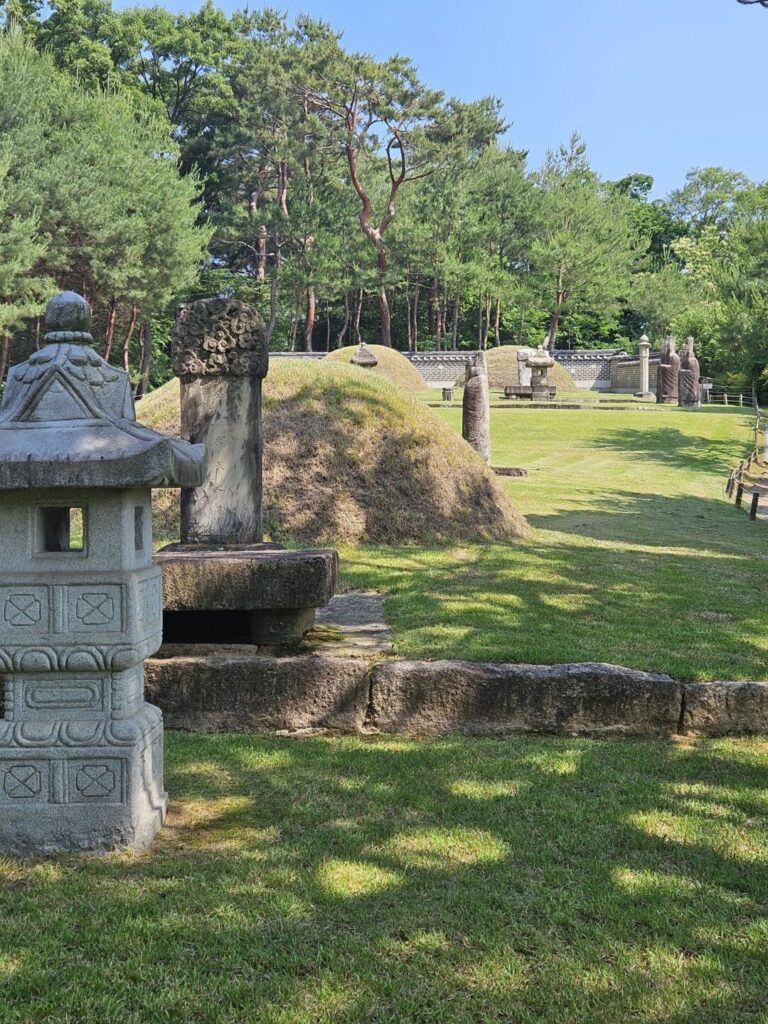
Flanking the path toward the burial mounds are the muninsok — stone statues of civil officials, carved to stand guard over the tomb forever. At Joseon’s formal royal tombs, you would find both civil and military stone figures, along with stone horses and other elaborate arrangements. Here, the statues are fewer and simpler. A deposed king gets less.
That restraint is part of what makes this place feel different from the grand royal tombs elsewhere in Seoul. There is no performance here. No grandeur. Just a hillside, some stones, and the weight of a life that went badly wrong.
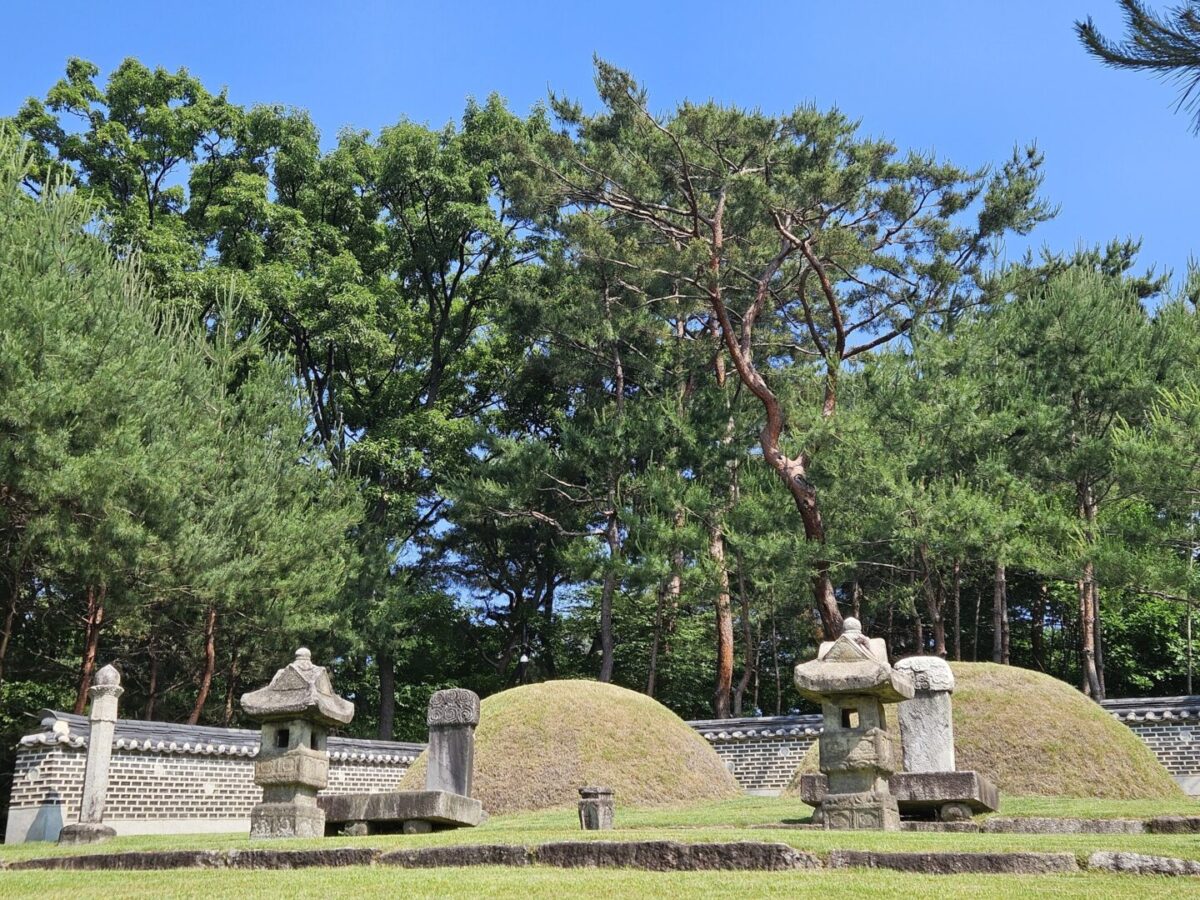
At the top of the slope, two grass mounds rise side by side.
The larger one is Yeonsan-gun. The one next to it belongs to his queen, Lady Shin — who was stripped of her title when he was deposed, and who, when she died years later, asked to be buried beside him anyway.
History doesn’t record what she thought of the man she married. It records only what she did at the end. The two mounds have been here together since 1537.
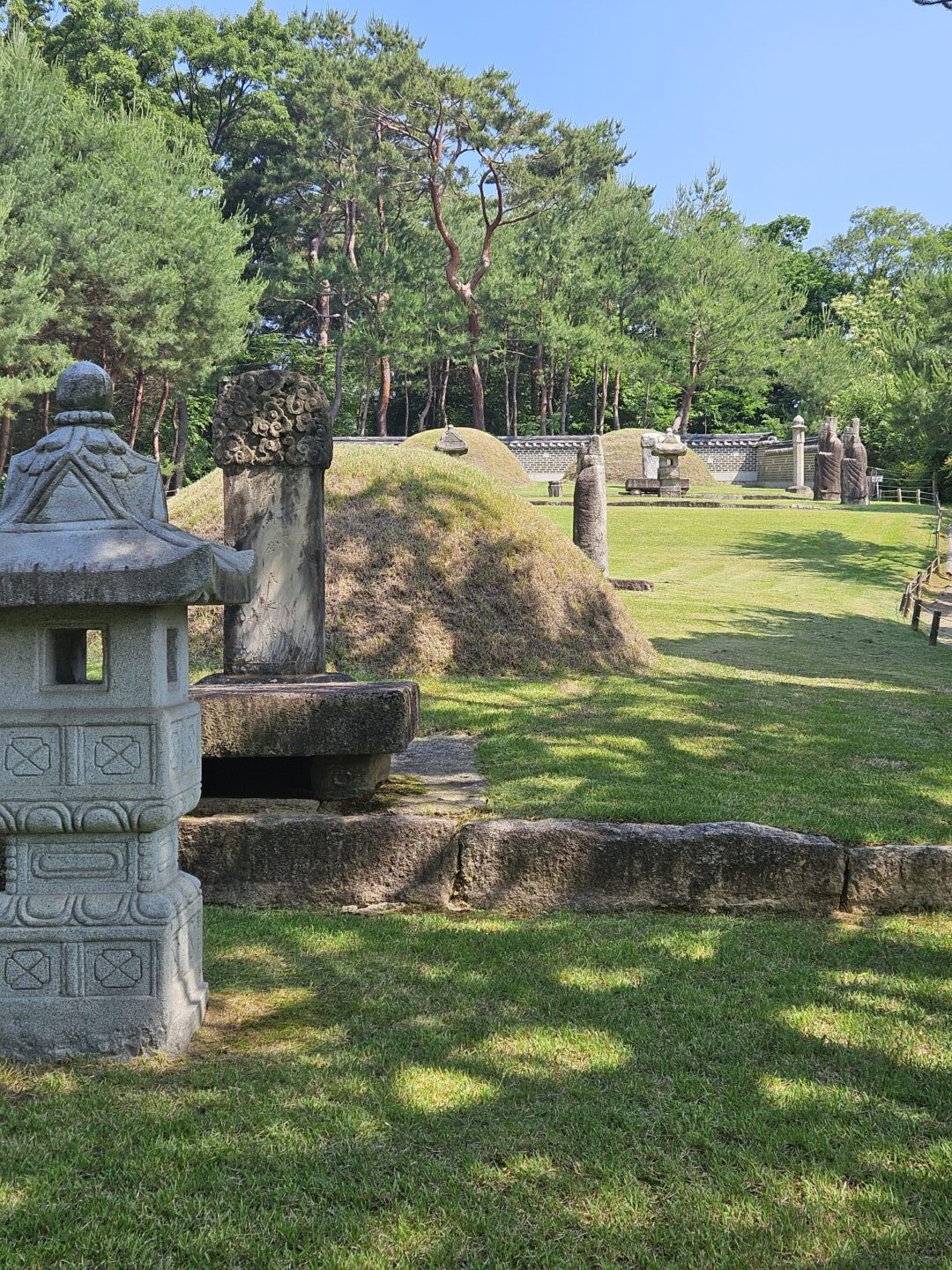
A Place That Almost No One Visits
Stand here for a few minutes and notice the quiet.
On a weekday morning, you may be the only person in the entire complex. No audio tour crackling through a speaker. No tour group moving in formation. No gift shop. The Joseon royal tombs listed as UNESCO World Heritage sites are beautiful — but they are also managed, curated, and crowded. This is not that.
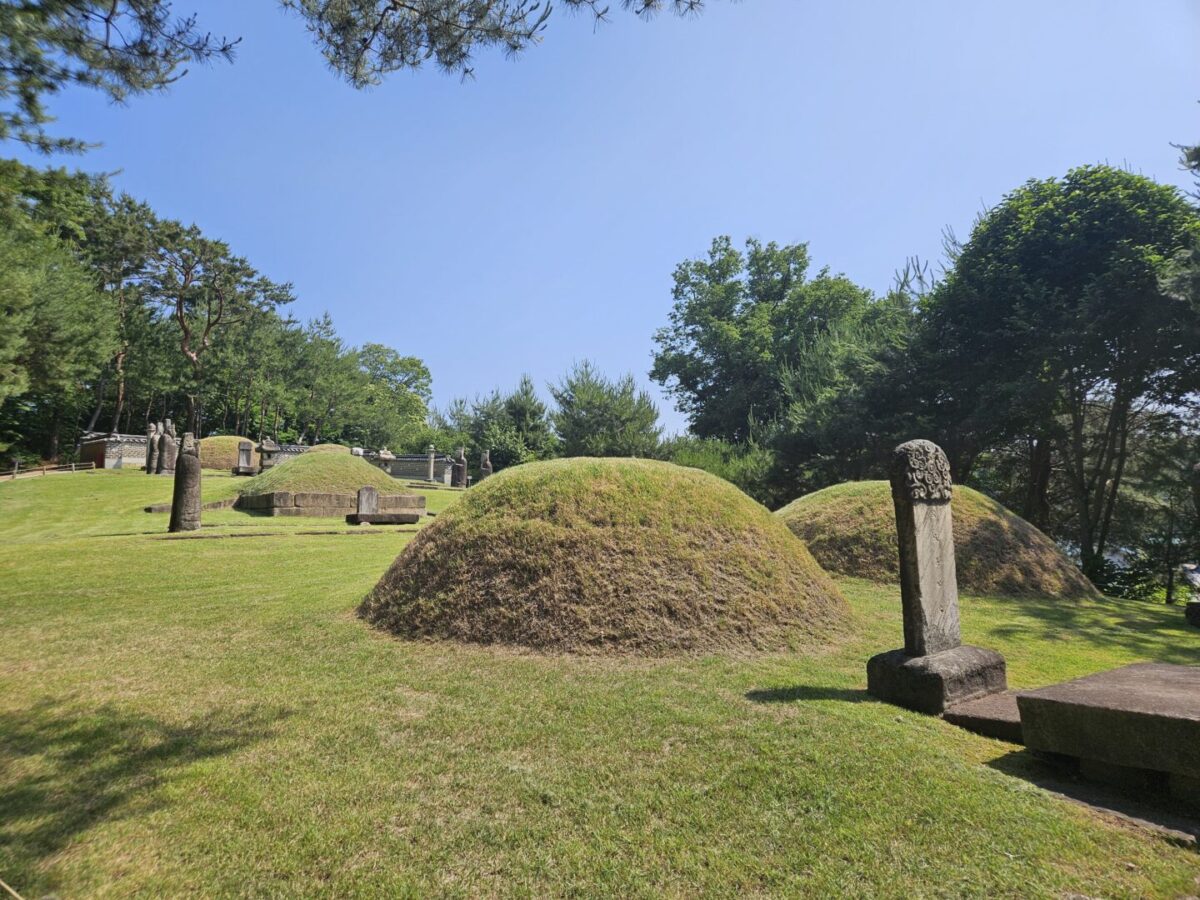
What you get instead is something rarer: the feeling of encountering history without intermediary. The grass mounds are just mounds. The stone figures are just stone. The tree is just a tree. Nothing is explaining itself to you or asking for your attention. You’re simply there, in a place that has been here for five hundred years, deciding for yourself what it means.
Somewhere nearby, a cat lives in the complex. It may or may not appear.
Visitor Information
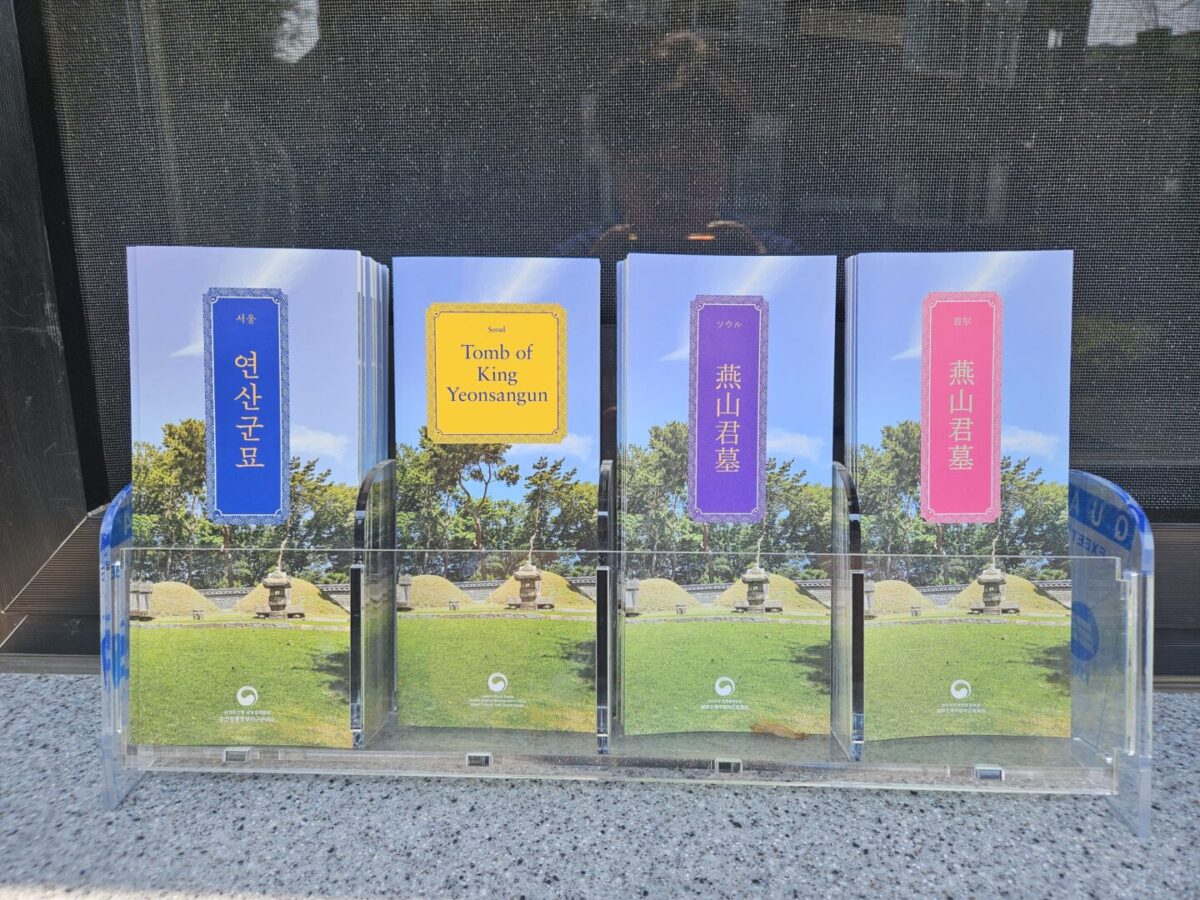
Address: 46 Banghak-ro 17-gil, Dobong-gu, Seoul (서울 도봉구 방학로17길 46)
Admission: Free
Opening Hours
| Period | Last Admission | Closing |
|---|---|---|
| Feb–May, Sep–Oct | 17:00 | 18:00 |
| Jun–Aug | 17:30 | 18:30 |
| Nov–Jan | 16:30 | 17:30 |
Closed every Monday.
Getting There (from Seoul Station)
Public transport is the only practical option — parking is extremely limited and the surrounding streets are narrow.
Step 1 — Subway: Take Line 1 from Seoul Station in the direction of Soyosan (소요산) or Uijeongbu (의정부). Ride directly to Banghak Station (방학역). No transfers needed. Journey time: approximately 35 minutes. Trains run every 10 minutes.
Step 2 — Walk or bus: From Banghak Station, you have two options.
- Walk: Exit and follow the signs toward 연산군묘. Approximately 12 minutes on foot.
- Bus 130: Board at the stop near Banghak Station and ride to the Tombs of King Yeonsangun and Princess Jeongui (연산군묘·정의공주묘) stop. The tomb entrance is a 3-minute walk from the bus stop.
Total travel time from Seoul Station: approximately 50 minutes.
How long to spend: 30–40 minutes is comfortable. If you want to sit with the ginkgo tree for a while, give yourself an hour.
Best time to visit: Early morning on a weekday. You will almost certainly have the place to yourself. The light through the pine trees before 9am is worth getting up for.
Official site: Cultural Heritage Administration
Before You Leave
On your way out, stop at the ginkgo tree one more time.
It was already here before Yeonsan-gun was born. It watched him become king. It was here when he was taken away and never came back. It has been standing in this spot — in what is now a residential neighborhood in one of the largest cities in the world — through all of it, saying nothing.
The apartments across the street were built in the 1990s. The tree does not appear to have noticed.
→ Want to understand the man buried here before you visit? Read the full story: [Yeonsan-gun: The Story Behind Korea’s Most Infamous King]