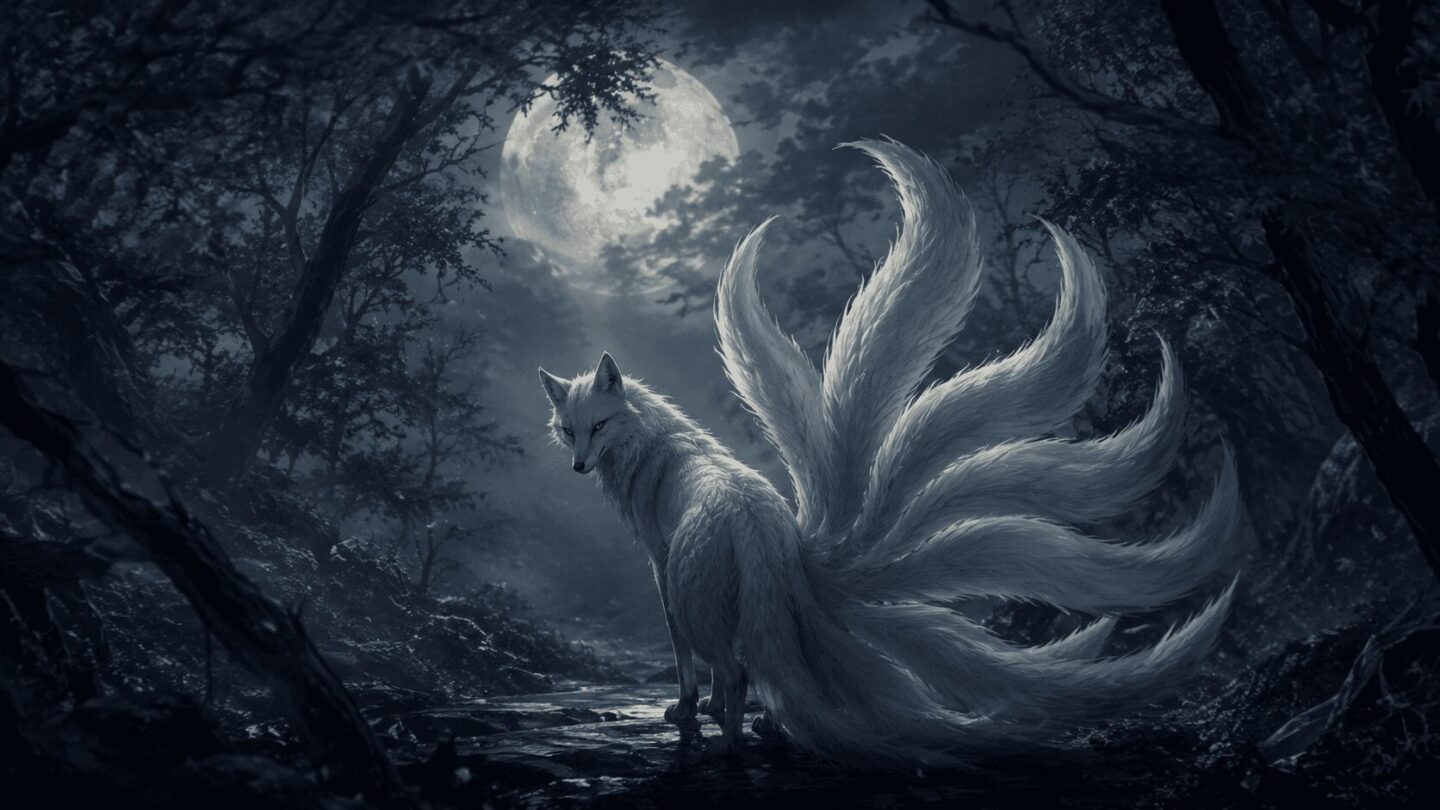
Gumiho: Korea’s Nine-Tailed Fox Is Not Who You Think She Is
You’ve seen her before.
She’s beautiful. Otherworldly. She wants nothing more than to be human — and somewhere between the longing and the deception, she falls in love with the man she was supposed to destroy.
That’s the Gumiho you know from K-dramas. From My Girlfriend Is a Gumiho. From Tale of the Nine Tailed. From League of Legends’ Ahri, who carries her fox-fire across international servers and into the bedrooms of teenagers who have never heard the word 구미호 spoken out loud.
But that Gumiho — the tragic, beautiful, lovesick one — is not the creature Korean children grew up fearing.
The real one is older. And she is much, much hungrier.

What She Actually Wants: The Liver
Here is the part the dramas leave out.
In traditional Korean folklore, the Gumiho does not want your love. She wants your liver.
This is not metaphor. The belief, passed down through oral tradition and folk stories for generations, was specific: the liver (간, gan) is where a person’s vital energy — their jeonggi (정기) — is concentrated. Not the heart. Not the soul in some abstract sense. The liver. The organ.
To become human, the Gumiho needed to consume one hundred human livers. One by one. And so she did what any apex predator with a thousand years of patience would do: she planned.
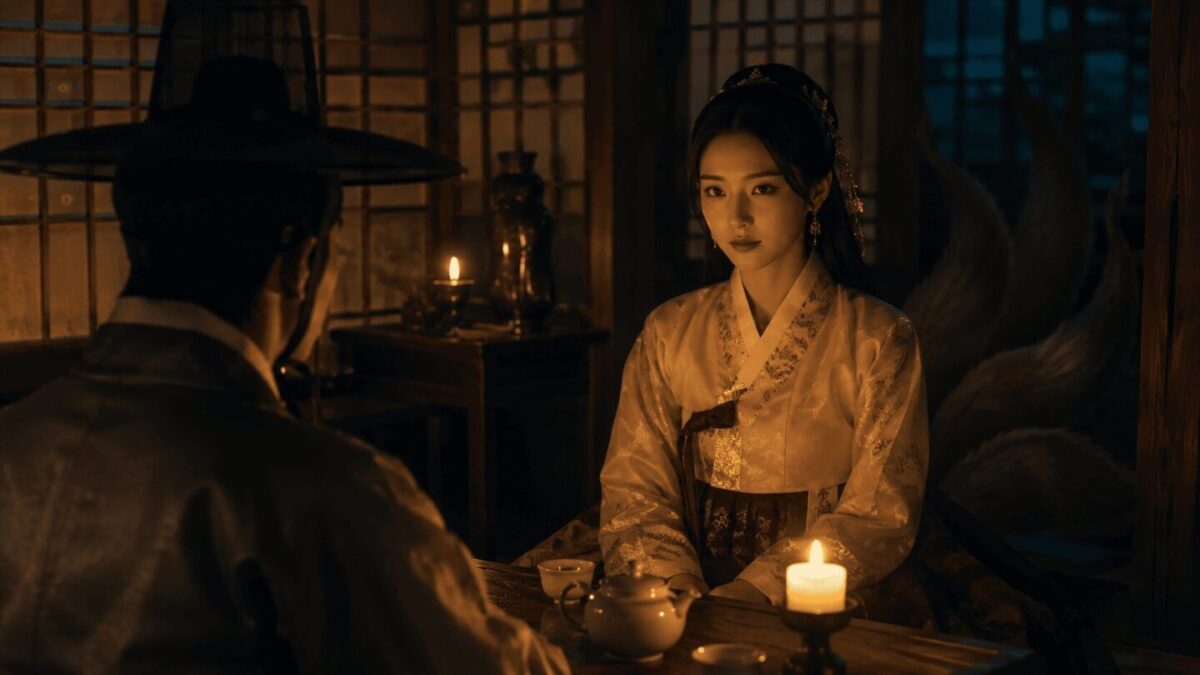
She would transform into a beautiful woman. Find a man. Earn his trust over days or weeks. And when the moment came — she would take what she came for.
This is not a love story. This is a hundred-day hunt.
The Fox Bead: A Thousand Years of Stolen Energy
Alongside the liver, there is the yeowu guseul — the fox bead (여우구슬).
Think of it as the Gumiho’s vessel. Every drop of human vital energy she absorbs — through the liver, through breath, through prolonged contact — accumulates inside this bead. It is the physical record of a thousand years of hunting. Concentrated power in a small, glowing sphere.
In some versions of the folklore, swallowing the fox bead could transfer its power to a human. Korean history remembers this too: stories circulated that scholars and officials of extraordinary talent — figures like Yi Hwang (이황) and Tojeong Yi Ji-ham (토정 이지함) — had swallowed a fox bead at some point in their lives, and that their brilliance came not entirely from their own effort.
The fox bead is not a romantic accessory. It is evidence.

Almost Human: How She Gets Caught
The Gumiho’s greatest power is also her greatest vulnerability: she looks exactly like a person.
Not almost. Not close enough to fool someone careless. Exactly. Her transformation is complete — the face, the voice, the warmth of her hands. She moves through the human world without friction, without suspicion, often for days or weeks at a time.
And then something gives her away.
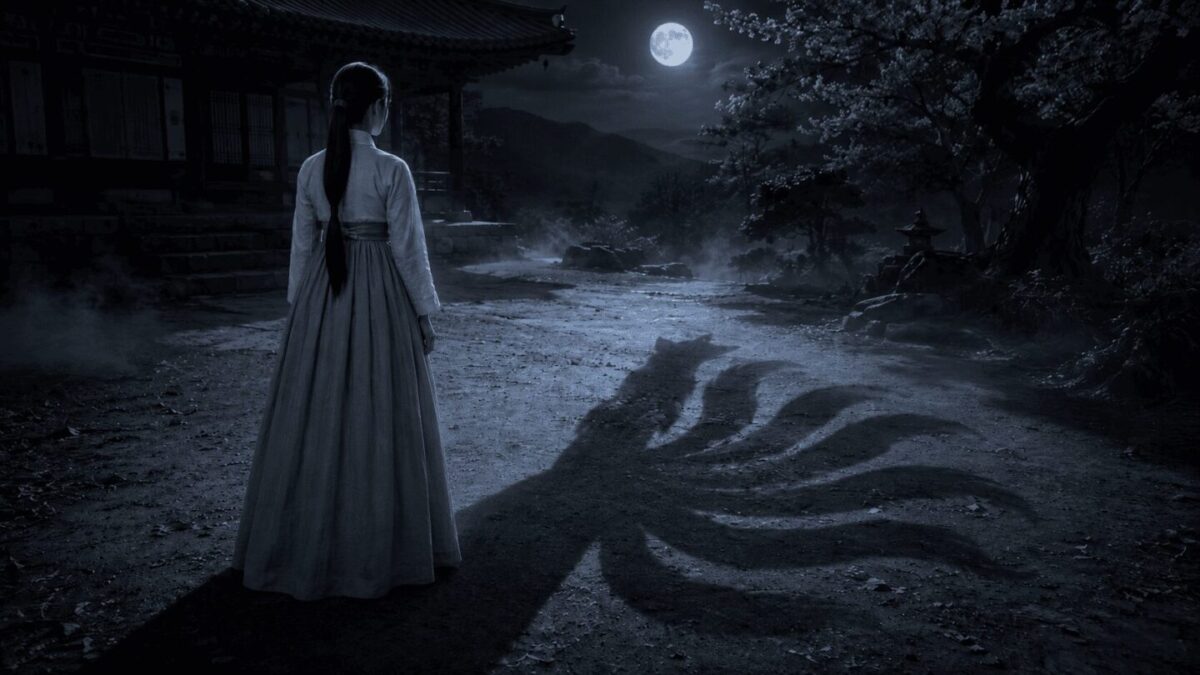
In traditional folktales, the moment of exposure comes differently each time. In one version, a hunting dog catches her scent — the animal instinct cutting through what human perception cannot. In another, a bride on her wedding day is unmasked only when her clothes are removed, the tails revealing themselves where they have been hidden beneath layers of fabric.
The pattern is consistent even when the details change: the disguise is perfect on the outside. But nature cannot be fully hidden. Something animal remains underneath — a smell, a shadow, a tail that was never quite gone.
This is where the real horror lives. Not in a monster that looks like a monster. In a monster that looks like your new wife. Your neighbor. The woman you’ve been talking to for a month who laughs at the right moments and never seems to eat very much.
Gumiho vs. Kitsune: Not the Same Fox
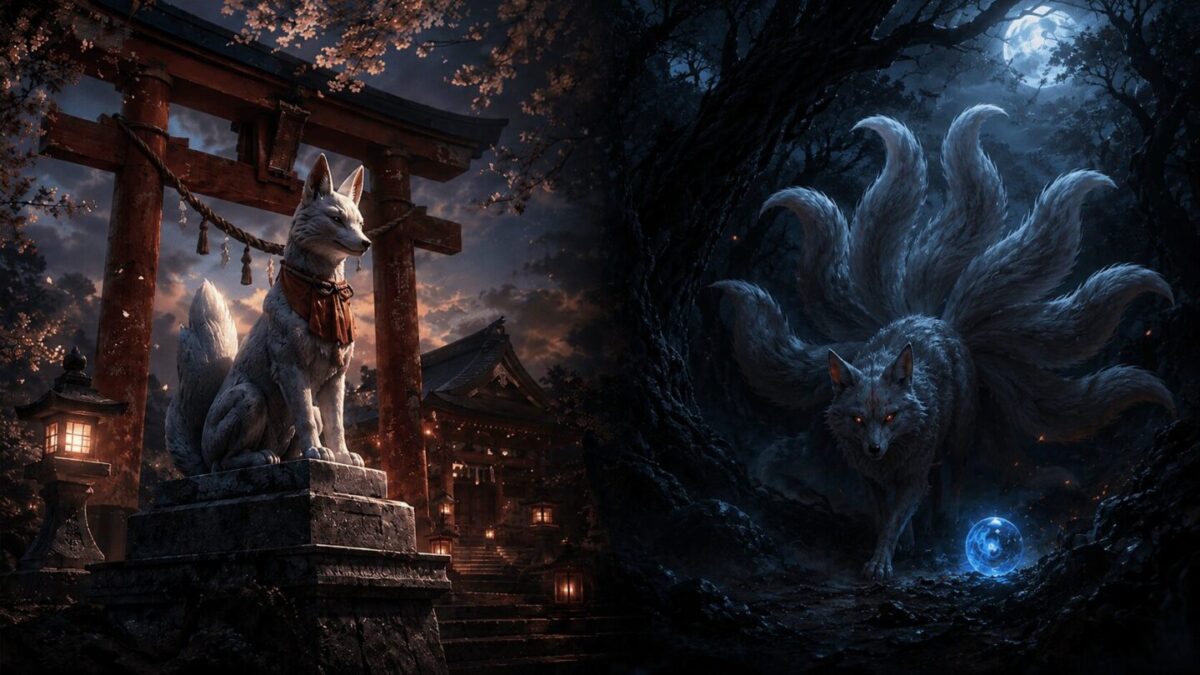
Western audiences often arrive at the Gumiho already knowing the Japanese Kitsune — and the two are easy to confuse. Both are foxes. Both have multiple tails. Both can take human form.
But they are not the same creature, and the difference between them says something important about how Korea and Japan imagined the relationship between the human and the supernatural.
The Kitsune, in Japanese tradition, is frequently a divine messenger — a servant of Inari, the god of rice and prosperity. Shrines to fox spirits exist across Japan. People pray to them. The Kitsune exists alongside humans, sometimes above them, as a being that has already earned its place in the spiritual order.
The Gumiho is trying to get in.
She is not worshipped. She is feared. And the hunger that drives her — the desperate, centuries-long effort to cross the line between fox and human — gives her a quality the Kitsune rarely has: she wants something she doesn’t have yet.
That wanting is what makes her dangerous. And, eventually, what makes her heartbreaking.
The Last Liver She Never Took
Here is the story that changes everything.
She had been hunting for a long time. Ninety-nine livers. Ninety-nine men. She was one away.
She found the hundredth. She did what she always did — transformed, approached, waited. But this time, something happened that was not part of the plan: she fell in love with him.
Not the practiced imitation of love she had used as a tool. Actual love. The kind that makes the plan feel like a betrayal.
And so she stopped.
She walked away from the hundredth liver. Walked away from a thousand years of work. From the human life she had been building toward since before most living things on earth had been born.
Korean children heard this story and felt something complicated — not quite sympathy, not quite grief, but something in between. She was the monster in the story. But she was also the one who gave up everything.
There is a word in Korean for a particular kind of sorrow: han (한). It describes grief that has no clean resolution — longing that cannot be satisfied, injustice that cannot be undone, loss that simply has to be carried. The Gumiho who walked away from her hundredth liver is one of the purest expressions of han in Korean folklore. She earned nothing. She lost everything. And she made the choice herself.

What the Dramas Did — And What They Found
The K-drama Gumiho is not a mistranslation. She is an amplification.
The longing was always there. The ambiguity between monster and sympathetic figure was always there. The tragedy of a creature caught between two worlds — always there, in the folklore, in the oral tradition, in the story of the liver she never took.
What the dramas did — and what games like League of Legends extended globally with characters like Ahri — was take the part of the Gumiho that Koreans already felt complicated about, and move it to the centre. The hunger was kept, but reframed as romantic. The tragedy was kept, but given a resolution the original story never offered.
She became beautiful in a way that erased the danger. Tragic in a way that invited sympathy without the discomfort.
But underneath that polished surface, the older story is still running. The one where she’s patient. Where she plans. Where she is not waiting for love — she is waiting for her hundredth liver.
And the reason the drama version works, the reason audiences around the world find her compelling, is because the original version already had everything it needed. Korea just took a thousand years to decide how to tell it.
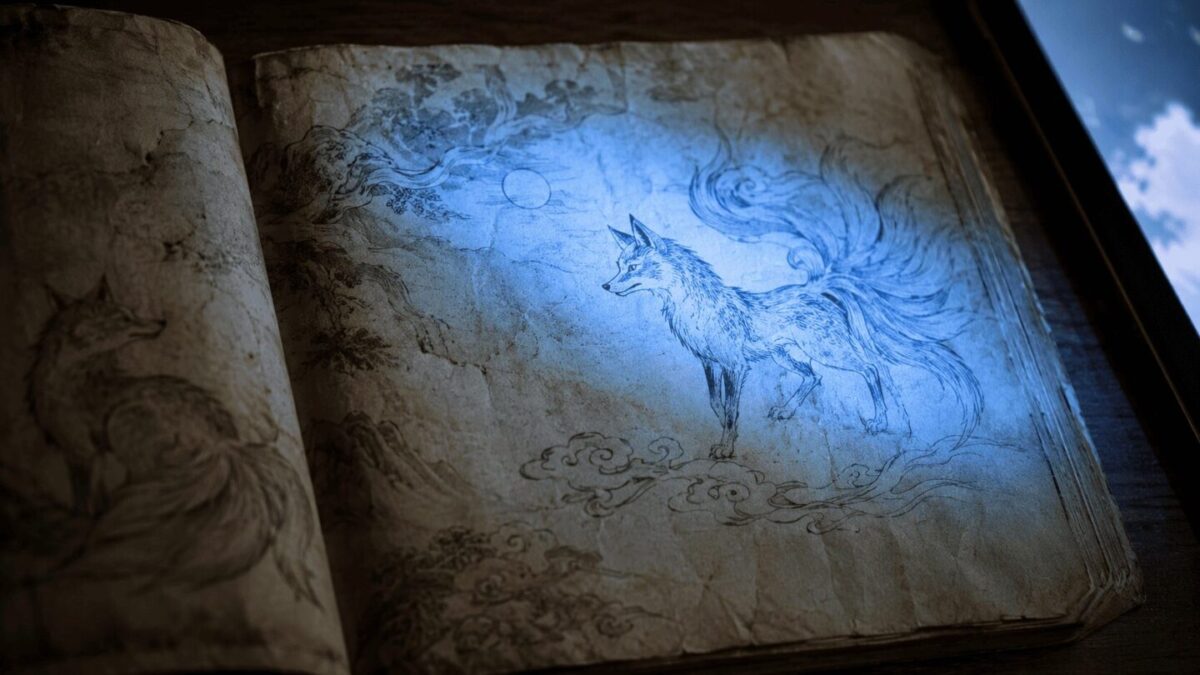
The Gumiho is just one thread in a much larger web of Korean supernatural belief. If you want to understand the world she inhabits, the Mudang — Korea’s shamanic spirit medium — is another place to start. [Read: What Is a Korean Mudang?]
She Isn’t Just a Monster
The Gumiho endures because she is not simply a horror story.
She is a creature who wanted something human beings take for granted — the right to exist as one of them — and spent a thousand years trying to earn it by the only means she knew. She is terrifying because she looks like you. She is heartbreaking because she wants to be you.
And in the version of the story that Korean children carried with them into adulthood, she was capable of something that no monster in Western folklore ever quite manages: she chose not to finish what she started.
Not because she was defeated. Not because she was caught.
Because she loved someone more than she wanted to become human.
That’s not the ending of a monster story.
That’s the ending of a Korean one.