What Does ~~~ Mean in Korean? A Korean Explains
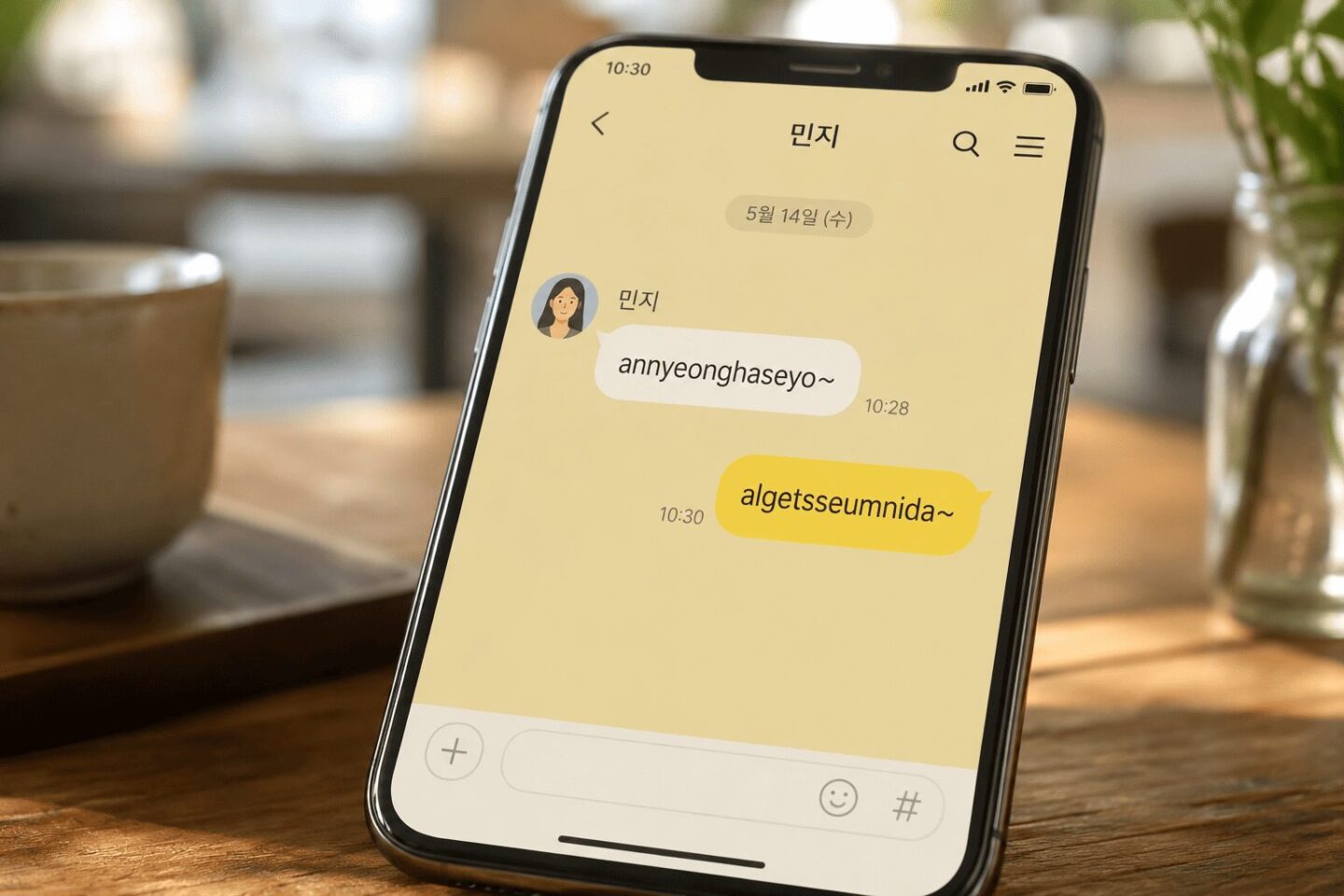
You’re watching a Korean drama. A character picks up her phone, types a reply to her coworker, and hits send.
algetsseumnida~
The subtitle reads: “Okay~”
You move on. But something was just said that the subtitle didn’t catch. A social signal so precise, so quietly loaded, that most Koreans couldn’t even explain it to you if you asked — because they’ve never had to. It just is.
That little wave at the end of the sentence — what does ~~~ mean in Korean, exactly? It’s not decoration. It’s not an emoji. It’s not a typo.
In Korean digital communication, ~~~ carries an entire layer of social meaning that no translation tool on earth has ever successfully captured. And the only way to understand it is to have someone who grew up inside it walk you through it.
So let’s do that.
It’s a Sound Written as a Symbol
Before anything else, you need to understand what ~ actually is in Korean.
Korean is a language where tone and length matter in speech — not in the tonal sense of Mandarin, but in the emotional sense. When a Korean person draws out a word, stretches it at the end, lets it linger in the air — that says something. It softens. It signals ease. It tells the other person: I’m not being stiff with you.
~~~ is that sound, written down.
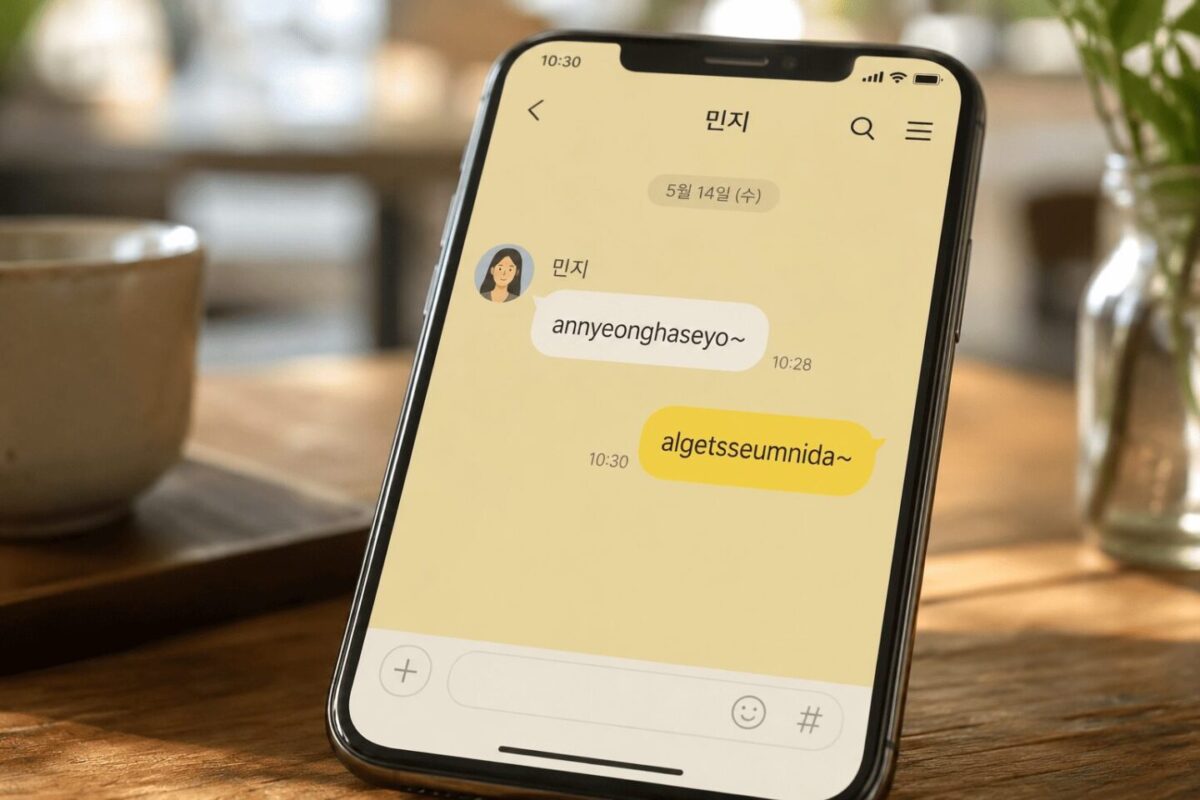
annyeonghaseyo~~~ doesn’t mean anything different from annyeonghaseyo. The words are identical. But it sounds like annyeonghaseyoooooo — the last syllable stretched out, voice rising slightly, landing gently. The kind of greeting you’d give someone you just met at a neighborhood potluck, or the first message you’d send when you join a new group chat and want to make clear you’re not here to cause trouble.
This matters because Korean has a very formal written register and a very informal spoken register — and they sit far apart from each other. ~~~ is one of the rare tools that lets written Korean sound like a human voice. It doesn’t change the words. It changes how the words feel.
The Social Map: Who Gets a Tilde?
Here is where it gets interesting. Because ~~~ is not for everyone.
In Korean social life, there is an invisible architecture of relationships — some closer, some more formal, some defined by hierarchy, some by familiarity. Where you sit in relation to another person determines almost everything about how you speak to them. And ~~~ has a very specific place on that map.
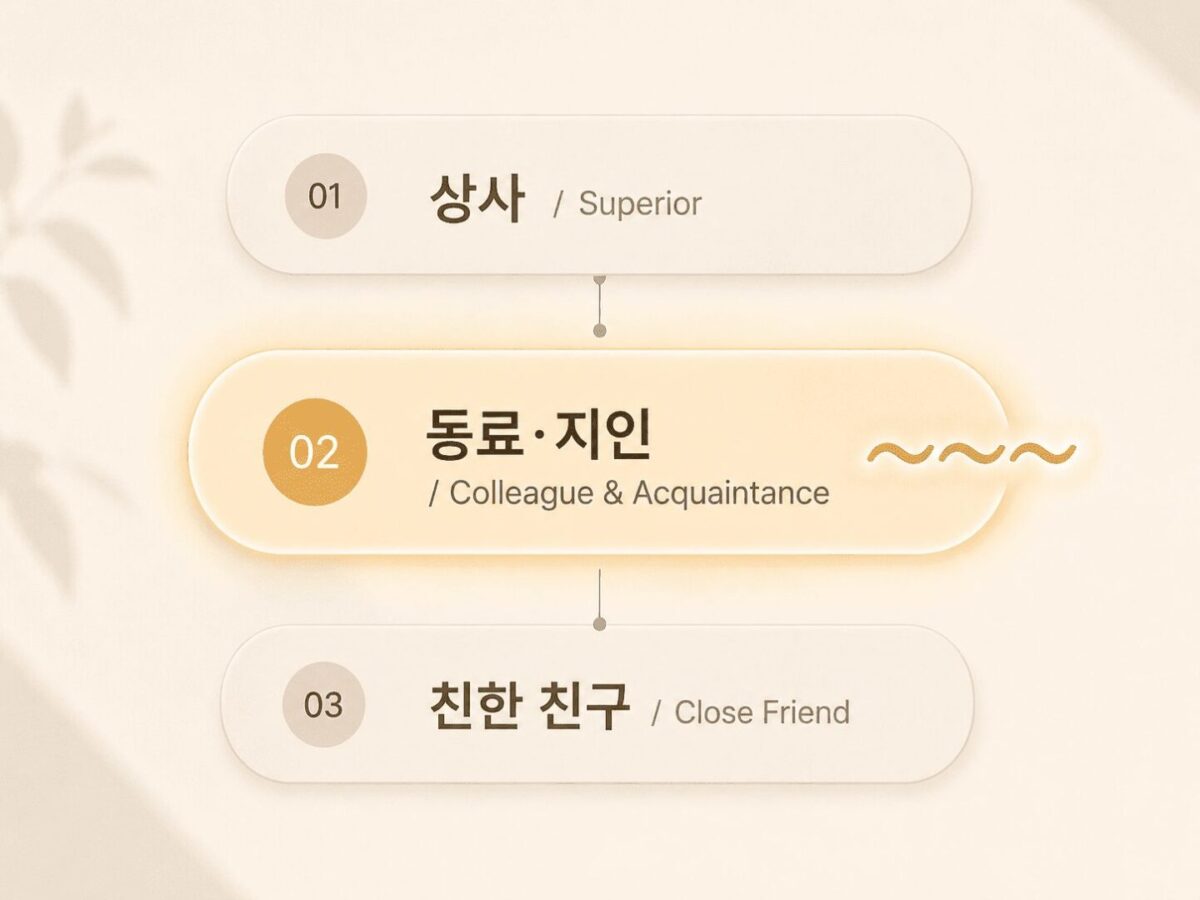
Close friends: No tilde needed. Between people who are genuinely close, ~~~ would feel oddly distancing — like adding a polite buffer where none should exist. If your best friend texted you algesseo~, you’d probably register, somewhere in the back of your mind, that something felt slightly off. Not wrong, exactly. Just… not quite right. Like they were being just a little too careful with you.
Colleagues, acquaintances, group chats: This is the tilde’s home territory. When you join a new group chat for a neighbourhood association, a hobby club, an alumni network — and you type your first message — annyeonghaseyo~ is almost automatic. It says: I’m friendly. I’m not a threat. I’m not treating this like a formal occasion, but I’m not assuming we’re already close either. It holds the middle ground perfectly.
Subordinates to superiors: Here, caution is required. If a junior employee sends their manager algetsseumnida~, it can read as slightly presumptuous — too casual for the direction of the relationship. It’s not always offensive. Context matters. In a big team group chat where the manager just announced something, a chorus of algetsseumnida~ from the team is perfectly normal. But as a direct, one-on-one reply from junior to senior? Many managers would notice. Some would mind.
Superiors to subordinates: Freely used. The same algetsseumnida~ that reads as presumptuous going upward reads as warm and approachable going downward. The tilde doesn’t change — the direction of the relationship does.
This is not a rule anyone teaches. No Korean child sits in a classroom and learns the social grammar of ~~~. They absorb it the way you absorb any unspoken social code: through repetition, through watching others, through the quiet discomfort of getting it slightly wrong and adjusting.
The Paradox: More Tildes, Less Warmth
Now here is the part that surprises even people who have been learning Korean for years.
You might assume that more ~~~ means more friendliness. More warmth, more softness, more ease. It seems logical. But Korean doesn’t work that way.
Look at this sequence:
| Message | Feel |
|---|---|
| algetsseumnida | Stiff. Formal. Cold. Borderline rude in casual contexts. |
| algetsseumnida~ | Natural. Warm. The right amount of ease. |
| algetsseumnida~~~ | Something else entirely. |
That third one — algetsseumnida~~~ — has tipped over into something different. The warmth is gone. What you’re hearing now is closer to: Yes, yes, I get it, I heard you the first time. It’s the written equivalent of a slow nod while someone is still talking. Patient on the surface. Less patient underneath.
The tilde stretches the sound. One stretch feels like a breath, a soft landing. But keep stretching — and the sound becomes something strained. Algetsseumnidaaaaaa said out loud would sound impatient, almost performative. algetsseumnida~~~ carries that same energy into text.
One ~ is a smile. Three ~~~ is a tight smile.
The Korean social ear is calibrated for this difference without anyone ever explaining it. Most Koreans, if you asked them right now, could not articulate this rule. They just feel it. And they would immediately feel the difference if you sent them the wrong one.
What Does ~~~ Mean to a Translation Tool?
Run algetsseumnida~~~ through any translation tool. Google Translate. Papago. DeepL.
Every single one will return something like: “All right.” Or “I see.” The tilde itself gets stripped away entirely. What’s left is a clean, neutral acknowledgment — no warmth, no edge, no subtext.
That’s technically not wrong. The words haven’t changed. But everything around the words — the social positioning, the emotional temperature, the faint edge of impatience — disappears completely. The translation captures the content and loses the signal.
This happens constantly in Korean digital communication. The language carries enormous amounts of social information in the way things are said, not just in what is said. Honorific levels, speech endings, the presence or absence of particles — all of these shift meaning in ways that don’t cross over into English.
~~~ is just the most visible example, because it’s literally a visible symbol sitting there on the screen. Foreign learners see it. They ask what it means. And they get the simple answer — it’s like stretching a word — which is true, but misses the half that matters.
The full answer is: it’s a sound, a social signal, and an unspoken code — all in one small wave.
The Part Koreans Never Think About
Here is something worth sitting with: most Koreans have never consciously thought about any of this.
The rules described in this article — who gets a tilde, how many is too many, when it reads as warm versus when it reads as impatient — are not things that get discussed. They are not passed down as advice. There is no moment where a Korean parent sits their child down and explains the social grammar of ~~~.
It accumulates. Through group chats, through watching how others respond, through the small social friction of getting it wrong without knowing you got it wrong. By the time a Korean person enters the workforce, this knowledge is already installed, invisible, operating quietly underneath every message they send.
That’s what makes it so hard to explain — and so easy to misread from the outside.
When a Korean person types annyeonghaseyo~, they’re not thinking about tildes. They’re just saying hello. The wave at the end isn’t a choice they’re making consciously. It’s the sound of the room, translated into text — a soft step forward into social space, careful not to land too hard.

A Note Before You Go
If you’ve made it this far, you now know something that most Korean language textbooks won’t teach you — not because it’s a secret, but because nobody thought to write it down.
In Korean, ~~~ is the kind of thing that lives between the lines: too small to be grammar, too important to be decoration. It’s the texture of Korean social life, showing up in every group chat, every workplace message thread, every first hello sent into a room full of strangers.
The next time you see it in a subtitle — or in a message from a Korean friend — you’ll know it isn’t just a wave.
It’s a whole conversation happening in three small curves.
Curious about other Korean expressions that don’t translate easily? Read: The Korean Proverb That Means “Speak of the Devil” →