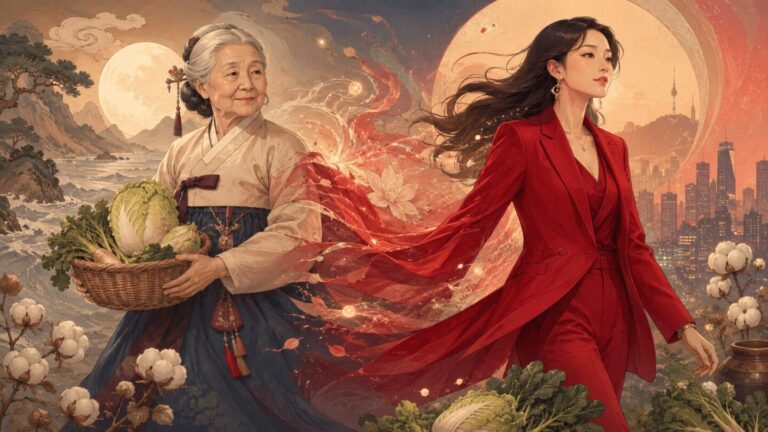
What Is the Korean Version of Yokai? Meet Korea’s Three Creatures
If you’ve spent any time around Japanese pop culture — anime, games, horror films — you already know the word yokai. The shape-shifting tricksters, the water-dwelling kappa, the long-necked woman who unspools her neck across the dinner table. Yokai are everywhere. They’ve become one of Japan’s most successful cultural exports.
So here’s a question worth asking: what is the Korean version of yokai?
The answer is yes — and the word is almost identical. Yokai is written 妖怪(hangul = 요괴) in Japanese. Korea uses the exact same two Chinese characters, 妖怪, and pronounces them yogoe. Same word. Same characters. Different pronunciation — the way Alexander and Aleksandr are the same name wearing different accents.
But here’s where it gets strange. Open up the Japanese yokai catalogue and the Korean one side by side, and almost nothing matches.
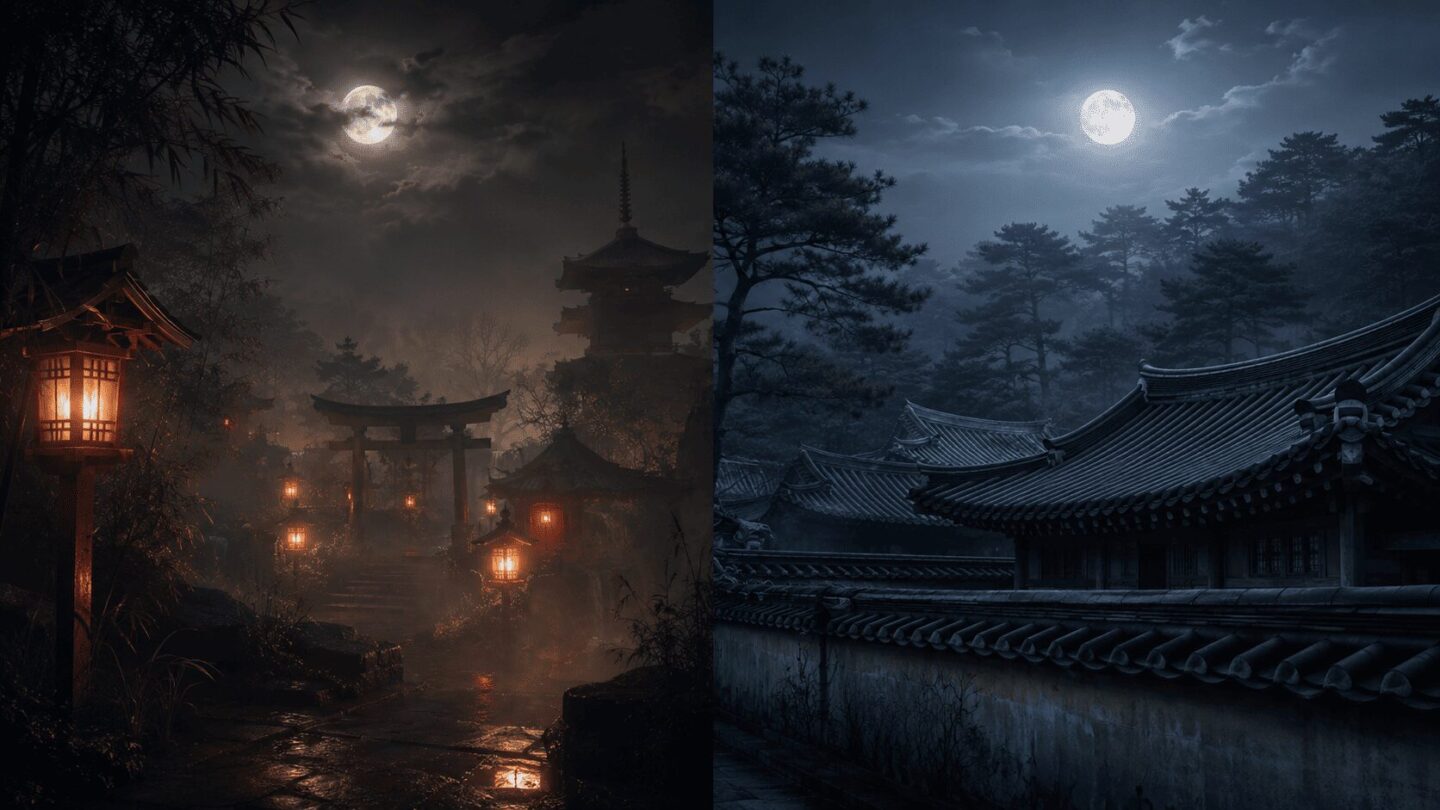
The Korean Version of Yokai Is a Different World
In Japan, the yokai world is a vast, sprawling spectrum. Some are terrifying. Some are mischievous. Some are oddly cute. The kappa is a water imp with a dish of liquid on its head. The rokurokubi is a woman whose neck stretches impossibly long at night. The tengu is a winged mountain spirit. They number in the hundreds, and they range across every possible emotional register — horror, comedy, melancholy, whimsy, all mixed together.
Korea’s creatures don’t work like that.
A Korean person looking at the Japanese roster doesn’t usually feel a flicker of recognition. There’s no Korean kappa. No Korean rokurokubi. No Korean tengu. These are simply not part of the Korean imagination. And the reverse is true too — some of Korea’s most defining creatures have no Japanese equivalent at all.
But the deeper difference isn’t the roster. It’s the structure.
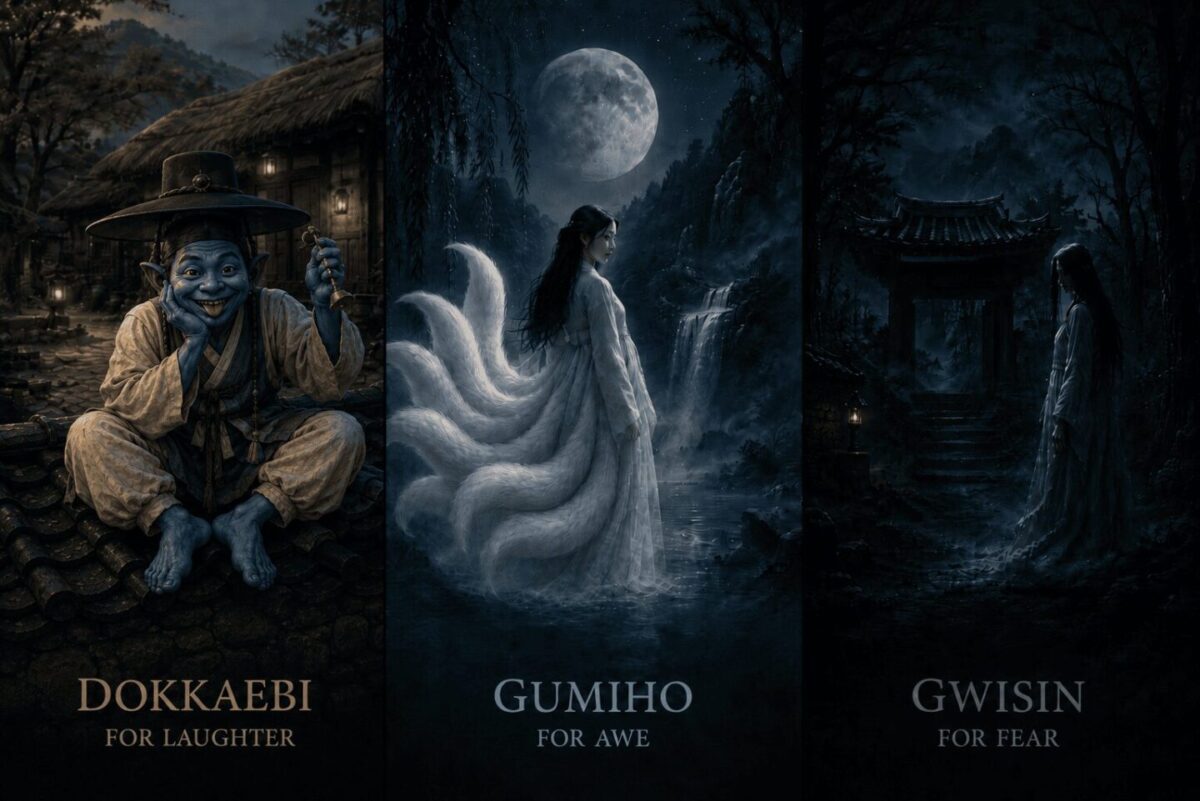
Where Japanese yokai blend horror and humor and cuteness into a single chaotic spectrum, Korean creatures are sorted. Each one occupies a distinct emotional lane. One is for laughter. One is for awe. One is for fear. They don’t overlap, and a Korean person feels exactly which is which without ever being taught.
Let me introduce all three.
Dokkaebi — The One That Makes You Laugh
Ask a Korean to picture a dokkaebi and you will not get fear. You’ll get a children’s cartoon theme song.
There’s a beloved Korean nursery rhyme about a dokkaebi’s underwear — how wonderfully stretchy it is, how tough and durable. There are cheerful animated shows. For most Koreans, the dokkaebi is a figure from childhood, closer to a Pokémon character than a monster. It’s a trickster: playful, a little chaotic, fond of games and riddles and mischief, but fundamentally not something you’d be afraid of.
This is genuinely hard to explain to someone outside Korea, because the closest visual cousin — the Japanese oni, a horned, club-wielding ogre — actually is frightening. The dokkaebi sometimes gets drawn with horns and a club too, which makes the confusion worse. But the emotional reality is completely different. The oni is a threat. The dokkaebi is a personality.
If the yokai spectrum has a “fun” end, the dokkaebi lives there permanently — and alone, because in Korea, fun and fear don’t mix in a single creature.
→ Want the full story? Read: The Real Dokkaebi: Korea’s Trickster Spirit Is Nothing Like the Drama
Gumiho — The One That Commands Awe
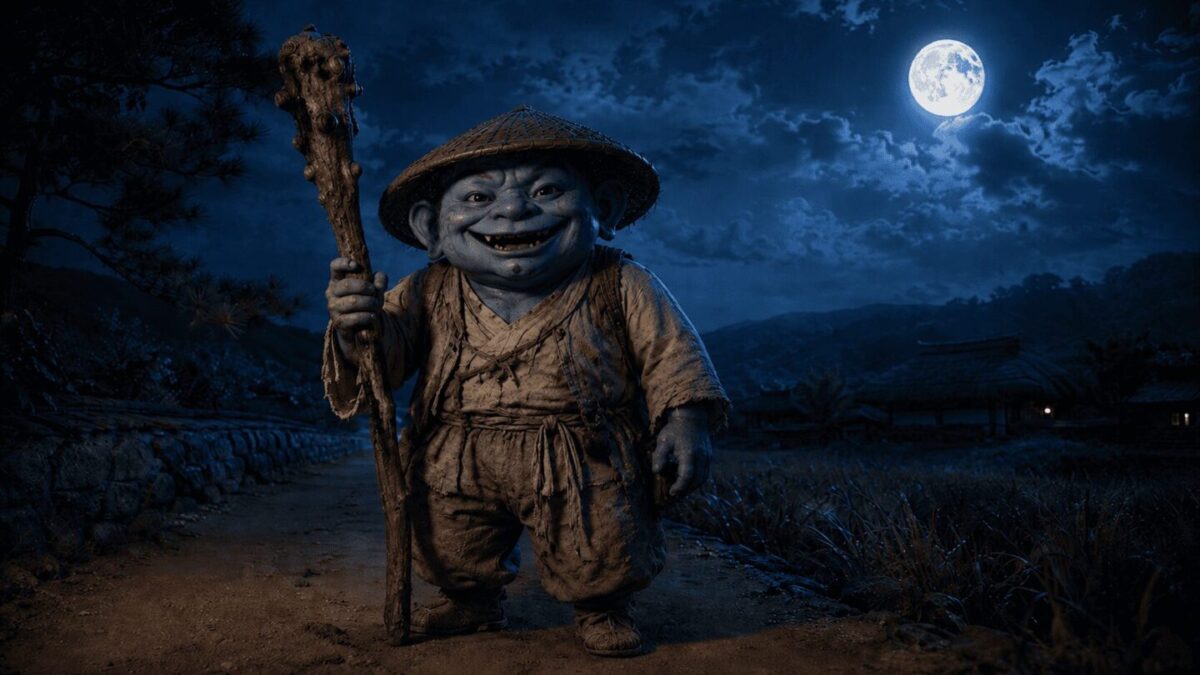
The gumiho — the nine-tailed fox — sits at the opposite end of the power scale.
Here’s the interesting part: even though the gumiho is dangerous, even though the old tales have her devouring human livers and draining people’s vital energy, most Koreans don’t describe her as scary. They describe her as powerful. Magnetic. The kind of creature that commands awe rather than terror.
If Korean folklore were a video game, the gumiho would be a final boss — an apex-tier entity, beautiful and lethal, the one whose presence changes the whole atmosphere of a story. You don’t feel the cheap jolt of a jump-scare around a gumiho. You feel the weight of something far more powerful than you, deciding whether or not it’s interested in you.
She’s also almost always female, and that’s no accident — it connects to a long history of how Korean culture has tied together beauty, danger, and the feminine. That’s a whole story of its own.
→ Want the full story? Read: Gumiho: Korea’s Nine-Tailed Fox Is Not Who You Think She Is
Gwishin — The One That Actually Frightens
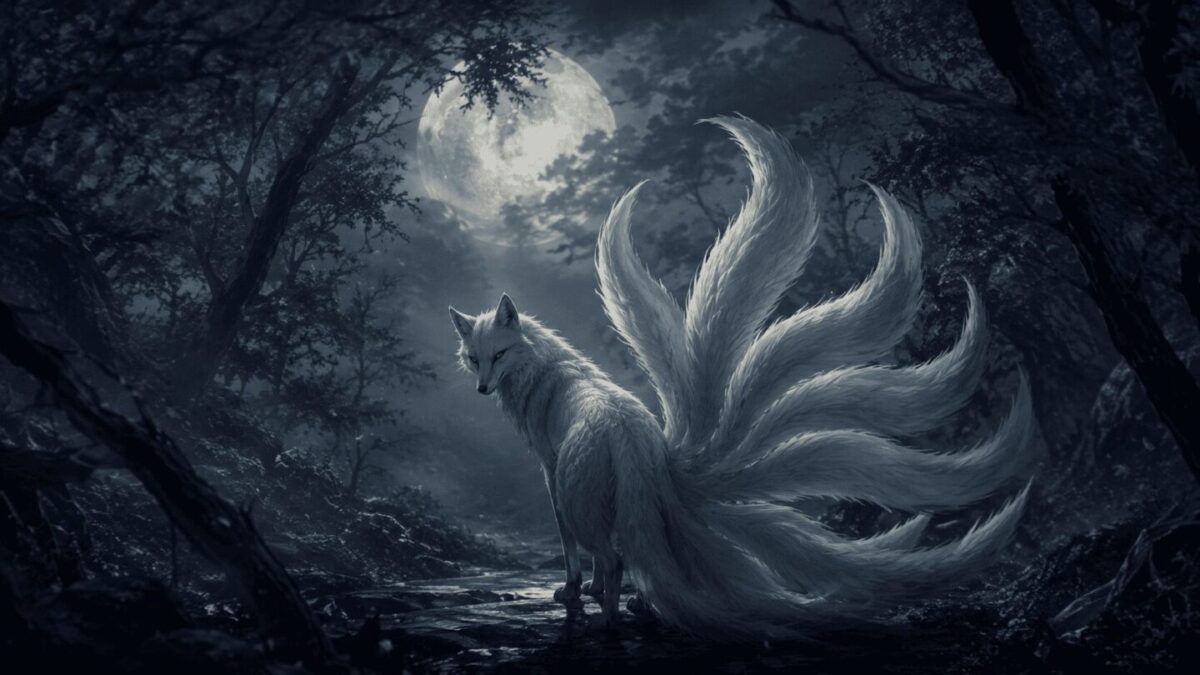
And then there’s the gwishin — the ghost. This is the only one of the three that delivers genuine, spine-cold fear.
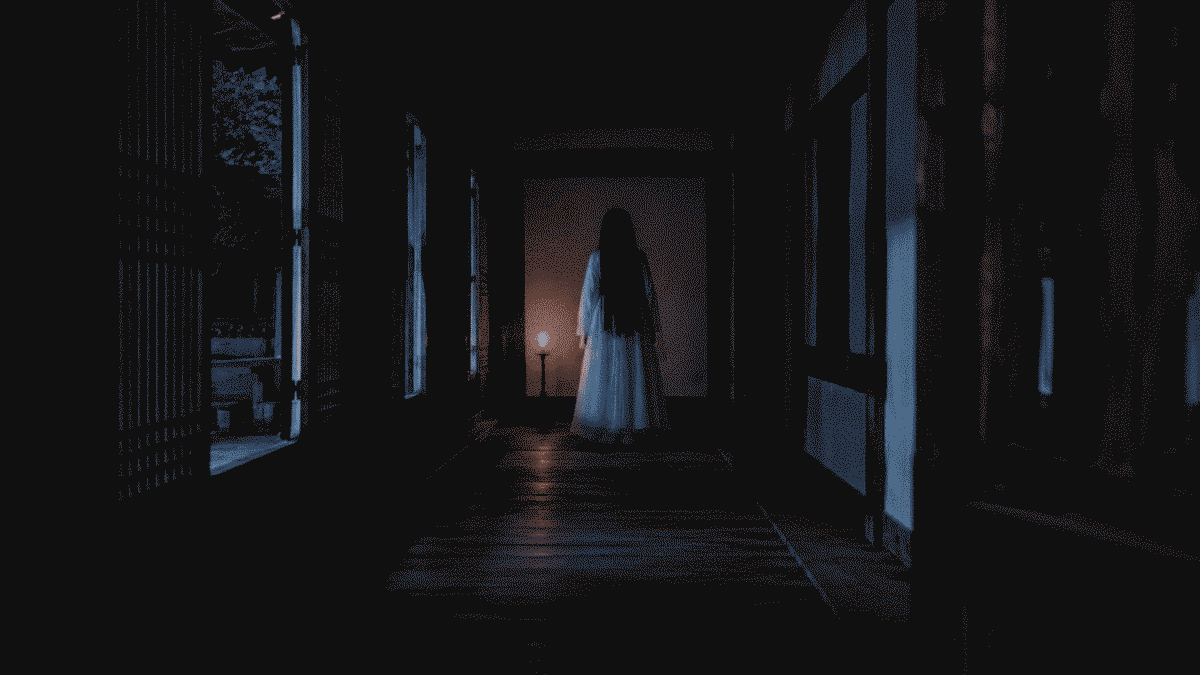
When a Korean hears the word gwishin, the image that surfaces is the one from horror films: the long black hair, the white burial clothing, the figure standing too still at the end of a dark hallway. No playfulness, no magnetism. Just dread.
But here’s what makes the Korean ghost fundamentally different from a Japanese yokai: the gwishin is not frightening because of what it is. It’s frightening because of what happened to it.
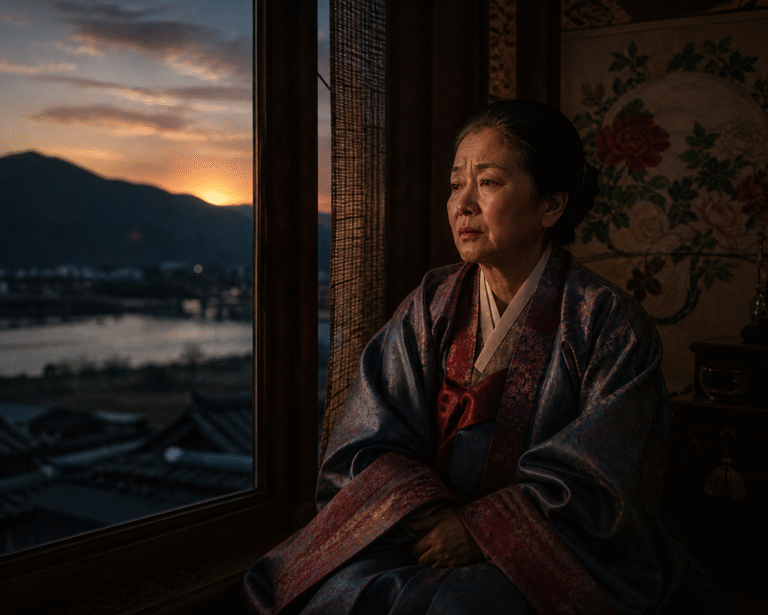
A gwishin is almost always someone who died with unfinished business — a death soaked in injustice, grief, and unresolved resentment. In Korean, there’s a word for this emotional state: han, a deep, accumulated sorrow and grievance that has nowhere to go. A gwishin is han given a body. The horror isn’t in fangs or claws. It’s in the story behind the eyes.
The clearest example is the mulgwishin, the water ghost. Korean children grow up hearing that if you see a dark, head-shaped object drifting on the surface of a lake or river or sea, you must never go near it. The water ghost is someone who drowned in bitterness, and its hunger is desperate and specific: I couldn’t move on like this — so you’re coming with me. It doesn’t want to scare you. It wants company in its grief. That’s so much worse.
→ Want the full story? Read: Why Is the Korean Ghost Always a Woman?
Why Korean Horror Cuts Differently
This is the heart of it. The reason Korean creatures feel different from Japanese yokai isn’t the costumes or the catalogue. It’s the source of the fear.
A great many Japanese yokai are frightening — or funny, or strange — because of what they are. Their form is the point. A long neck, a dish of water, a mountain spirit’s wings.
The Korean gwishin is frightening because of what was done to it. Strip away the white clothing and the black hair and you’re left with a person who was wronged and could not let go. The supernatural is just the container. The real horror is human — injustice, grief, a debt that was never paid.
This is why han sits underneath so much of Korean storytelling. It’s in the ghost stories, yes, but it’s also in the films, the dramas, the music. Korean horror rarely asks what is that thing? It asks what happened to make it this way? — and that question is far harder to shake.
So Why Haven’t You Heard of Them?
If Korea has such a rich and distinct cast of creatures, why does the world know yokai but not yogoe?
The honest answer is exposure. Japan turned its yokai into one of the great cultural export engines of the last century — through manga, through anime, through video games. Yokai were animated, given faces and movement and personality, and shipped across the world to people who would never read the original folktales. The medium was perfect for the material.
Korea simply didn’t have that channel for most of that period. Korea has never been an animation powerhouse the way Japan has, and its supernatural creatures stayed mostly inside Korean-language stories, untranslated and unseen abroad.
But that’s changing. K-dramas have started doing for Korean folklore what anime did for yokai — putting gumiho and dokkaebi and gwishin on screens around the world. The creatures were always here. They’re just finally getting their passport.
A Note Before You Go
So — what is the Korean version of yokai?
The word is yogoe, written with the very same characters as the Japanese 妖怪. But the answer the question is really fishing for isn’t a vocabulary match. It’s an understanding that Korean creatures are organized differently: the dokkaebi for laughter, the gumiho for awe, the gwishin for fear — each in its own clean lane.
And underneath the scary one, always, sits han — that uniquely Korean weight of unresolved sorrow. To understand Korean creatures, don’t reach for the yokai frame. Reach for the feeling first. In Korea, a monster isn’t a shape. It’s an emotion that couldn’t rest.