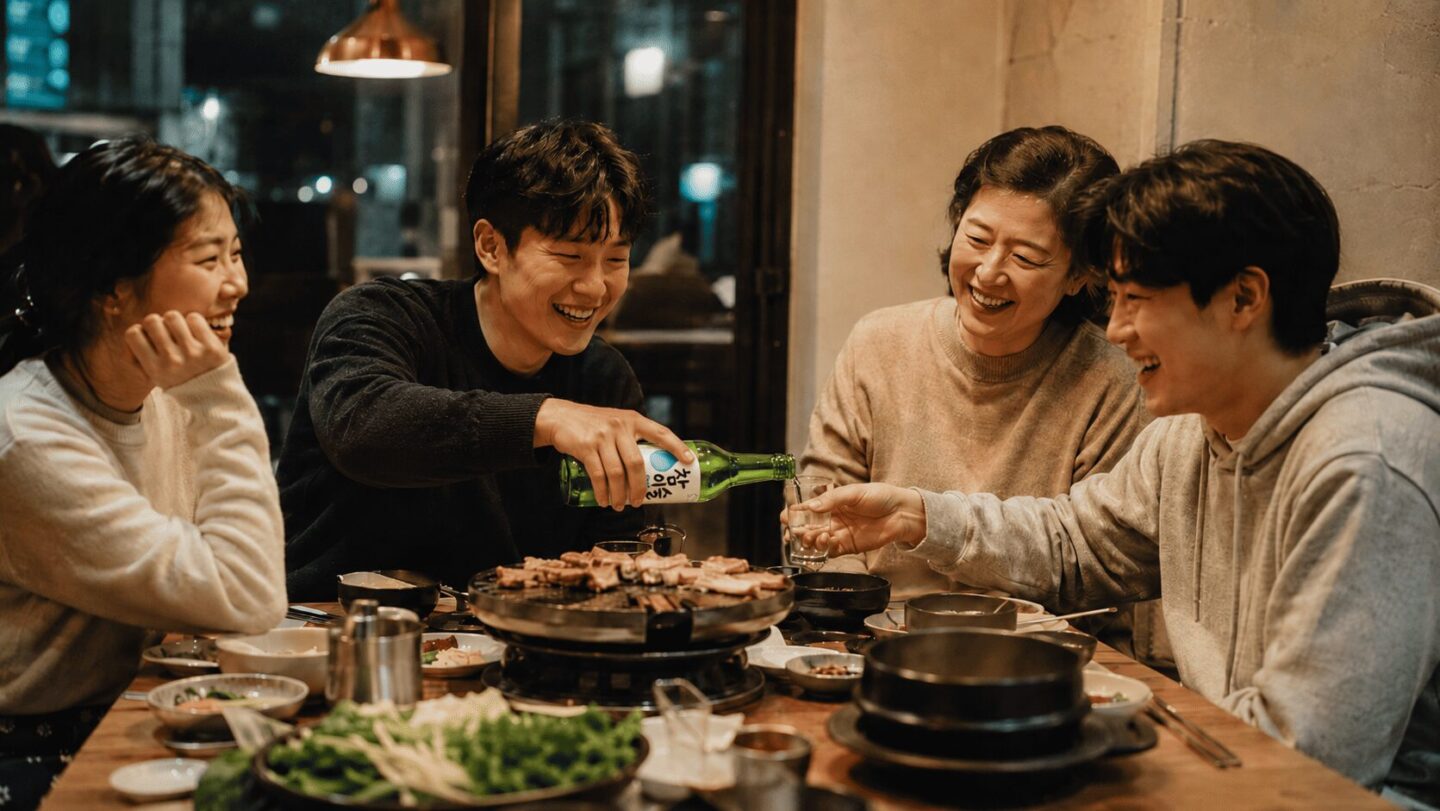
Why Koreans Ask Your Age Before Your Name
Imagine this. You start a part-time job in Korea. There’s a new coworker who looks a little younger than you, so without really thinking about it, you start talking to them the way you’d talk to someone younger — casual, relaxed, maybe a little bit like a big sibling.
Three days later, it comes out that they were born two years before you.
Now you have to quietly walk back the way you’ve been talking to them, because in Korea, you’ve had the hierarchy backwards this whole time. They’re not your junior. You’re theirs.
If that sounds dramatic for a workplace where you just stack shelves together, that’s the part outsiders usually miss. What people call Korean age isn’t small talk. It’s the thing that quietly decides how two people are supposed to speak to each other — and people sort it out early, on purpose, because getting it wrong is genuinely awkward.
Here’s the strange twist, though: figuring out a Korean person’s age is harder than it sounds, and not only because of culture. Koreans have famously argued about their own ages for generations — because until very recently, one person could honestly be three different ages at the same time.
Let me explain. And at the end, there’s a calculator so you can find out exactly how old you’d be in Korea.
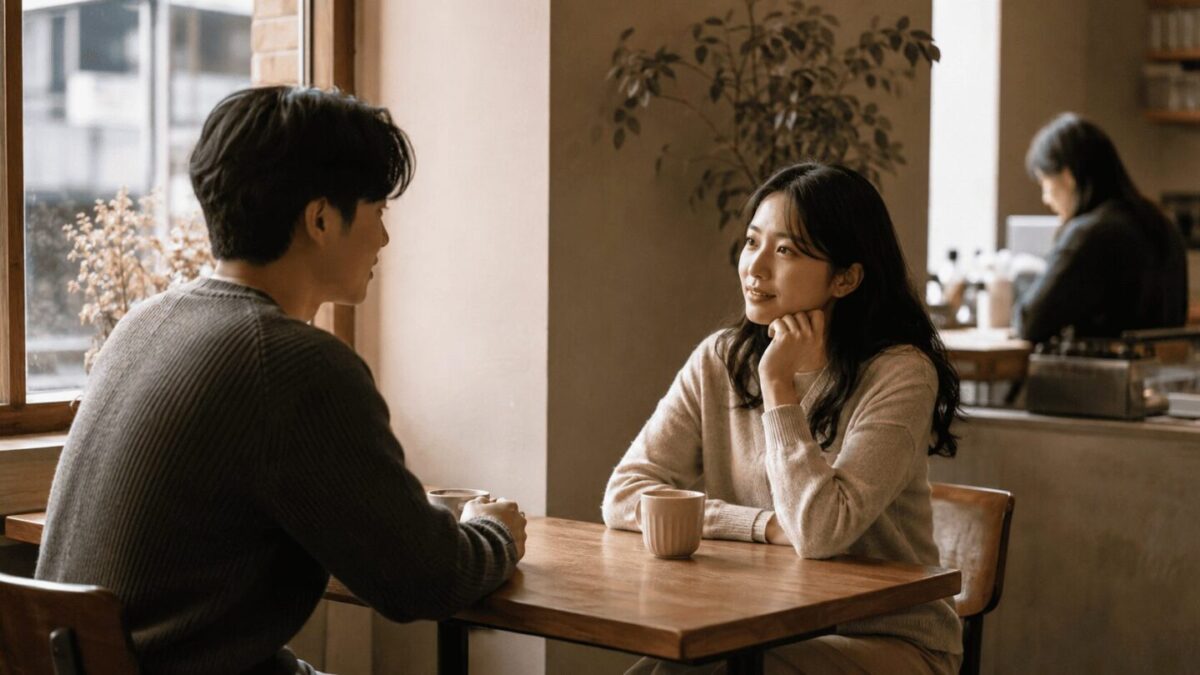
In Korea, Your Age Is Basically Your Rank
In a lot of Western cultures, asking someone’s age — especially early — can feel rude, even invasive. In Korea, it’s closer to a handshake.
That’s because age in Korea isn’t just a fact about your body. It sets the rank between two people. Think of it less like a birthday number and more like a rank in the military: once two people know who’s older, a whole set of unspoken rules clicks into place about who speaks casually to whom, who defers to whom, who’s expected to look out for the other.
This shows up most clearly in what people call each other. An older person becomes a hyeong or eonni or oppa or nuna — different words for “older brother” and “older sister” depending on the speaker’s own gender — and these words get used constantly, even between friends who aren’t related at all. The younger person becomes, in a sense, the junior. None of this is hostile. If anything, it’s the opposite: the older one is expected to take care of the younger one, pick up the check a little more often, look out for them. But the roles have to be assigned first. And they can’t be assigned until everyone knows the ages.
So when two Korean people meet and one of the very first things that comes up is “what year were you born?” — they’re not being nosy. They’re doing the social equivalent of figuring out who outranks whom, so that nobody accidentally speaks to a senior the way they’d speak to a junior. Get it wrong, and it’s not a disaster, but it’s a small, real social stumble — the kind that makes both people wince a little.
You might be thinking: every culture has age. Everybody gets older. What’s so different here? The difference isn’t that Koreans have age — it’s that age in Korea comes with a built-in instruction manual for how to treat the person in front of you. The number isn’t trivia. It’s a role.
So They Just… Ask
Here’s the practical problem that makes this even more interesting: Koreans often genuinely can’t tell.
Korea is full of people who look much younger than they are — it’s almost a national stereotype, and Koreans say it about each other constantly. So you can’t reliably eyeball it. You can’t just look at a new coworker and know whether they’re your senior or junior. And because getting the hierarchy right matters, the most efficient solution is also the most direct one: just ask.
This is why, to a foreigner, Koreans can seem weirdly upfront about age. It’s not nosiness. It’s that the question has a real function — it resolves an ambiguity that actually affects how the conversation is going to work from this point on. Among men especially, not sorting it out can leave things stuck in a strange, stiff limbo, where neither person knows quite how casual they’re allowed to be. Settling it is a relief. Once the ages are on the table, everyone relaxes, the right words snap into place, and the friendship can actually start.
(One honest caveat from inside the culture: this plays out more freely among men. Asking a woman her age directly can still land as too forward, so people often find softer, more roundabout ways to get there. The underlying need — figure out the ranking — is the same. The bluntness just gets dialed down.)
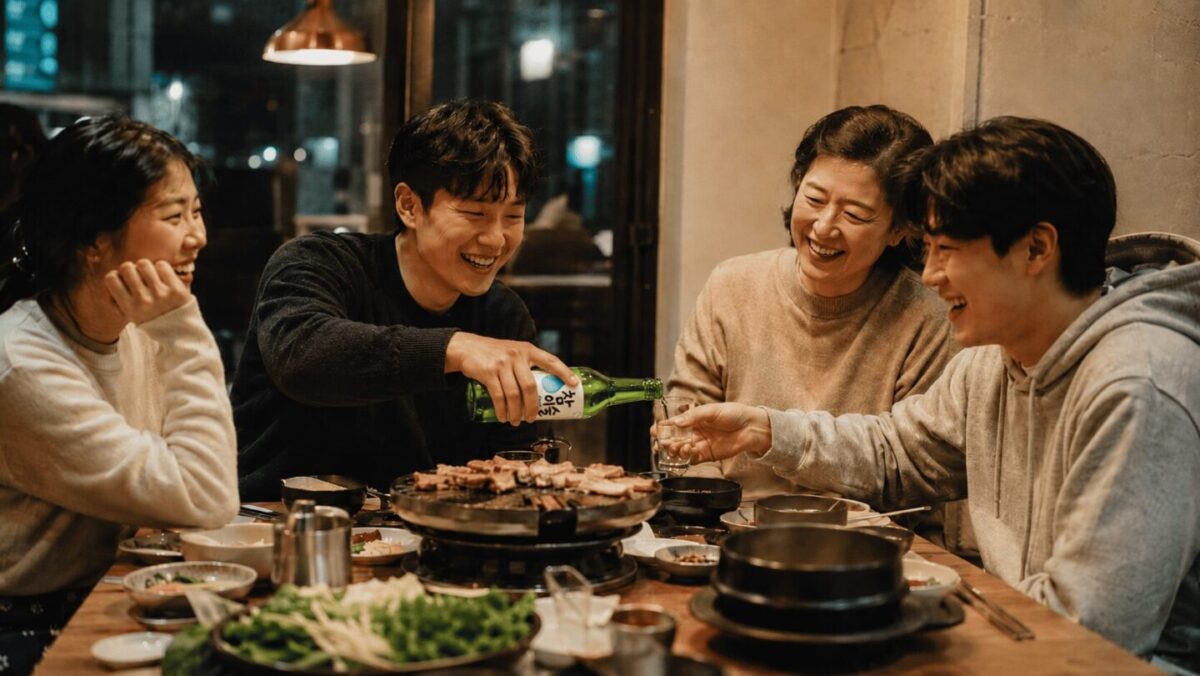
So How Old Are You in Korea? (Three Answers)
Now the part that has confused Koreans themselves for generations. Until 2023, a single person in Korea could correctly be called three different ages at the same time, depending on which counting system you used.
Here they are, in plain terms.
International age is the one the whole world uses. You’re zero on the day you’re born, and you tick up one year on each birthday. Nothing surprising here — it’s just “how many full years have you actually lived.”
Korean age (saeneun-nai, the “counting age”) is the traditional one, and it’s the source of most of the confusion. Under this system, you’re one year old the moment you’re born — not zero — and then everyone in the country ages up together on January 1st, regardless of when their actual birthday is. So a baby born on December 31st is one year old that day, and two years old the very next morning, on New Year’s Day, despite being two days old. This is the age Koreans traditionally use in daily life, and it’s the number behind all that hierarchy we just talked about.
Calendar age (yeon-nai) is a middle option that a few specific laws use — mainly things like military service and youth-protection rules. You’re zero at birth, but you still age up for everyone on January 1st instead of on your birthday. It’s basically “this year minus your birth year.”
If your head is spinning a little, that’s the whole point — this genuinely tripped up Koreans too, which is exactly why the law finally changed. But the math itself is simple once you see it. Rather than work it out by hand, just drop your birth date in here:
Novus Korea
How old are you in Korea?
Enter your date of birth. We’ll show all three ages Koreans actually use.
Korean age (세는나이)
International age (만 나이)
Calendar age (연 나이)
Since June 2023, South Korea uses international age for all legal and official purposes. Korean age (세는나이) still rules everyday social life — who’s older, who’s younger, and who calls whom what.
A quick note on what you’ll see: your Korean age will always be the biggest number. It’s either one or two years higher than your international age — two if your birthday hasn’t arrived yet this year, one if it already has. That two-year gap is the maximum possible, and it’s why someone born in late December can feel like they “lost” almost two whole years overnight when the rules changed.
The Law Changed. The Habit Didn’t.
In June 2023, South Korea did something it had been debating for decades: it officially scrapped the confusing patchwork and declared that international age is now the standard for all legal and official purposes. Overnight, on paper, millions of Koreans technically became a year or two younger.
It made a lot of practical sense. The old system created real headaches — medical records, contracts, legal documents, and forms had quietly been drifting between different age systems for years, and tidying that up was overdue.
Here’s a footnote most explainers skip: South Korea wasn’t even the last place on the peninsula doing this. North Korea quietly dropped the old counting-age system back in the 1980s, decades before the South got around to it — one more small, strange way the two halves of one country drifted apart after the division. (We’ve gone deeper on more of those everyday differences here →)
But here’s the thing the headlines mostly missed: the law changed what’s written on documents. It didn’t change how people actually talk to each other.
Walk into any gathering of Korean friends today, well after the law took effect, and you’ll still hear them sorting out birth years, still assigning hyeong and nuna, still using Korean age to figure out the pecking order. The government can standardize a form. It can’t standardize the instinct to know, within the first few minutes of meeting someone, whether you’re the older one or the younger one — because that instinct was never really about the paperwork. It was about knowing how to treat the person in front of you.
That’s the part I’d want a foreign friend to understand. The three-age confusion was a quirk, and it’s mostly gone now. But the reason Koreans cared about age in the first place — that quiet, constant, affectionate sorting of who looks out for whom — that’s still completely alive. The law caught up with the rest of the world. The culture is still doing its own thing, the way it always has.

A Note Before You Go
A few quick answers, in case you came here with a specific number in mind.
How old is 18 (international age) in Korean age? Usually 19 or 20. If your birthday this year has already passed, you’re 19 in Korean age; if it hasn’t yet, you’re 20. (Korean age is always one to two years higher than international age.)
How old is a 15-year-old in Korean age? A 15-year-old in international age is 16 or 17 in Korean age — 16 if this year’s birthday has passed, 17 if not.
How old is 25 in Korean age? A person who is 25 in international age is 26 or 27 in Korean age.
Why do Koreans count age differently? Traditional Korean age comes from an older East Asian way of counting that treated birth as year one (rather than year zero) and added a year for everyone at the New Year rather than on individual birthdays. Most neighboring countries dropped it long ago; Korea kept it in everyday use until officially standardizing to international age in 2023 — though socially, it’s still widely used.
So if a Korean friend tells you their age and the number seems off by a year or two from what you expected — now you know why. Ask them which age they mean. They’ll probably laugh, because chances are they’ve had to explain it more than once.