Jang Hee-bin: Korea’s Only Commoner-Rank Queen, and the Curse That Ended Her
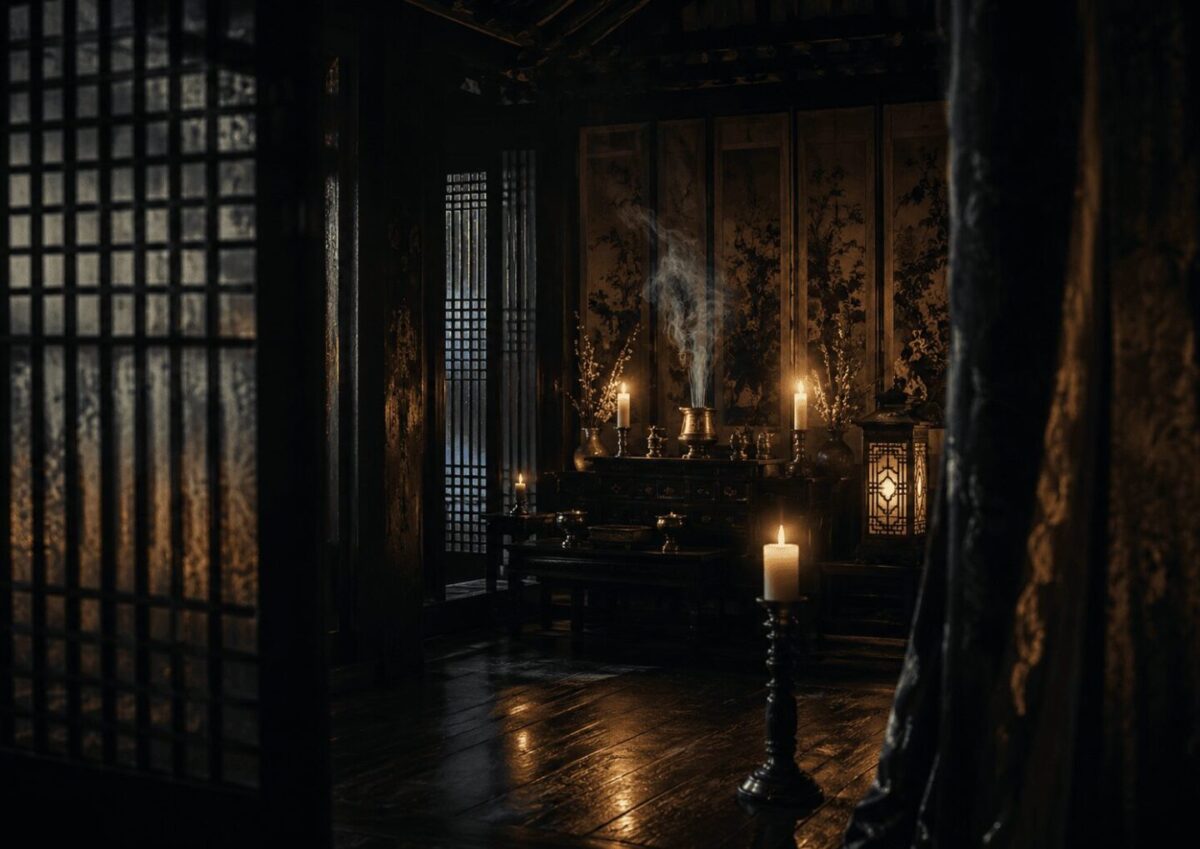
In the autumn of 1701, guards searching a shrine tucked behind a queen’s private chambers found three things that would end her life. A pit of dead animals, buried in secret. A doll, dressed in women’s clothing, with needles driven into it. And a portrait of the king’s legal wife, torn through with arrows.
The woman who’d ordered all of it had once been the most powerful woman in the country. She’d been queen herself — not a concubine playing at the role, but the actual, crowned queen — and the mother of the heir to the throne. She had done something no other woman managed in five centuries of this dynasty: she climbed all the way from outside the nobility to the very top of it, in a kingdom built specifically to keep people like her out.
Then, when she felt that position slipping, she reached for the one tool left in her hands. And it killed her.
If you know the story of Anne Boleyn — a king who tore up his own kingdom’s rules to put the woman he wanted on the throne, then years later had her executed on charges that included witchcraft — you already understand the shape of this story. Korea had its own version, three centuries apart from England’s. Her name was Jang Ok-jung, later known by her court title, Jang Hee-bin, and her rise and fall is still one of the wildest swings of fortune in Korean history.
Money, But No Door In
Here’s the part most retellings skip, and it matters: Jang Ok-jung was not poor. Her family had real money — old money, by the standards of the time.
Her relatives worked as royal interpreters, a profession that doesn’t sound like much until you realize what it actually meant in practice. Interpreters traveled with diplomatic missions to China, and along the way, some of them built enormous private fortunes through trade on the side. Her grand-uncle was famously called one of the richest men in the entire country. Think less “humble translator” and more “self-made trading-house tycoon.”
The catch was status. Interpreters belonged to a middle class — educated, often wealthy, but locked permanently outside the aristocracy that actually ran the country. It’s a strange position to explain to a Western reader, because the closest comparison isn’t quite right either: imagine a Gilded Age family with all the money in the world, still barred from the one social register that actually mattered. They could buy almost anything. They could not buy a seat at the table.
So when people call Jang Ok-jung a “commoner” who became queen, that’s a simplification — and an understatement of how unusual her path really was. She wasn’t a peasant girl plucked from nowhere. She was the daughter of money with no title, walking into a system explicitly designed to keep money-with-no-title exactly where it was.
Catching a King’s Eye, the Hard Way
The popular version of this story usually imagines a beautiful young woman catching a king’s eye by accident, somewhere in a palace hallway. The real version is less romantic and more calculating.
Palace girls in this period entered service as small children, sometimes as young as four or five — long before anyone could have predicted who they’d grow up to charm. Jang Ok-jung’s family almost certainly arranged her entry deliberately, the same way they’d already placed another relative inside the palace walls. It wasn’t fate. It was a long-term bet, placed years in advance.
The bet paid off after the king’s first wife died. King Sukjong, young and still without an heir, began noticing her. He was twenty. She was a couple of years older. And almost immediately, the king’s own mother stepped in and had her thrown out of the palace, warning her son in blunt terms: this woman is clever and dangerous, and if you let her hook into your temper, it will cost the country dearly.
It took the king’s mother dying for Jang Ok-jung to come back. And once she did, she didn’t just become a mistress with no real position. Korean has a specific word for what she actually became: hugung. It’s not a vague term for “concubine” the way English uses it — it described a real, ranked position inside the royal household, with its own property rights, its own staff, and its own formal ladder of titles a woman could be promoted through, almost always by hitting specific milestones: catching royal favor, giving birth, raising a son who survived.
And no, a king’s hugung weren’t an unlimited harem the way Western imagination tends to picture it. Each rank had a fixed number of seats. Climbing from the bottom rung to the very top — which Jang Ok-jung eventually did — was rare enough that, when it happened to her, the entire court took notice, and not happily.

A King Who Broke His Own Rules
For years, the king had no son. Then Jang Hee-bin gave him one — his first, after nearly fourteen years on the throne. He was thrilled enough to personally reward the doctors in the delivery room.
What happened next is the part of this story that turns it from palace gossip into actual political history. The king didn’t just dote on the baby. He declared the boy the official heir to the throne — skipping past the standard expectation that an heir should come from the legal queen, not from a concubine’s son. It was less a sentimental gesture than a deliberate, calculated move to lock the succession in place before anyone could challenge it.
The country’s most powerful scholar-official, a man named Song Siyeol — think of him as roughly the era’s most respected senior statesman, the kind of figure whose word could move the whole government — objected that the announcement was premature. The king’s response wasn’t a debate. It was an execution order. Song Siyeol was forced to drink poison before he even reached his place of exile.
That was only the warm-up. A few months later, the king deposed his own legal wife, Queen Inhyeon, to clear the throne for Jang Hee-bin. This wasn’t a quiet divorce. The formal documents and ceremonial regalia that had made her queen in the first place were publicly burned — a deliberate, irreversible act stripping her of the title down to its legal foundation. More than eighty officials signed a joint protest against the move. The king had them dragged in for interrogation. At least two of them died under questioning before the matter ever reached a real trial.
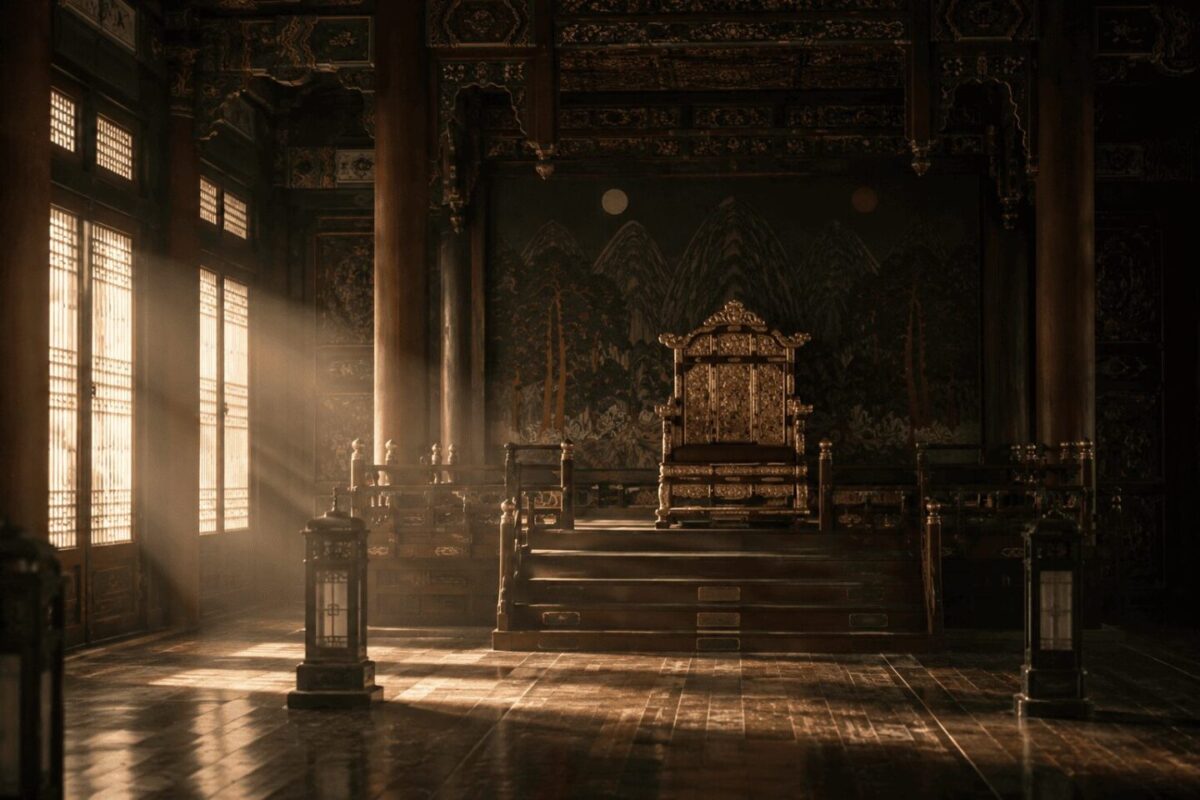
By the time the dust settled, Jang Hee-bin — the daughter of a wealthy family with no political rank — was the crowned Queen of Korea. It is, to this day, the only time in the dynasty’s entire five-hundred-year run that this happened.
Five Years at the Top
Her reign as queen lasted exactly five years, and for most of it, she held real power. She had a second son, though he didn’t survive infancy. Her father’s grave was rebuilt grand enough to rival a noble’s. The king forced his entire cabinet to attend a celebration for her family, and reportedly punished officials who skipped it.
But cracks were already showing. A new woman entered the court — a former servant named Lady Choi — and by the early 1690s, the king’s attention had begun drifting toward her instead. Around the same time, Jang Hee-bin developed a recurring illness that, by every description that survives, sounds a great deal like chronic stress: flare-ups that came and went in step with shifts in the king’s mood and the political weather.
She could feel her position sliding. She just couldn’t stop it through the normal channels anymore.
The Shrine Behind Her Chambers
When Queen Inhyeon — demoted but still alive, still respected by much of the court — fell seriously ill, Jang Hee-bin made a decision that would define how history remembers her. She had quietly come to believe that if Inhyeon died, the throne might open back up for her. So she tried to help that happen.
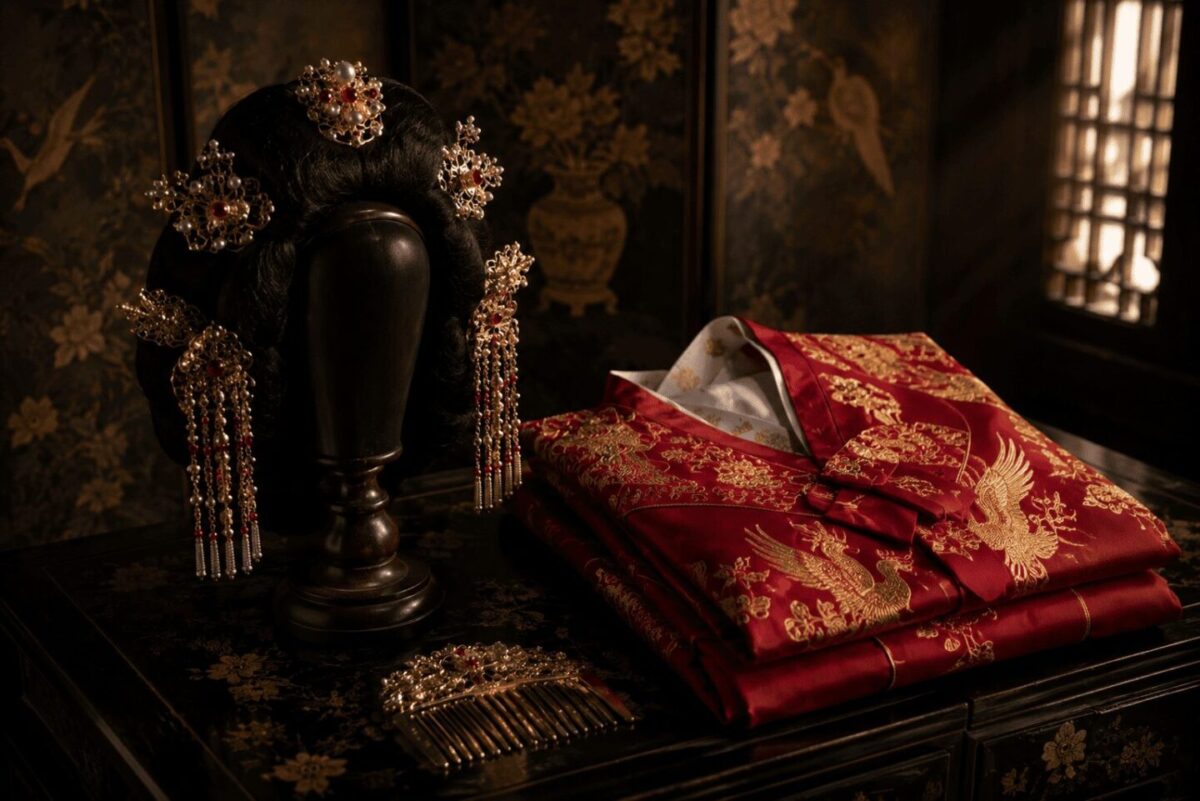
Behind her own quarters, she set up a private shrine and brought in shamans to perform rituals aimed at hastening the sick woman’s death. Buried animal remains were later found near the queen’s residence. Inside the shrine itself, investigators found a doll dressed in women’s clothing. Jang Hee-bin reportedly had her shamans shoot arrows into a portrait of the queen, again and again.
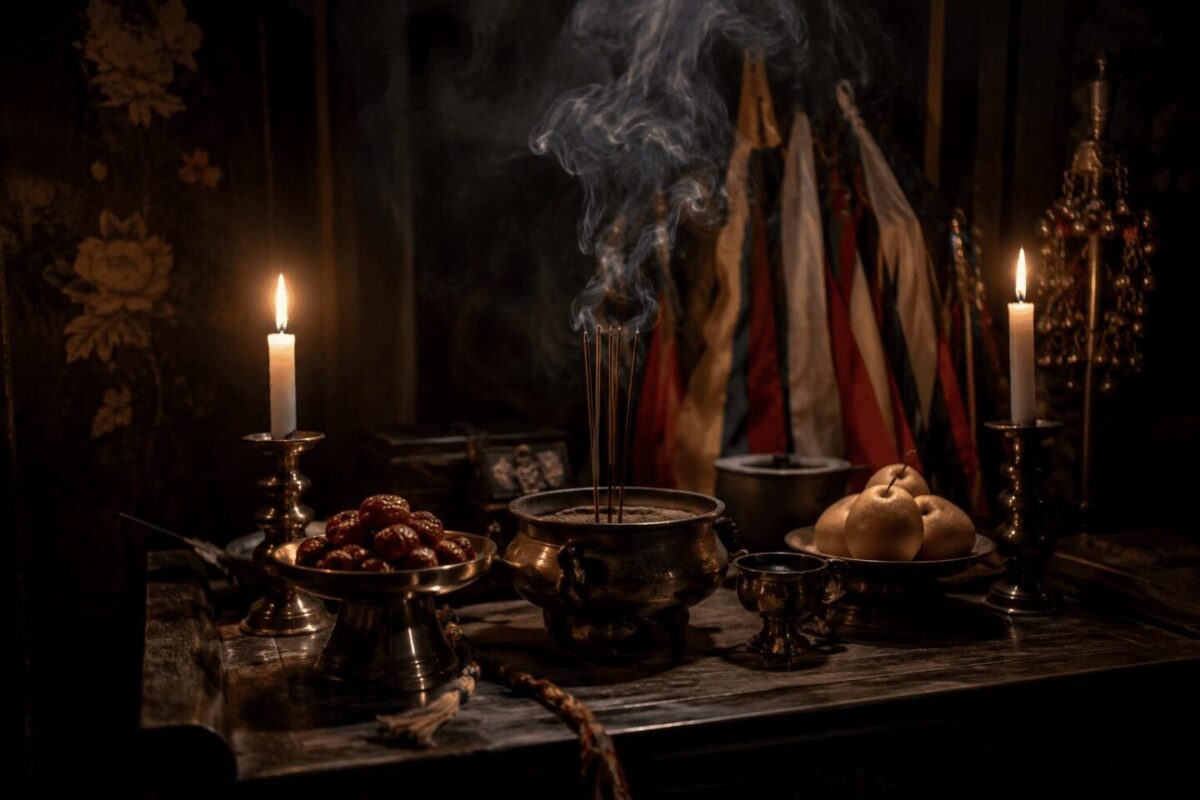
There’s a specific concept in Korean folk belief for what was happening in that shrine. It’s called sal — not quite “a curse” in the Western sense of summoning a demon to do your bidding, but closer to the act of deliberately directing a hostile, almost predatory energy at a specific person, hoping it does them harm from a distance. Professional shamans can be hired to “send sal” against someone, but even within shamanism itself, this is treated as close to the gravest line a practitioner can cross — something many shamans compare to ordering a killing, and something believed to rebound on whoever sends it. Ordinary people, with no shamanic training at all, sometimes attempt cruder folk versions on their own: burying charms or bundles of needles near someone’s home, sticking pins into a doll marked with the target’s photograph. Either way, it’s not treated as harmless superstition in Korea. It’s treated as something close to an unforgivable act — which is exactly why, once discovered, it was more than enough to end her.
When a rival at court eventually reported the shrine to the king, the investigation moved fast. Servants confessed under harsh interrogation. The case became known to history as the Mugo Scandal — the “curse case” — and it left no room for Jang Hee-bin to argue she’d been framed. The animal remains were real. The doll was real. The arrow-pierced portrait was real.
A Death the Records Won’t Fully Describe
The king’s response was swift, and he made the historical stakes explicit himself, comparing the situation out loud to a Chinese emperor centuries earlier who’d executed the mother of his own heir to protect the boy’s future reign. The framing was deliberate: this wasn’t revenge, the king insisted. It was politics, dressed up as necessity.
The crown prince — Jang Hee-bin’s own son, only thirteen or fourteen at the time — begged for his mother’s life. According to court records, he lay on straw matting outside the palace gate, weeping, pleading with officials to spare her. It didn’t work.
Here’s where I want to be straightforward with you, because this is exactly the part Korean dramas love to dramatize, and it’s exactly the part that gets exaggerated. The official court record confirms only this: Jang Hee-bin was ordered to end her own life, and she died. The gruesome details you may have seen in K-dramas — convulsions, multiple doses of poison, graphic deaths — come from a much later, semi-fictional account written for entertainment, not from the actual historical record. Nobody alive today knows exactly how those final hours went. The record simply doesn’t say.
What we do know is that her death was a foregone conclusion the moment that shrine was discovered. Several of the king’s own advisors tried to argue that a woman who’d raised the future king deserved at least the dignity of being spared formal execution procedures. The king listened to the argument, agreed to call it something gentler on paper, and then made sure the outcome was identical anyway.
There may have been a colder calculation behind that vagueness, too. A century earlier, a different Korean king had also forced his deposed queen to drink poison — and kept the record deliberately thin. That queen’s son grew up not knowing the full story, became king himself, and when he finally learned the truth as an adult, the result was one of the bloodiest revenge campaigns in the dynasty’s history. Read that story here. Whether Sukjong’s court had that exact precedent in mind or not, leaving Jang Hee-bin’s final hours undocumented was, if nothing else, the safer bet.
The Irony That Outlived Her
Here’s the part of this story that almost no one outside Korea knows, and it’s the part that makes the whole thing land differently.
Jang Hee-bin’s son eventually did become king — he reigned as Gyeongjong. But he was sickly for most of his life, and he died after only four years on the throne, leaving no children of his own.
The throne instead passed to the son of Lady Choi — the same rival concubine whose rise had marked the beginning of Jang Hee-bin’s downfall. That son became King Yeongjo, and he went on to become one of the longest-reigning, most accomplished kings in the dynasty’s entire history.
In other words: the very same kind of raw, rule-breaking royal favor that lifted Jang Hee-bin out of the merchant class and onto the throne — then turned around and executed her for trying to hold onto it — ended up handing the crown, a generation later, to the bloodline of the woman who replaced her. Power built on broken rules doesn’t stay loyal to whoever broke them first.
Her story never really left Korean popular culture. It’s been retold in films and television dramas more than nine separate times since 1961, reimagined again almost every decade, in a new shape for a new audience. The newest version is airing right now — the 2026 series My Royal Nemesis draws directly on her story for one of its central characters.
A Note Before You Go
A few quick answers, in case you came here with specific questions.
What did a Korean royal concubine actually do? Far more than the English word “concubine” implies. A hugung held real rank, ran her own household, could own property, and climbed a formal ladder of titles — usually by gaining royal favor and, especially, by giving birth to royal children.
How many concubines could a king have? There was no fixed total number, but there was also no unlimited harem. Each official rank in the system had a fixed number of seats, and reaching the very top — queen herself — happened to a concubine exactly once in this dynasty’s five-hundred-year history. That was Jang Hee-bin.
When did the system end? It ended along with the dynasty itself, in 1910, when Korea’s last king lost his throne for good.
So — was Jang Hee-bin a victim or a villain? Honestly, neither answer fully fits. She broke through a wall almost no one else managed to break through, in a system built to keep her out permanently. And when that same system turned against her, she reached for the only weapon she had left, and it cost her everything. That’s not really a villain’s story or a victim’s story. It’s just what happens when someone with no real safety net gets handed real power, briefly — and then has it taken away.