North Korea Language Law: Where Talking Like a South Korean Is a Crime
In August 2024, months before most Americans had ever heard of North Korea language law, its leader stood before flood victims and gave a speech. Nothing especially unusual there. What caught people’s attention, according to residents who later spoke to Radio Free Asia, was the language he used.
He opened by addressing the flood victims as “residents” rather than the more familiar “comrades” or “people.” He referred to elderly people as “elders.” He used “TV.” And he dropped in a phrase meaning “navigating rough terrain” that reportedly sounded unusual to some North Korean listeners.
To an American ear, none of this sounds remarkable. But one North Korean source told Radio Free Asia that people were more surprised by his vocabulary than by the actual content of his speech. To them, some of it sounded distinctly South Korean.
There is an important caveat. These were not all forbidden South Korean words. Researchers at 38 North later checked North Korean state media and found that terms such as “residents,” “TV,” and several of the other expressions had appeared in official North Korean publications before — some of them for years. What seems to have been unusual was the concentration of these expressions, and the way the leader used them in such a public address.
That distinction matters, because North Korea had passed the North Korea language law just a year earlier, in January 2023 — officially the Pyongyang Cultural Language Protection Act. It criminalizes what the regime calls South Korean-style “puppet language,” with punishments starting at six years of forced labor and rising far higher in serious cases. That doesn’t mean an ordinary citizen gets six years for saying “TV.” But it does make the episode striking: while the state was aggressively policing South Korean influence, its own leader stood on stage using expressions some of his own listeners associated with the South.
The Law That Made an Accent Illegal
Let me back up, because this needs a little context that most Americans never get.
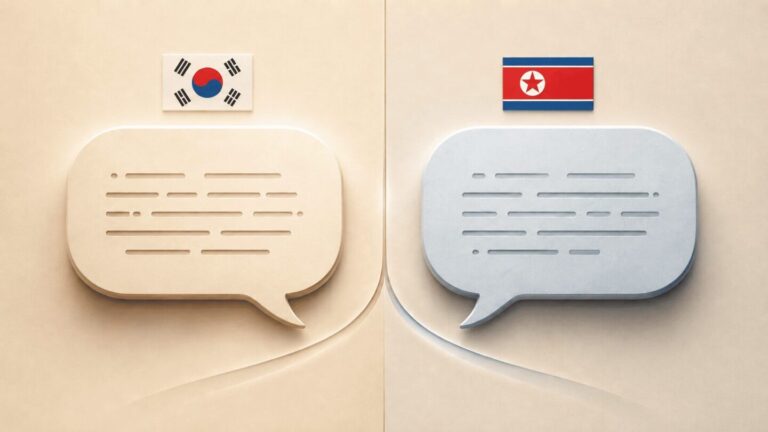
North and South Korea speak the same language. Same alphabet, same grammar, same core vocabulary. After seventy-plus years of separation, they’ve drifted — the way American and British English have drifted, except with one side sealed off from the world. The North purged most English loanwords decades ago and replaced them with homegrown terms; the South absorbed English by the thousands. Different accents, different slang, different words for ice cream. Still one language.
Then, starting in 2020, the North decided the drift itself was a threat.
First came the Anti-Reactionary Thought and Culture Act (December 2020), which made it a serious crime to consume or distribute South Korean media — dramas, films, music. Then, in January 2023, the government went further and passed the North Korea language law properly known as the Pyongyang Cultural Language Protection Act. It declares the Pyongyang dialect the one true standard, and it gives the South Korean way of speaking an official name: “puppet language.” As in, the language of the South Korean “puppet state.” (You can read the original Radio Free Asia report on the law here.)
Under this law, sounding South Korean in public is a punishable offense. Teaching others to speak that way, or circulating materials written in the “puppet” style, can carry a sentence of ten years or more. In what the law calls serious cases, the penalty rises to life imprisonment — or death.
Read that once more. A country wrote into law that the wrong choice of vocabulary is a capital offense.
Twenty Teenagers and a Word Game
Laws like this can sound abstract until you see who they land on.
In 2023, according to sources inside the country who spoke to Radio Free Asia, about twenty young North Korean athletes — winter sports prospects, the kind of kids a country invests in — were sentenced to three to five years of hard labor in prison camps. Their crime: while playing a word game together, they used South Korean vocabulary and slang.
A word game. The kind you play on a bus, or killing time between training sessions.
It didn’t stop with them. Their parents reportedly lost their official positions, and the families were deported from the city to the countryside. One round of the wrong words, and an entire household was erased from its own life.
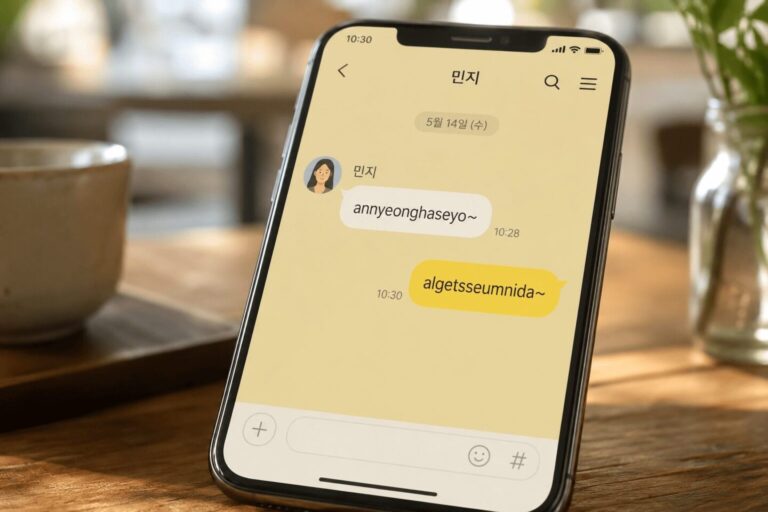
This is what enforcement looks like on the ground. Authorities inspect mobile phones for South Korean-style nicknames, abbreviations, and terms of endearment. Calling your girlfriend “honey” instead of “comrade” — a detail the Netflix drama Crash Landing on You played for laughs — is, in real life, evidence. Even the affectionate slang South Koreans throw around without thinking counts as evidence. The state isn’t only watching what you say. It’s reading how you text.

Why a Government Fears a Dialect
So why would a state go to war with an accent?
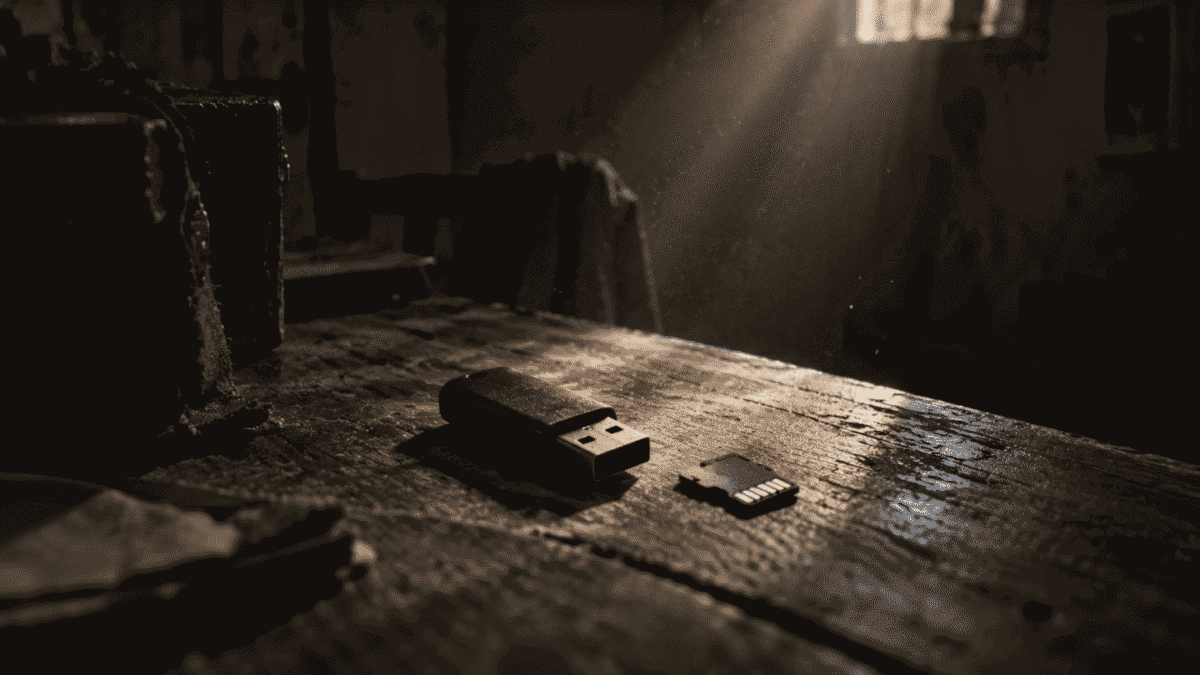
Because the accent is winning. For two decades, South Korean dramas, movies, and K-pop have been flowing into the North on smuggled thumb drives and memory cards, and young North Koreans have been binge-watching them in secret. When you watch enough of someone’s TV, you start to talk like them. Sources inside the country say many young people have simply gotten used to how Korean sounds south of the border — and speak that way among themselves.
To the government, that’s not a fashion problem. In its own words, this kind of cultural infiltration is more dangerous than an enemy holding a gun. Every South Korean phrase in a teenager’s mouth is proof that the seal on the country has a leak — and proof of where the leak leads.
A shared language is normally the one thing a divided people can’t be stripped of. North Korea is testing whether that’s true.
The Word “Comrade”
There’s a small linguistic detail here that I find haunting as a South Korean.
The North Korean word for “comrade” — dongmu — wasn’t invented by communists. It’s an old, ordinary Korean word that simply meant “friend.” Children’s songs used it. Grandmothers used it. But after the division, the North adopted it as its official term of address, and in the South it became so strongly associated with communism that people quietly stopped using it. Today, a South Korean would almost never call a friend dongmu. The word was, in effect, taken hostage by politics — and the South let it go.
So when North Korea’s leader stood in front of those flood victims and said “residents” instead of “comrades,” the sound that struck listeners wasn’t just South Korean. It was, in a strange way, the sound of an older Korea — the one where no word belonged to either side.
(Worth remembering here what we already covered: several of these words weren’t strictly forbidden — 38 North found some had appeared in state media before. What the reaction really shows isn’t a clean rule broken, but how tuned North Korean ears have become to spotting anything that sounds like the South.)

Watching the People Who Left
I’ll be honest about where I stand: I’m a South Korean who has never met a North Korean in person. Most of us haven’t. What I have done, for years, is watch a long-running Korean TV program where women who escaped the North sit on a stage and talk about their lives — what they ate, what they feared, what they thought the South would be like before they got here.
You can read about the North Korea language law as a policy. I did, for this post. But it’s a different experience to watch someone who lived under those rules describe, in her own accent, the first time she realized that the way she talked could get her in trouble — and then hear her laugh about the South Korean words she still gets wrong.
Every time I watch, the same thing happens: the statistics turn back into people. Twenty athletes stop being a number. “Puppet language” stops being a term in a law and becomes the voice of a specific woman on a specific stage, who left everything to be allowed to speak the way she wanted.
One Language, Two Countries, and a Border in the Dictionary
Here’s what I keep coming back to.
Both Koreas write with the same alphabet — the one a Korean king invented six hundred years ago so that ordinary people could read. Both sing the same folk songs. A grandmother in Pyongyang and a grandmother in Seoul could sit down together and understand each other with maybe an hour’s adjustment.
And one of the two countries has made it a crime to sound like the other.
That’s the strangest thing about the North Korea language law, when you sit with it. It isn’t a law against a foreign tongue. It’s a law against a family member’s accent — passed by a government so afraid of what its people might hear that it started policing what they say.
The words got out anyway. Words usually do.
North Korea’s language law refers mainly to the Pyongyang Cultural Language Protection Act (January 2023), which designates the Pyongyang dialect as the national standard and criminalizes South Korean-style speech, officially labeled “puppet language.” It follows the Anti-Reactionary Thought and Culture Act (December 2020), which criminalized consuming and distributing South Korean media. Penalties range from years of hard labor to, in cases the law defines as serious, life imprisonment or death.