Shrimp Between Whales: The Korean Proverb History Wrote
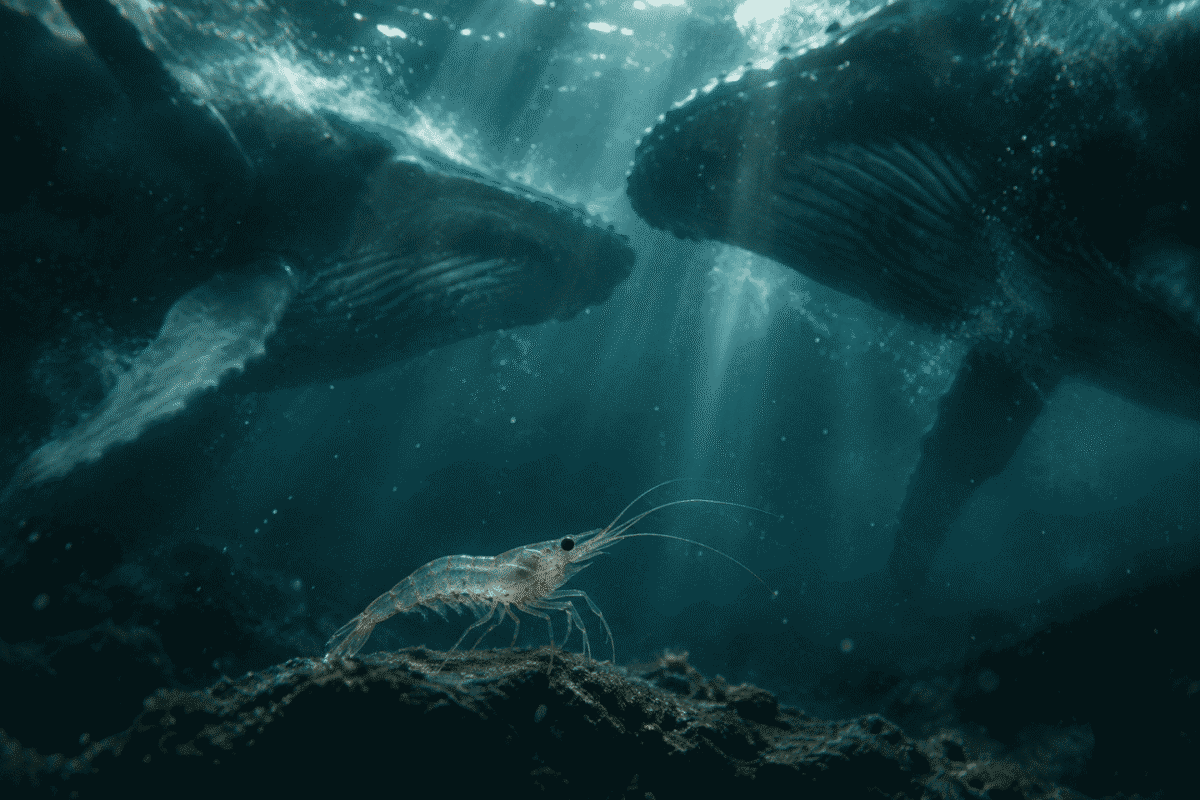
If you’ve read much news about Korea, you may have run into the phrase “a shrimp between whales.” American reporters love it. It shows up whenever big powers start pushing each other around in Asia, and someone needs one image to explain where Korea stands.
But it isn’t a reporter’s invention. It’s a Korean proverb — one that most Koreans know from childhood — and the full version is a little more painful:
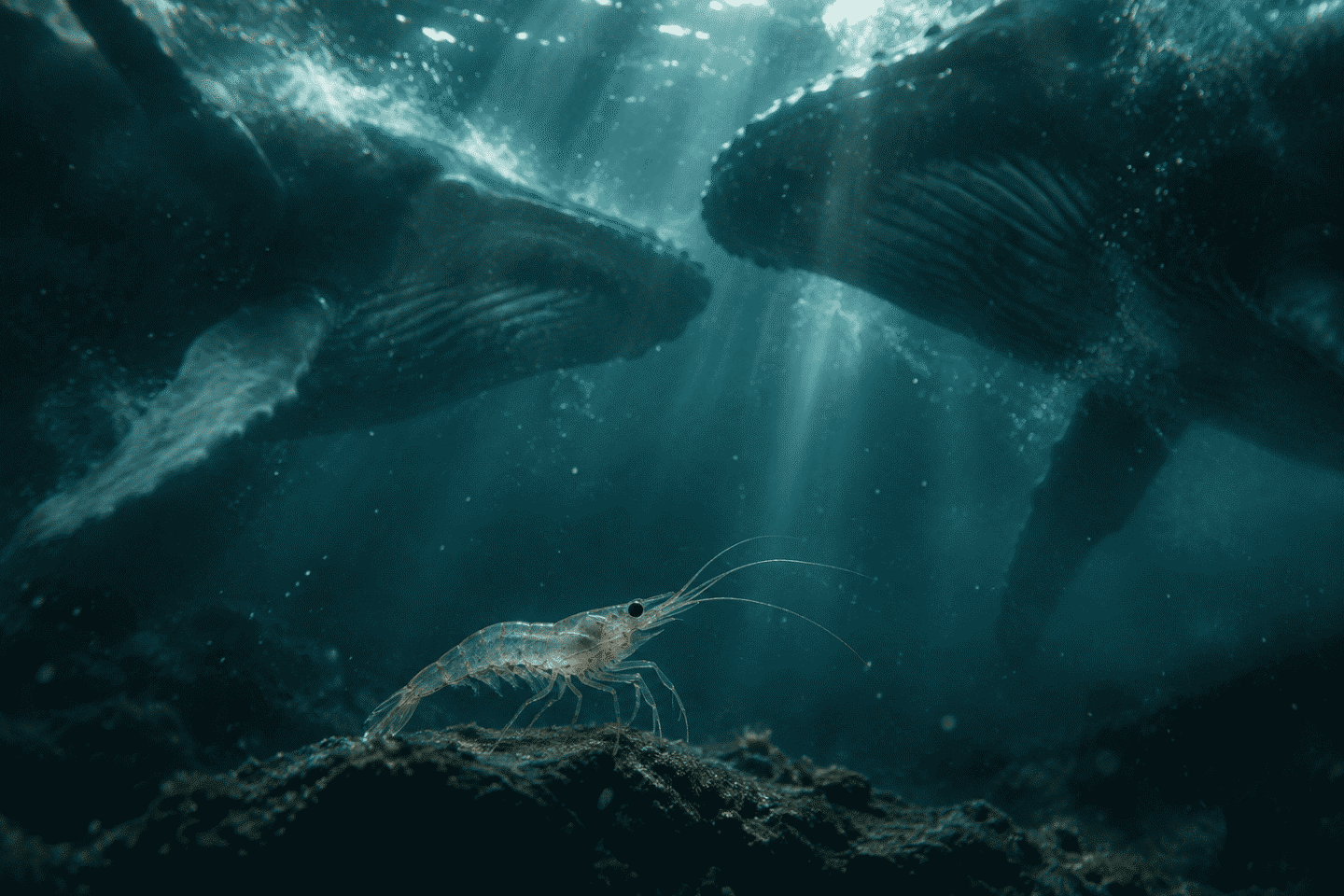
When whales fight, the shrimp’s back breaks.
I first really understood it in a history class. Not because a teacher explained it, but because by the end of the semester, I’d heard the same story three times. Different centuries, different whales, same shrimp.
Those three stories are below. Korea’s history has more than three of them; these are the ones I chose, because together they show the whole shape of the proverb — not just how the shrimp gets hurt, but how it learns.
Related Read: Korean proverbs often hide a whole worldview in one image. Here’s another one about a tiger who always shows up right on cue. → Speak of the Tiger
What Does “Shrimp Between Whales” Mean?
“Shrimp between whales” comes from the Korean proverb gorae ssaume saeu deung teojinda — “when whales fight, the shrimp’s back breaks.” It means that when two powerful sides clash, the small party caught between them gets hurt, even though it never started the fight. Koreans use it in everyday life — for family arguments, office politics, or small companies caught between big ones — but it’s best known as a description of Korea’s place in history: a small country sitting between much larger neighbors.
No one knows exactly who first said it. But Korean history gave it plenty of chances to come true.
| Year | The Whales | What Happened to the Shrimp |
|---|---|---|
| 1592 | Japan and China | Japan invaded Korea; China sent armies to fight it. The war was fought on Korean soil for six years. |
| 1894 | China and Japan | Korea asked China for help with an uprising. Japan sent troops too, and the two fought their war in and around Korea. |
| 1904 | Japan and Russia | Korea declared itself neutral. Within weeks, Japanese troops were in Seoul anyway. |
If you’ve ever heard the African proverb “When elephants fight, it is the grass that suffers,” you already know the feeling. Korea just picked an animal that lives in the sea — which, for a peninsula, makes sense.
1592: The Fight on Korean Soil
In the spring of 1592, a Japanese army of well over 150,000 soldiers landed on Korea’s southern coast. Japan’s ruler had a plan, and Korea was only the first step: the real target was China.
Korea wasn’t ready. Within weeks, the capital, Seoul, had fallen.
So China sent its own armies south to stop Japan before Japan reached China’s border. In early 1593, Chinese and Korean forces drove the Japanese out of Pyongyang.
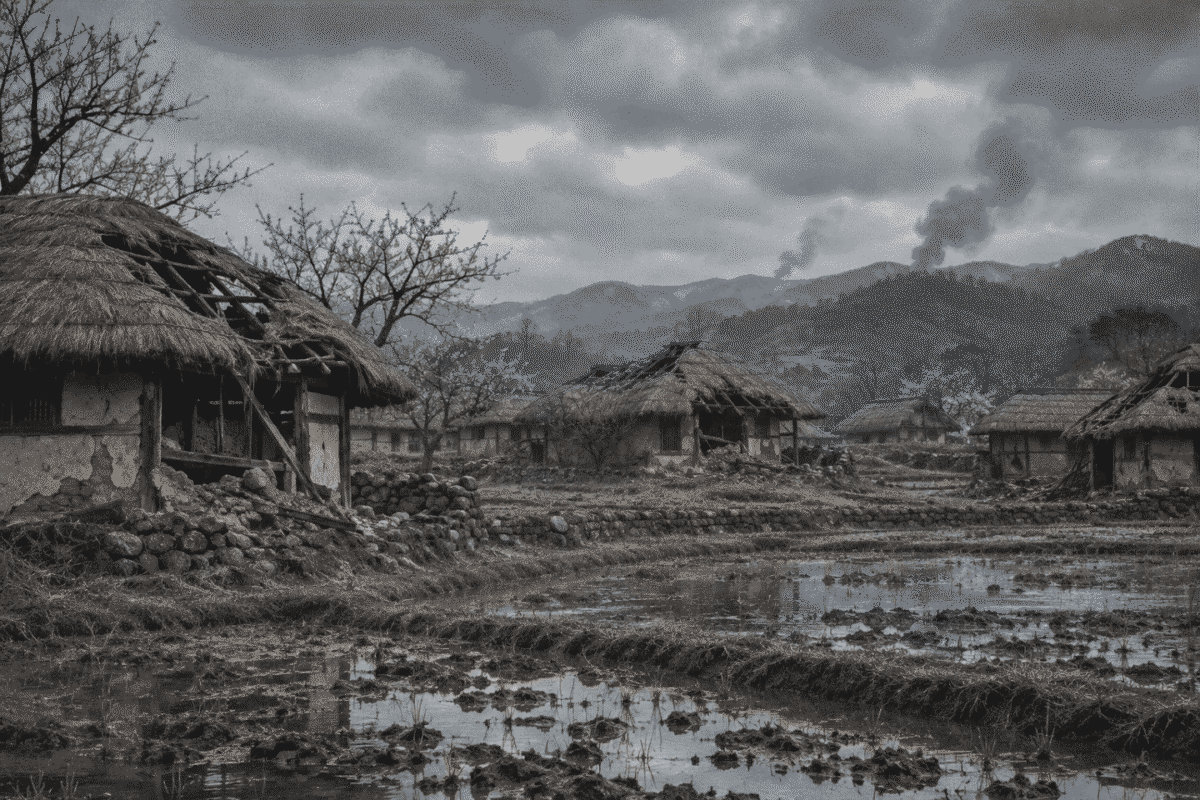
That sounds like rescue. And in part, it was. But notice where all of this was happening. Two giants were fighting over a road that led to China — and that road ran straight through Korean towns, Korean farms, and Korean homes.
The war dragged on, on and off, for six years. By one estimate, at least 125,000 Koreans died, and tens of thousands more were taken to Japan as captives. Seoul’s population fell by more than half. Palaces, temples, and libraries burned.
The whales had their fight. The shrimp’s back broke.
1894: The Whale Korea Invited
Three hundred years later, the shrimp tried something different. It asked one whale for help.
In 1894, a huge peasant uprising swept through southern Korea. Farmers furious about taxes and corruption took over whole towns. The Korean government couldn’t stop them.
On June 3, it asked China to send troops.
China sent about 2,000 soldiers. But there was a catch. Nine years earlier, China and Japan had signed an agreement: if either one sent troops into Korea, it had to tell the other. Japan was told. And Japan sent troops of its own — about 8,000 of them, landing near Seoul.
Then something strange happened. On June 11, the uprising ended. The Korean government and the rebels reached a settlement. The problem the troops had come to solve was gone.
Neither whale went home.
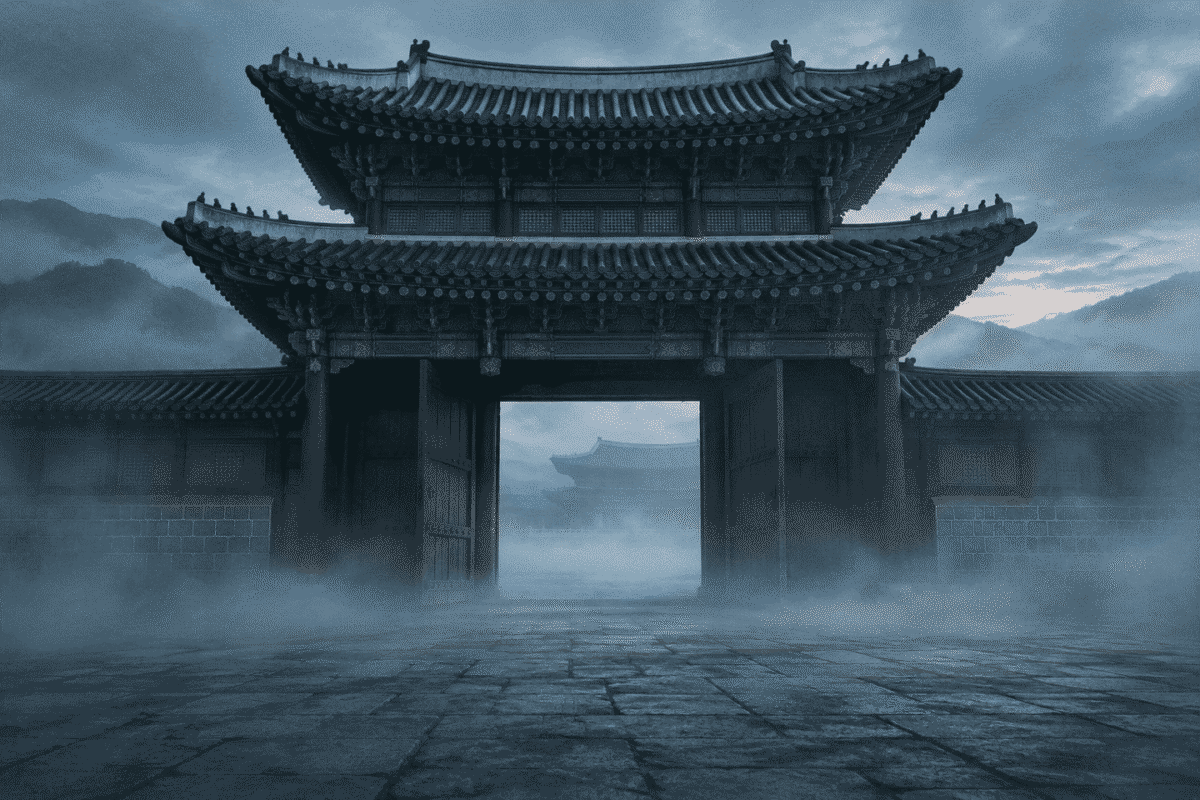
China asked Japan to withdraw together. Japan refused. On July 23, Japanese troops marched into Seoul and took the royal palace. Two days later, the first shots of the war between China and Japan were fired — off Korea’s coast. The first land battle came days after that, in a Korean town. One of the biggest battles of the war was fought at Pyongyang.
Korea had asked for help with a problem inside its own borders. What it got was two foreign armies fighting each other on its land.
Japan won. The peace treaty that ended the war in 1895 declared Korea fully “independent.” In practice, that meant independent of China — and wide open to Japan.
1904: Neutral on Paper
Ten years later, two new whales were circling: Japan and Russia. Both wanted control of Korea and the region just north of it.
This time, Korea tried the smartest move a shrimp has. It tried to stay out of the fight entirely.
In January 1904, Korea announced to the world that it was neutral. Whatever happened between Japan and Russia, Korea would not take sides.
War broke out weeks later. Japanese troops entered Seoul. And on February 23, 1904, Korea signed an agreement that allowed Japan’s military to move freely through Korean territory.
Neutral on paper. Occupied in practice.

It got worse quickly. A year later, Korea lost control of its own foreign affairs. In 1910, it lost its independence entirely, and stayed under Japanese rule until 1945.
The twentieth century would bring Korea even bigger whales — the division of the country in 1945, and the war that began in 1950. But by 1904, the proverb had already been proven three times.
What Koreans Do With the Saying Today
Here’s what surprised me when I started paying attention: Koreans don’t only use this proverb about history. They use it about everything.
A parent might say it to stop two kids from fighting, because the little sibling always ends up crying. A worker might say it when two managers are feuding and the whole team is stuck in the middle. Korean newspapers have used it for small suppliers that get squeezed when a giant company and its giant union go to war.
And yes, you’ll still see it in the news when big powers clash over trade or security in Asia. Whether Korea is still the shrimp is something Koreans argue about among themselves — and that argument is a story of its own.
But there’s one part of the proverb that outsiders often miss.
Koreans don’t tell these stories as pure defeat. In 1592, while two foreign armies fought across the country, Korean admirals beat Japanese fleets at sea, and ordinary farmers and monks formed volunteer militias to fight back on land. In 1894 and 1904, Korea’s leaders kept trying — asking for help, declaring neutrality, looking for any move that might work. Most of those moves failed. They still tried.
The shrimp got hurt. Again and again. But it’s still here.
So when you see “shrimp between whales” in a headline, here’s what it really means to a Korean reader. It isn’t just “small country, big neighbors.” It’s four hundred years of watching the whales very, very closely.
Shrimp Between Whales: Quick Answers
What does “shrimp between whales” mean? It comes from the Korean proverb “When whales fight, the shrimp’s back breaks.” It means that when two powerful sides fight, the smaller party caught between them gets hurt, even though it didn’t start the fight.
Why is Korea called a shrimp between whales? Because Korea sits between much larger powers — China, Japan, and Russia — and has repeatedly been the battleground for their conflicts. The Japanese invasion of 1592, the war between China and Japan in 1894, and the war between Japan and Russia in 1904 all played out in and around Korea.
Who came up with the proverb? No one knows. It’s a traditional Korean saying, and its exact origin hasn’t been traced to a single source or date.
Do Koreans only use it about politics? No. In everyday Korean, it’s also used for family fights, office conflicts, and small businesses caught between big ones — any situation where a bystander pays the price for someone else’s fight.
Is there an English equivalent? The closest is the African proverb “When elephants fight, it is the grass that suffers.” Both describe innocent bystanders hurt by a conflict between giants.