Korean Exam Cheating Is Centuries Old: Nose Notes, Buried Ropes, and Hired Brains
Every student on earth knows the classics. Answers inked on your palm. Formulas scratched into the side of a pen. A cheat sheet hiding under the label of a water bottle. Korean exam cheating has used every one of those tricks — it just started using them a few hundred years before anyone invented the ballpoint pen.
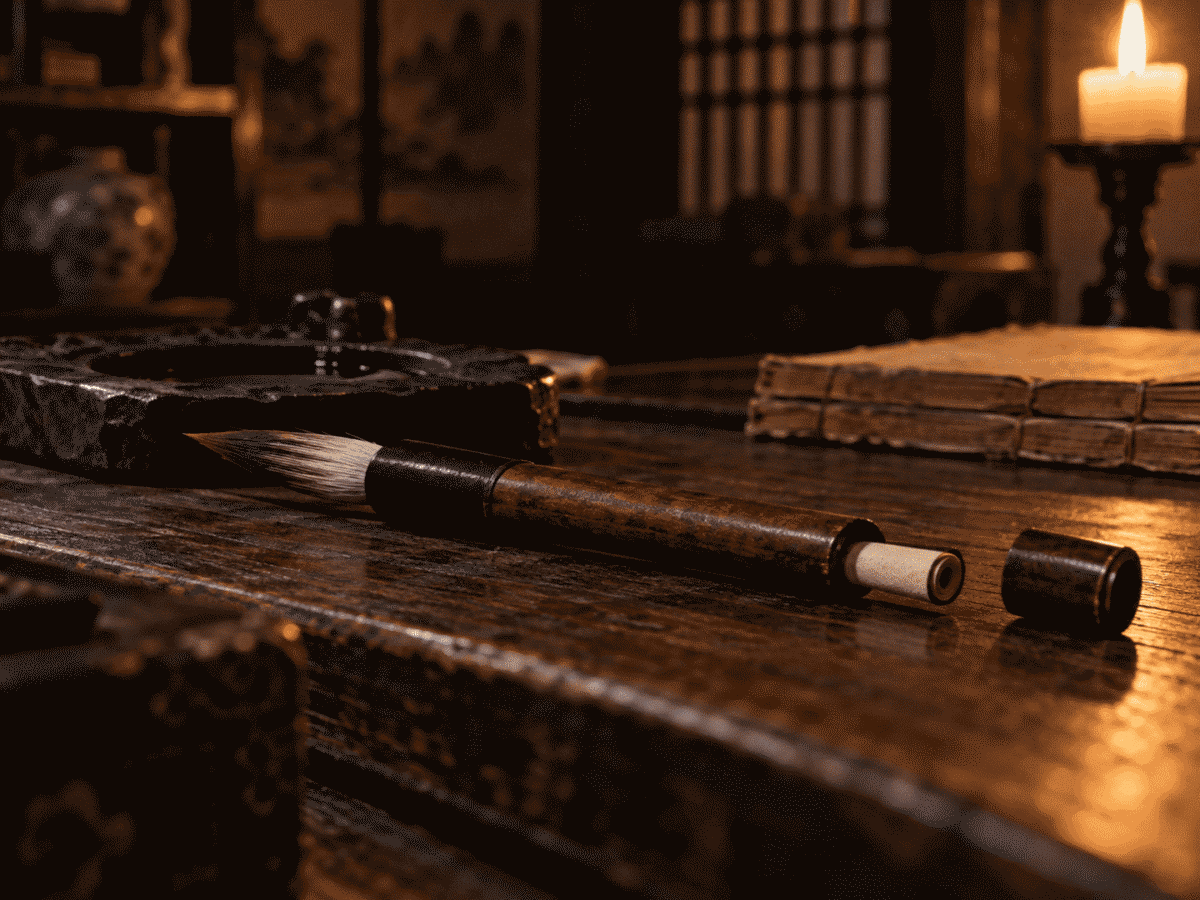
Back then, Korean test-takers hid notes inside the hollow handles of their calligraphy brushes. Some wore underwear made of paper, covered in answers. Some sewed tiny handmade books into their sleeves. And some, according to records from the time, rolled their cheat sheets up very, very small and tucked them into the one place no proctor wanted to check.
Their noses.
To understand why a grown man would walk into an exam with a crib note up his nostril, you have to understand what that exam meant.
The Exam That Decided Everything
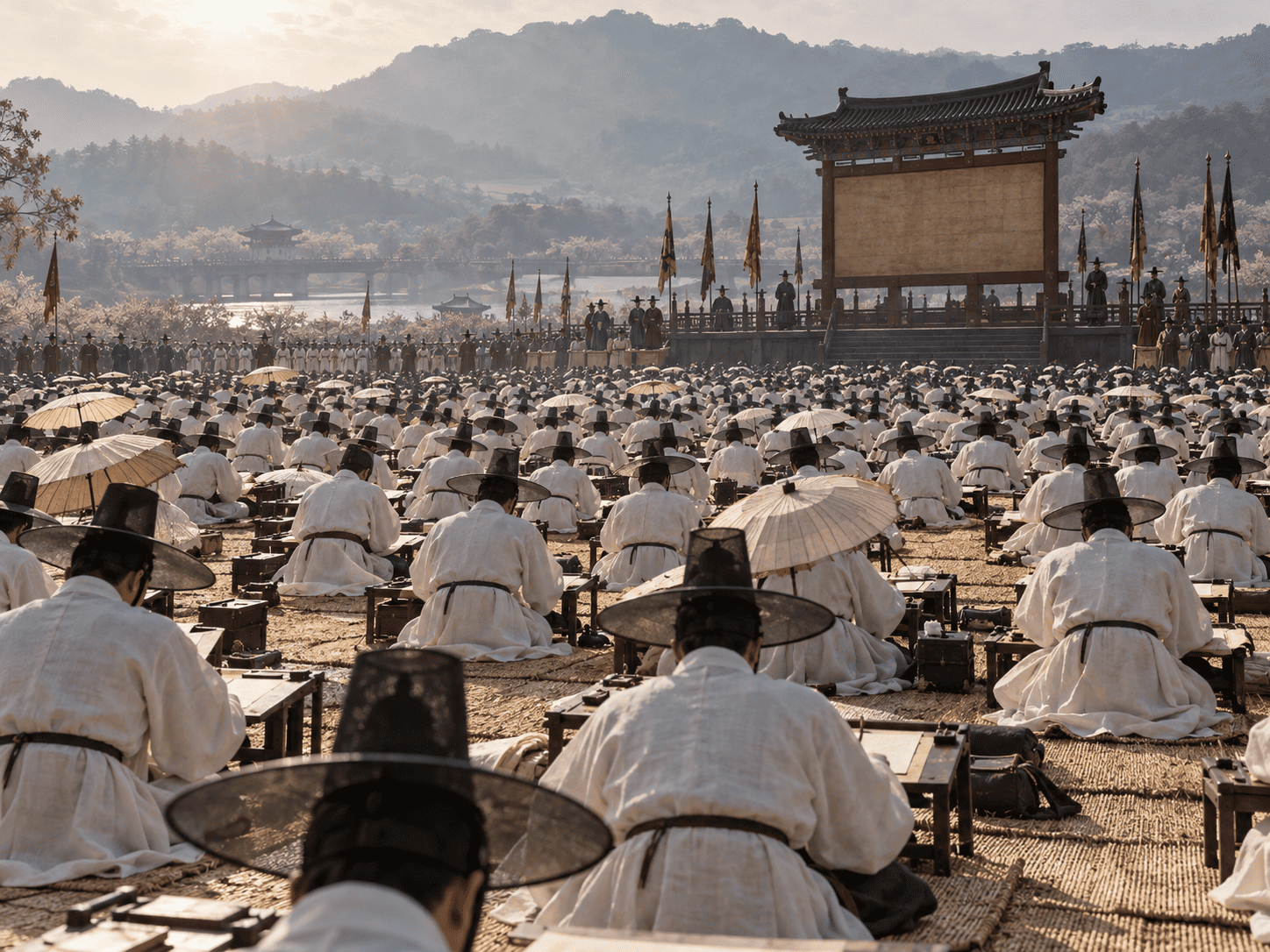
For about five hundred years, Korea was ruled by the Joseon dynasty — from 1392 until 1897. If you’ve watched a Korean historical drama like Kingdom, you’ve seen this world: men in topknots and wide-brimmed black hats, palaces, scholars, and a lot of serious bowing.
In that world, there was one main road to power, money, and respect: the state examination, called gwageo. Picture the SAT, the bar exam, and a government job test rolled into one. The regular exam came around once every three years. Pass the top level, and you could become a government official — and your whole family rose with you. Fail, and you went home and started studying again.
And everybody wanted in. In the spring of 1800, a single exam day in Seoul drew 103,579 test-takers, according to the official royal records. Fewer than a third of them even managed to hand in an answer sheet.
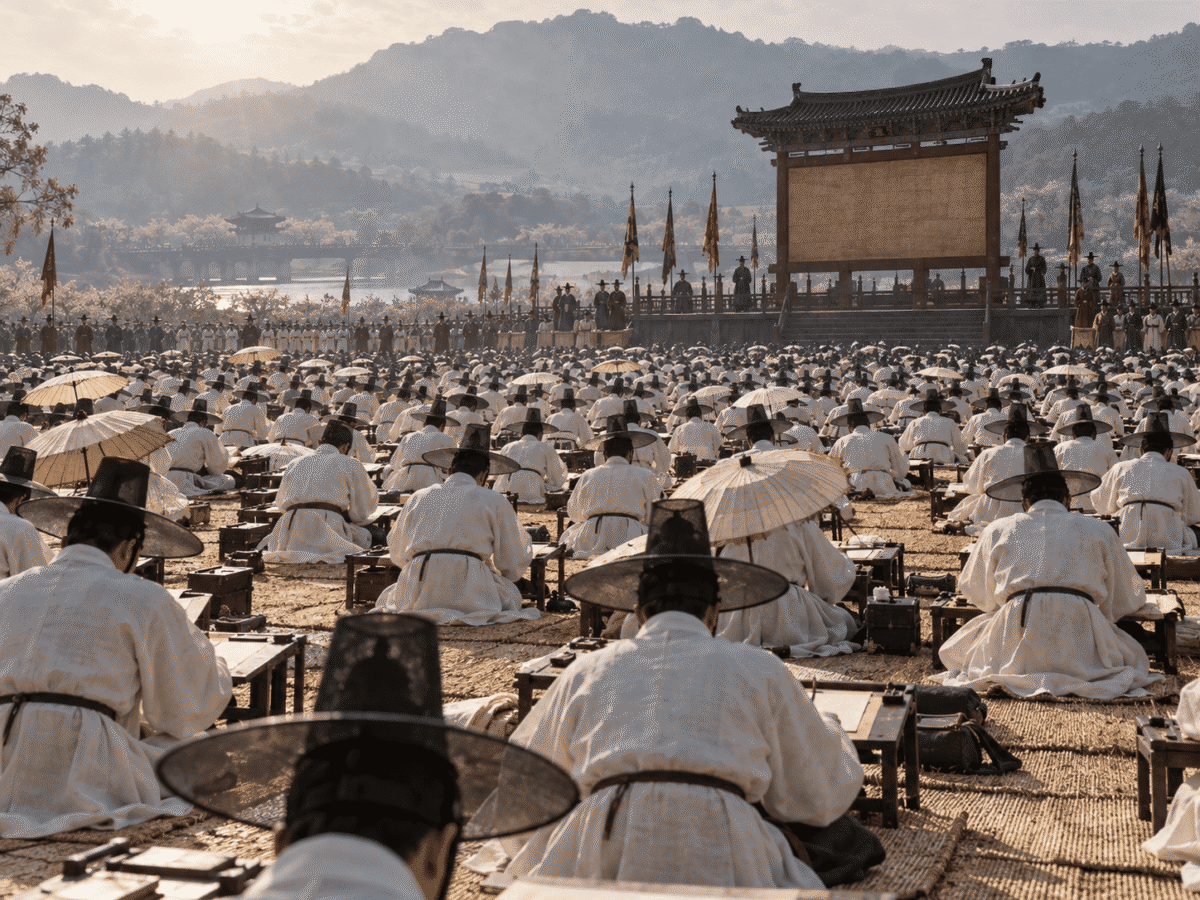
Part of the reason was chaos. There were no assigned seats. The question was posted at the front of a huge open exam ground, so the morning began as a stampede for the best spots — close enough to read the question, sheltered enough to write in peace. Records from 1686 describe a crush at an exam entrance that left eight people dead.
And the wait to pass kept getting longer. By one historian’s count, the average age of men passing the entry-level exam rose from about 25 in the 1400s to about 37 by the late 1800s. Imagine still taking your SATs at 37, with gray creeping into your topknot.
Thousands of applicants. A handful of spots. Your family’s honor on the line. You can see where this is going.
The Korean Exam Cheating Playbook
So people cheated. Creatively.
The beginner moves. The brush-handle note. The paper underwear. The tiny book up the sleeve. The nose note — a trick so well known that writers at the time joked about it. The classic “oops, I dropped my answer sheet” so the guy next to you could take a look. Muttering answers under your breath. Good old-fashioned peeking.
The intermediate move: send someone else. Hiring a smarter man to take the exam in your place was common enough that people mocked those degrees as bought, not earned.
The pro move: build a team. This is where Korean exam cheating stops being a schoolboy prank and turns into a business. The scholar Jeong Yak-yong, one of the most respected thinkers of his time, wrote about it with obvious disgust. A wealthy candidate could walk into the exam with a whole crew:
- The “Big Thumb” — a hired writer who actually composed the essay.
- The Hand — a hired calligrapher who copied it out in beautiful handwriting, because presentation counted.
- The Porters — men who carried in the mats, umbrellas, and supplies.
- The Vanguard — the muscle who charged into the exam ground at dawn and grabbed the best spot before anyone else could.
The rich candidate’s job? Show up. Basically, he hired a cheating startup — a writer, a designer, a logistics team, and security.
The legendary move: dig a tunnel. In February 1705, a woman living near the national academy in Seoul was out gathering wild greens on a hillside when she found a cord buried in the dirt. When officials dug it up, they found something wild. The cord ran from the hill, under the academy wall, and straight into the exam grounds, threaded through bamboo tubes buried underground.
The plan, as historians describe it: someone inside passes the question down the line, someone outside writes the answer, and the answer travels back in through the tube. Nobody knows for sure whether it ever worked. But somebody spent a lot of nights digging, and a woman picking vegetables brought the whole thing down.

When the Examiners Cheated Too
Students weren’t the only ones gaming the system.
In 1610, the list of people who passed one major exam raised a lot of eyebrows. An unusual number of the names belonged to the sons, sons-in-law, younger brothers, nephews, and in-laws of the examiners and powerful officials — including a relative of the most powerful man at court.
People in Seoul didn’t need an investigation to figure it out. They gave the results a nickname, roughly: “The Sons, Sons-in-Law, Brothers, Nephews, and In-Laws List.”
If that sounds familiar, it should. In 2019, America had Operation Varsity Blues — wealthy parents paying to fake athletic records and rig test scores to get their kids into elite colleges. Different century, different continent, same idea: when the stakes get high enough, the people with power try to buy the outcome.
Korea Fights Back
Joseon wasn’t naive. The government kept coming up with countermeasures, and some of them were surprisingly modern.
Numbers instead of names. Test-takers were tracked using characters from the Thousand Character Classic — a 1,000-character text every Korean schoolchild memorized, with no character repeated. Think of it as using a famous poem as your numbering system instead of A, B, C.
Blind grading. The section of the answer sheet with the candidate’s name and family details was folded over and sealed, so the graders couldn’t see whose paper they were reading.
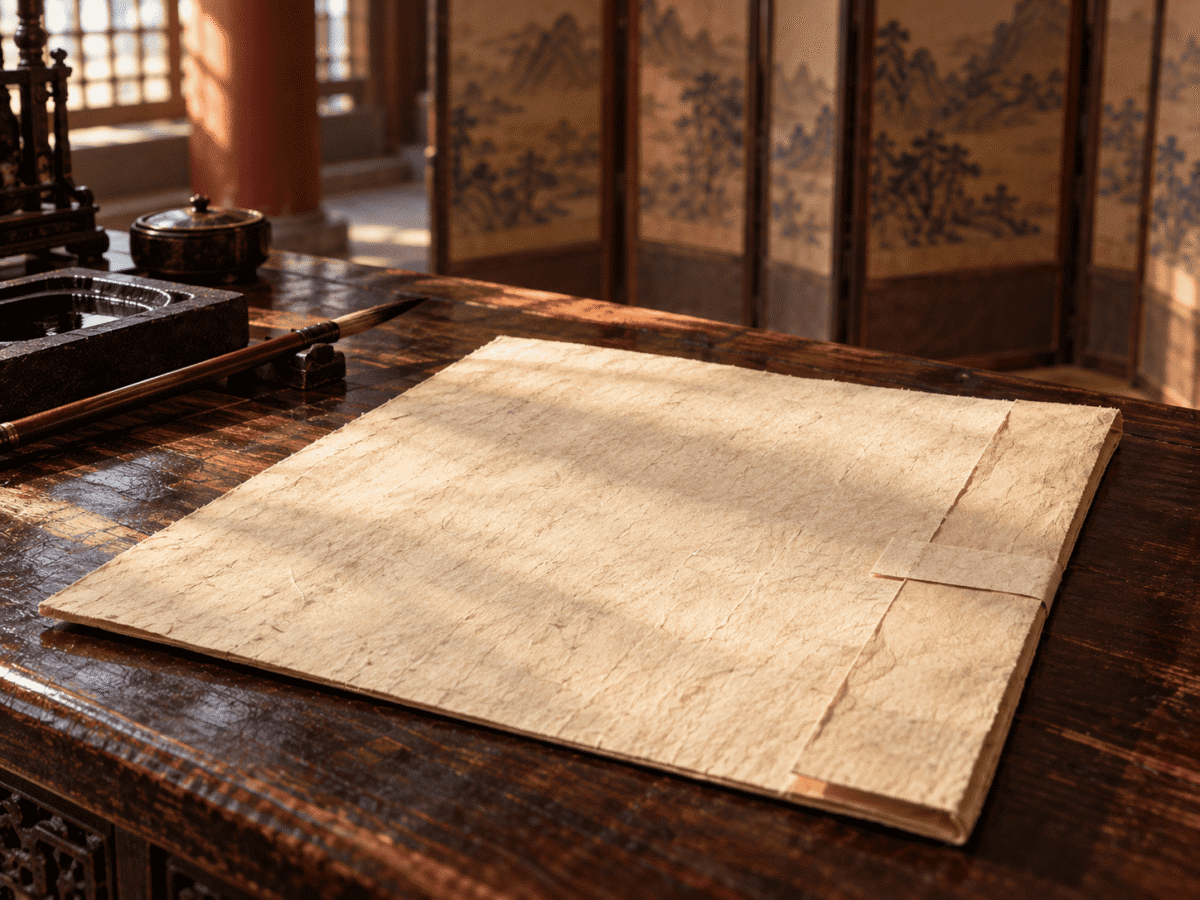
Screens in the room. For some oral exams, a screen was placed between the examiner and the test-taker, so the examiner couldn’t recognize a friend’s son by his face. Some of these exam sheets survive today in Korean palace collections.
Punishment. Get caught, and you could be banned from the next several exams, have your pass taken away, or watch the entire exam be thrown out for everyone.
And still, the cheaters kept coming. Every new rule got a new workaround. It was an arms race, and it lasted centuries.
Korea’s National Exam Festival
Fast-forward to today. Korea no longer has gwageo, but it has the Suneung — the national college entrance exam, taken by roughly half a million students every November. This year it falls on November 19, 2026.
And honestly? Every year it feels like a national festival. Except the guests of honor are terrified 18-year-olds who didn’t sleep.
Here’s what Korea does on exam day:
- Offices open late. Government offices and many big companies push back their start time by an hour so the roads stay clear for students. Even the stock market opens late.
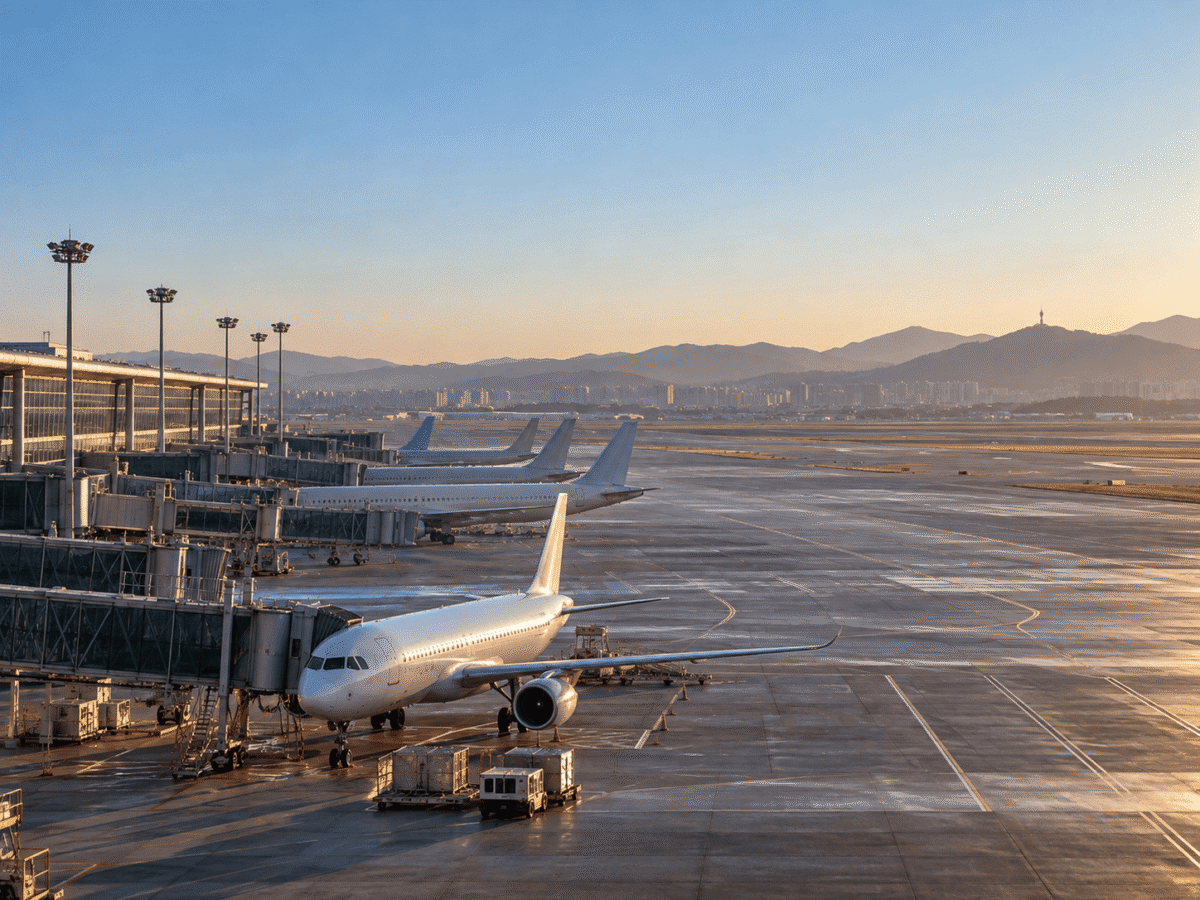
- The sky shuts down. During the English listening section, the entire country grounds its planes. In 2025, takeoffs and landings stopped nationwide for 35 minutes, 140 flights were rescheduled, and planes already in the air were told to hold at least 3 kilometers up. Drones were banned too. Because a jet engine during a listening question could cost someone a point.
- The police become a taxi service. Running late? Missed your bus? Went to the wrong school? Police patrol cars rush students to their exam halls, sirens and all. Every year the news is full of these clips — a kid in a school uniform jumping out of a police car and sprinting through the gate as it closes.
- Phones are the new nose notes. Phones and smartwatches are banned from the exam room. Get caught with one, and your exam can be voided.
Outside the school gates, younger students cheer, parents pray, and someone is always handing out the sticky good-luck candy Koreans give on exam morning.
Same Obsession, Better Tech
Four hundred years ago, Korea checked noses. Today it grounds airplanes.
The tools changed. The obsession didn’t. A country that once dug tunnels under exam halls now clears its highways and silences its skies for one day of testing — and somewhere out there, a student is still trying to write formulas on the side of a pen.
As a Korean, I find that both a little ridiculous and a little beautiful. Korea has always believed that one exam can change a life. That belief built a system people respected for centuries — and it’s exactly why people kept trying to cheat it.
Next Read: Want to know what students get handed at the school gate on exam morning — and why the same gift can also mean f*** you? Read my story on Korean yeot, the good-luck candy that’s also an insult.
Korean exam cheating has a long history. During the Joseon dynasty (1392–1897), candidates for the state civil service examination, gwageo, hid notes in brush handles, paper underwear, and even their noses, hired proxy test-takers, and used organized teams of writers and calligraphers, as described by the scholar Jeong Yak-yong.
In 1705, a buried rope running through bamboo tubes into the exam grounds near the national academy in Seoul was discovered. In 1610, an exam was mocked as a list of examiners’ relatives. Countermeasures included numbering candidates with the Thousand Character Classic, sealing names for blind grading, and banning cheaters from future exams. One exam day in 1800 drew 103,579 test-takers. Today, on the day of the Suneung, Korea’s college entrance exam, flights are grounded nationwide during the English listening section.