The Korean Sun and Moon Myth: A Tiger, Some Rice Cakes, and a Rope from Heaven
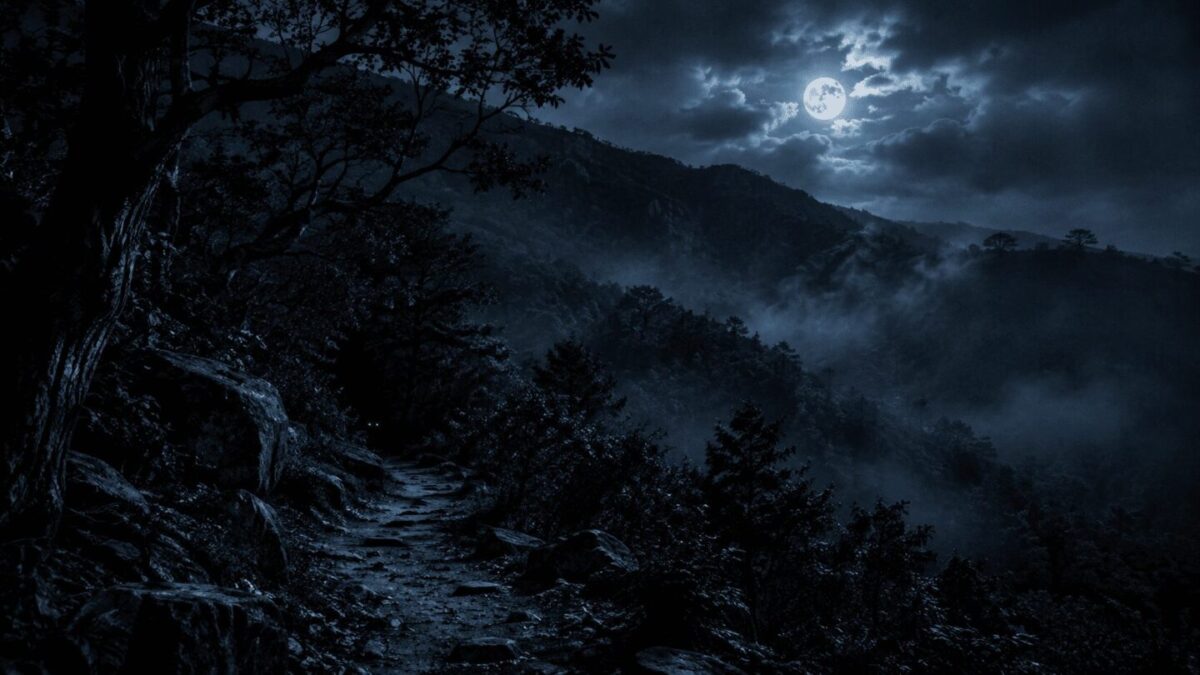
Every country has that one story. The one every single person grew up on, the one you absorb before you can even read. Americans have Little Red Riding Hood. Koreans have the Korean sun and moon myth — the tale of a hungry tiger, two kids up a tree, and a rope dropping out of the sky.
If you meet a Korean who doesn’t know this story, there are only two possibilities: they were born after 2010 and raised entirely by YouTube, or they’re lying to you. I had it in my childhood picture book set. It was a level in the online racing game I played after school. Every Korean kindergarten teacher has performed the tiger’s voice at least a hundred times.
It’s called Haewa Dari Doen Onui — “The Brother and Sister Who Became the Sun and Moon.” And it explains, among other things, why you can’t look directly at the sun.
What Is This Story? (The Quick Version)
The Korean sun and moon myth is a folktale passed down orally for centuries and known by virtually every Korean alive. Folklorists file it alongside the world’s oldest story types — a predator impersonating a family member (hello, Little Red Riding Hood) and children escaping to the sky. But the Korean version has its own flavor: the villain is a tiger, the weapon is rice cakes, and the ending literally hangs from a rope.
One thing before we start, because this trips up every American I’ve explained it to: Korean rice cakes — tteok — are not those dry, styrofoam-textured discs from the diet aisle. They’re dense, chewy, slightly sweet — closer to mochi than to anything called “rice cake” in an American grocery store. People here would absolutely risk a tiger encounter to bring some home. Which is exactly how this story begins.
The Story: “Give Me a Rice Cake and I Won’t Eat You”
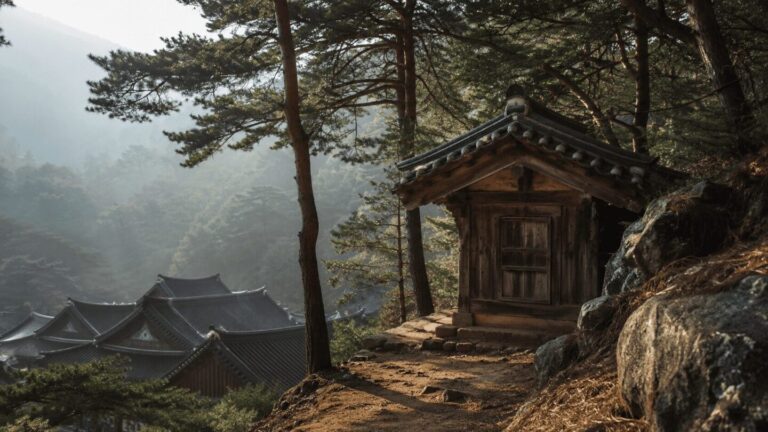
A widowed mother lives deep in the mountains with her young son and daughter. To feed them, she works at a market far away, and one evening she’s walking home over the mountain passes with a basket of rice cakes on her head.
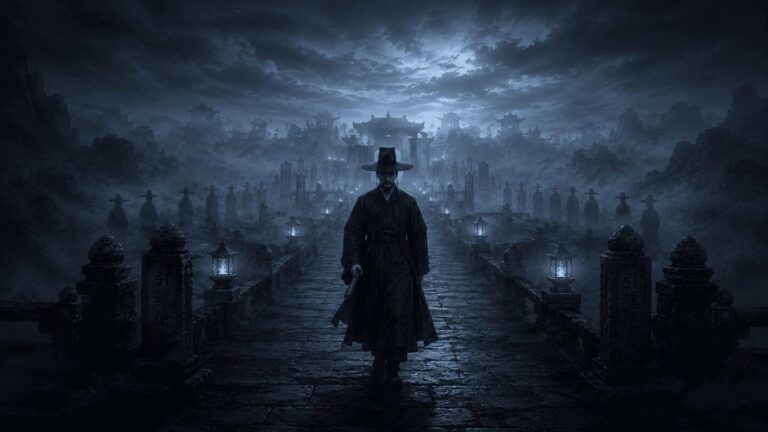
At the first pass, a tiger blocks the road.
“Give me a rice cake, and I won’t eat you.”
She throws one. The tiger lets her pass. At the next ridge — the same tiger, the same line. Another rice cake. Another pass, another demand. Ridge after ridge, the basket gets lighter, until there’s nothing left to throw.
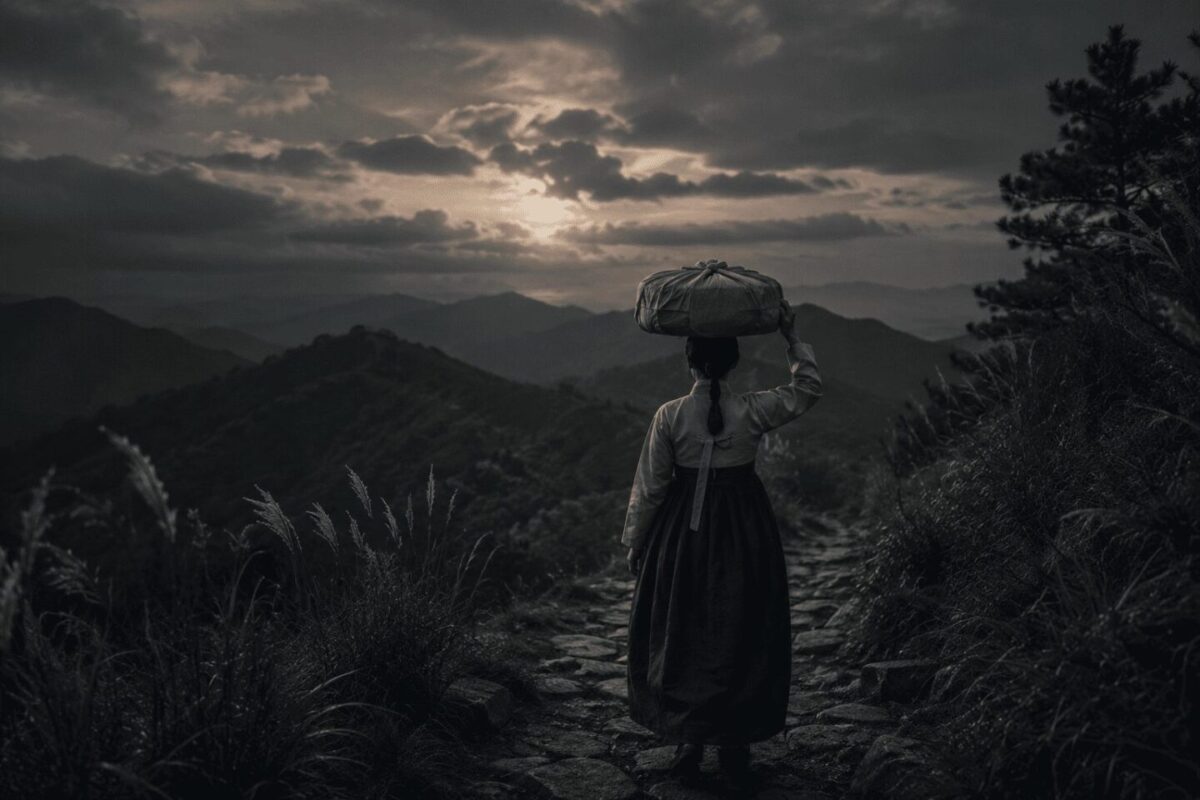
You can guess what happens when the rice cakes run out. The picture books handle this part gently, and so will I: the mother never makes it home. Some of the older oral versions are considerably darker about it — dark enough that I’m not going to retell them on a nice culture blog. Korean folktales, like the original Grimm tales, got sanitized on their way to the children’s shelf.
“Give me a rice cake and I won’t eat you” is still one of the most quotable lines in the Korean language, by the way. It gets used the way Americans use “I’ll huff and I’ll puff” — everyone knows exactly where it’s from.
The Wolf in Grandma’s Clothing — Except It’s a Tiger
Here’s where the story turns into Korea’s answer to Little Red Riding Hood.
The tiger puts on the mother’s clothes, walks to the house, and knocks. “Children, it’s Mom. Open the door.”
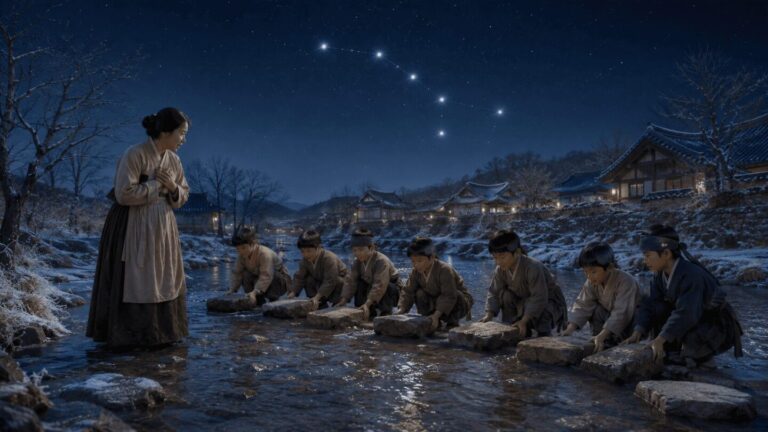
The kids aren’t stupid. The voice is too rough — “Mom’s voice isn’t like that.” The tiger explains it caught a cold. They ask to see a hand through the crack in the door — it’s rough and strange. “That’s from working all day,” says the tiger. And because they’re children, and because they miss their mother, they open the door.
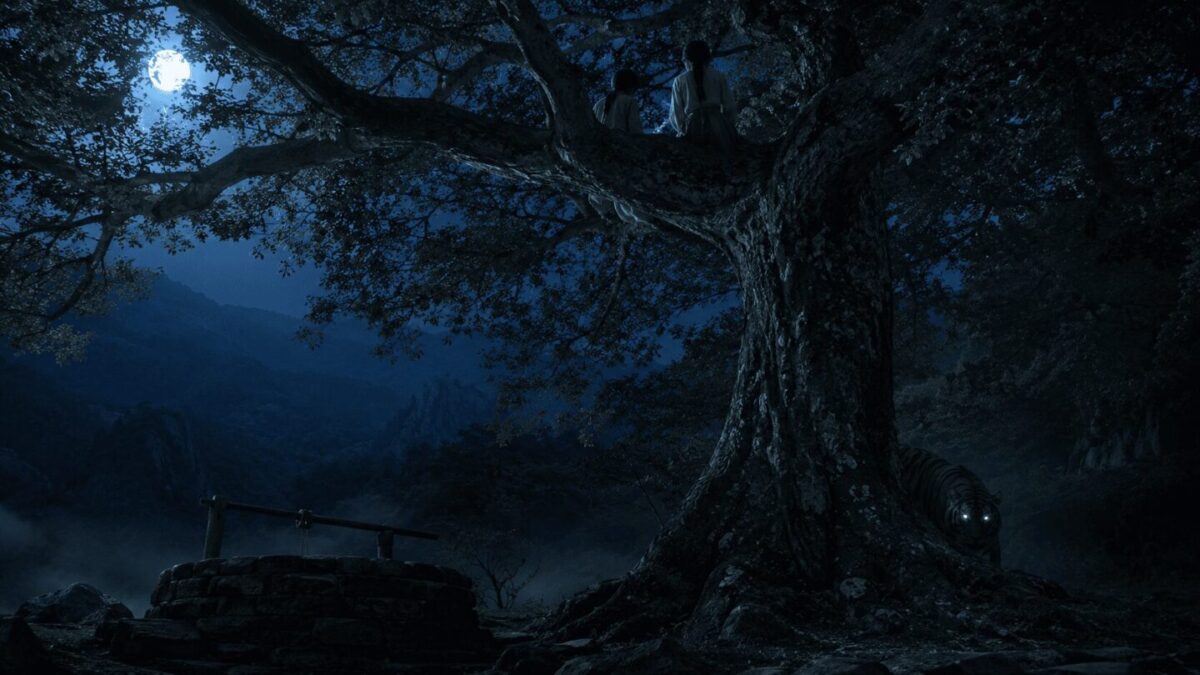
One look at the shadow under the borrowed clothes and they know. The kids bolt out the back, scramble up a tall tree by the well, and hold their breath.
The tiger circles below, finds them, and starts climbing.
A Rope From Heaven (and a Very Bad Rope)
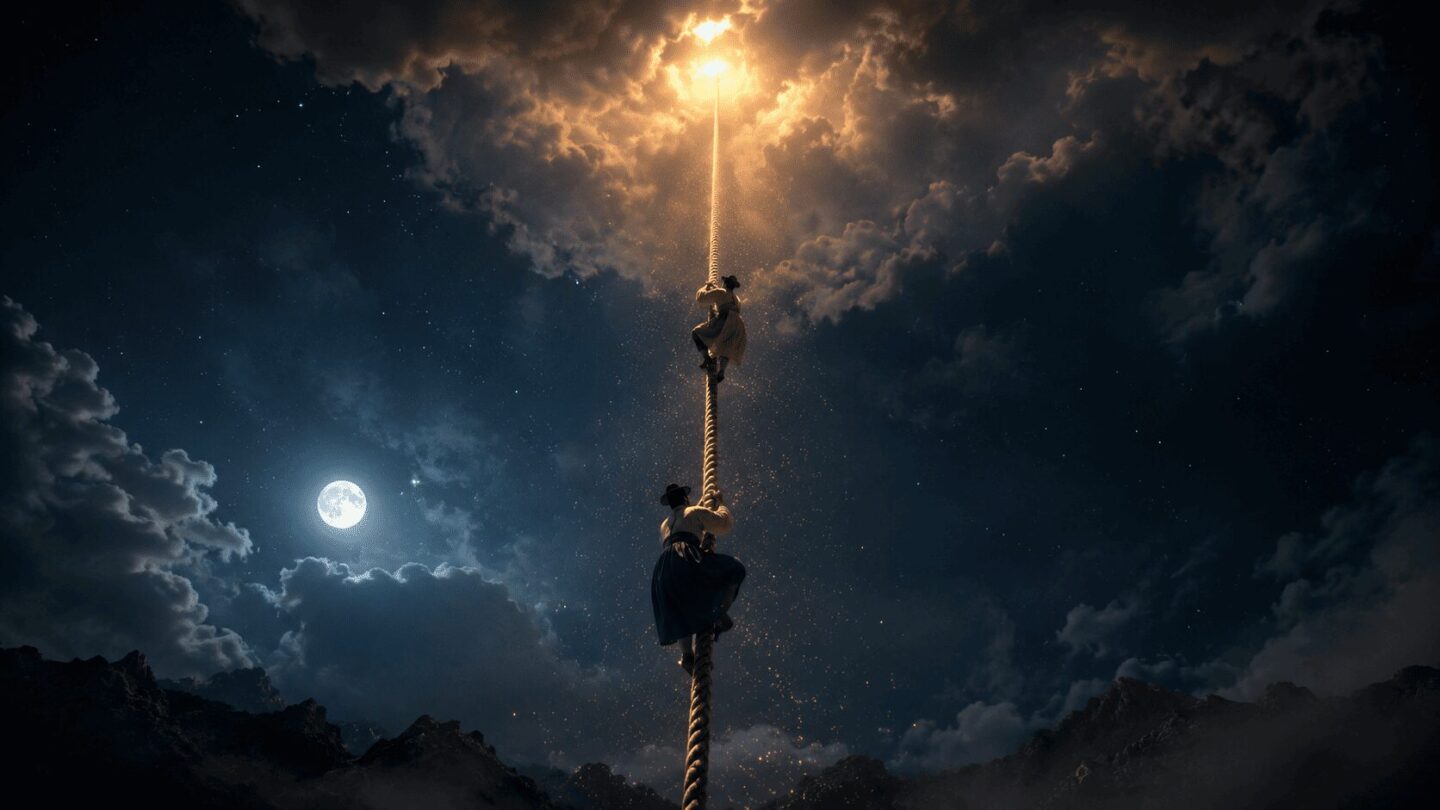
Out of options, the children pray to the sky: “If you want to save us, send down a strong rope. If you want us to die, send down a rotten one.”
A rope drops from the clouds — a strong, golden one. The kids grab on and rise into the sky.
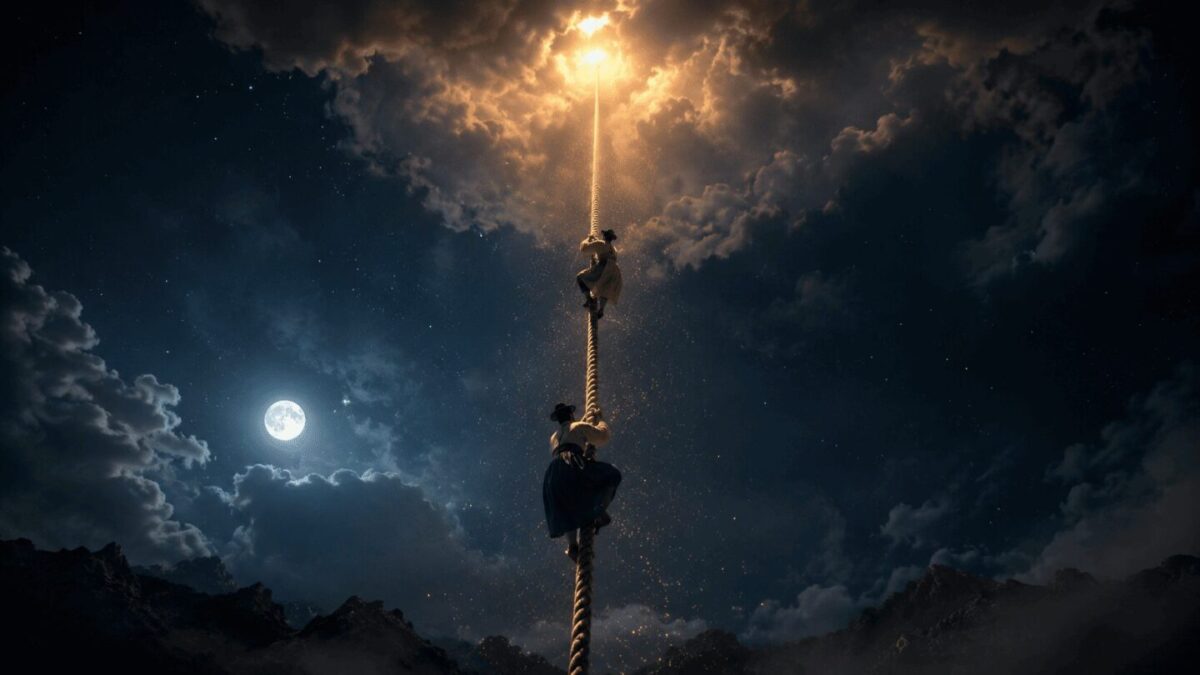
The tiger, watching this, prays the exact same prayer. And a rope comes down for the tiger too.
A rotten one.
Halfway up, it snaps. The tiger falls into a sorghum field and is impaled on the sharp cut stalks. And here’s my favorite detail in the whole story: Koreans said that’s why sorghum stalks are red to this day — stained by the tiger’s blood.
(If you’re American and only know sorghum as the syrup your grandmother in the South kept next to the maple — same plant. Next time you see the reddish stalks, you’ll know what Korean kids get told.)
This is what folklorists call an origin tale: a story that ends by explaining something you can walk outside and see. The sky took sides, the villain became a warning label on a crop, and the kids kept climbing.
Why You Can’t Look at the Sun
The brother and sister reach the sky, and heaven gives them jobs: he becomes the sun, she becomes the moon.
Except the story doesn’t end there, and this is the part I loved as a kid.
The sister hated the night shift. The moon meant being alone in the dark, and she was scared. So her brother swapped with her: she became the sun, and he became the moon.
But the new sun had a problem — everyone on earth kept staring at her all day. So, embarrassed, she began hurling out needles of light at anyone who looked directly at her.
And that, according to every Korean grandmother, is why you can’t look at the sun. Not nuclear fusion. A shy girl with needles. Honestly, I know which explanation I’d rather grow up with. That same moon still gets an entire harvest holiday built around it every autumn.
A Story That Refuses to Retire
This folktale never became a museum piece. It’s still everywhere in Korea, doing the rounds one generation at a time.
It has appeared on Korean postage stamps. A K-pop hit by the group IVE — “HEYA” — drew on its imagery. And when I was a kid, the online racing game Tales Runner had an entire level built on this story: you sprinted past hungry tigers, tossed them rice cakes to get by, and climbed into the clouds at the finish line. My generation didn’t just hear this folktale — we speedran it after school.
That’s the thing about the stories a country tells its kids — they don’t stay in the books. In Korea, tigers carried a whole world of meaning long before this tale (they were feared, worshipped, and everything in between), and a story where two kids out-pray one has proven impossible to retire.
So the next time you catch yourself squinting at the sun, consider the Korean explanation: she just doesn’t like being stared at. Give her some privacy. She’s had a long story.