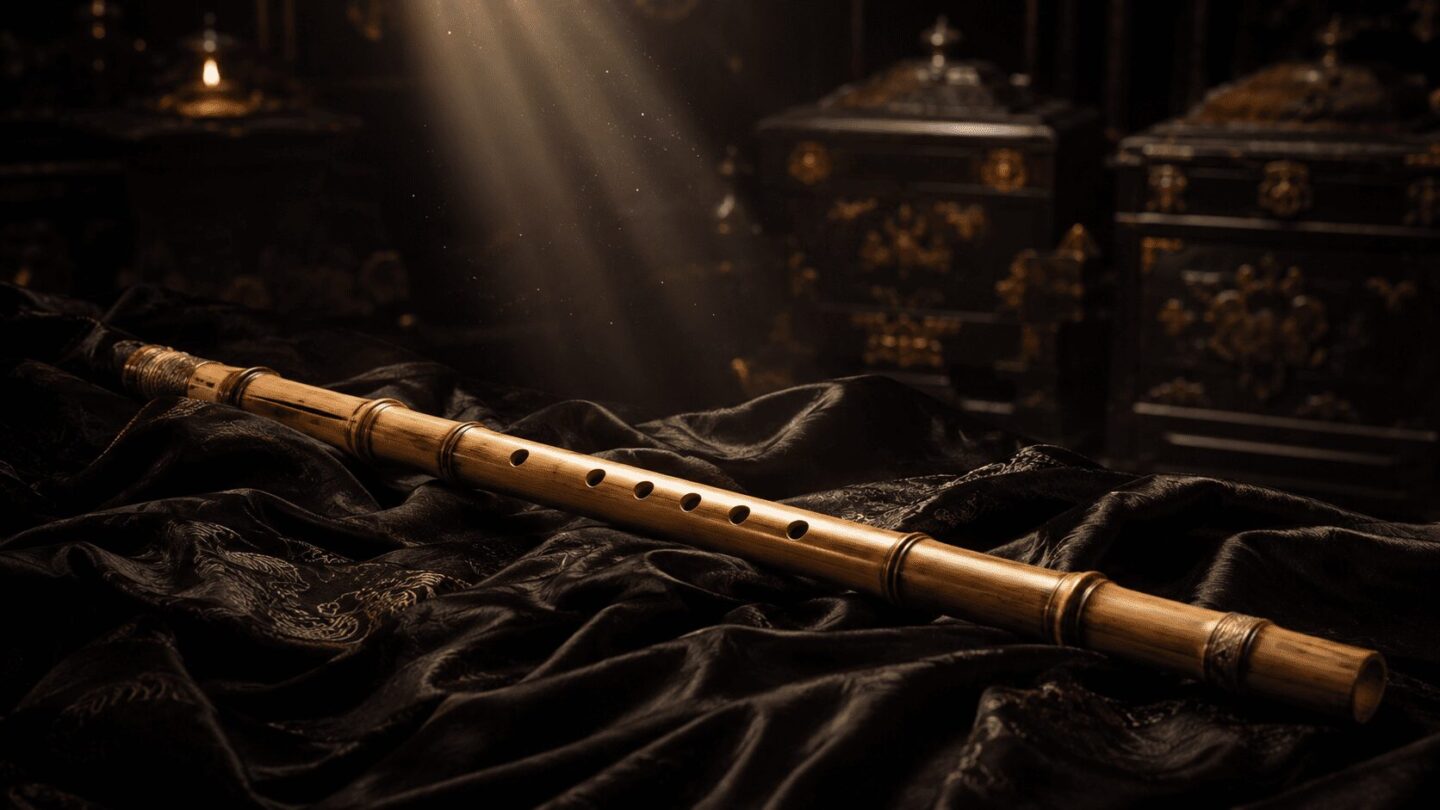
Manpasikjeok: The Korean Flute That Silenced Ten Thousand Waves
Here’s an embarrassing confession to open with.
I’ve been to Gyeongju — the ancient capital city in southeastern Korea that every Korean visits on a school trip. I saw the famous temple, the famous grotto, the famous royal tombs shaped like grassy hills. And I completely missed the setting of one of the strangest, loveliest stories in Korean history — a story I only knew from a children’s book, about a flute that could stop wars.
Not metaphorically. The story goes that when this flute was played, enemy armies turned around and went home. Diseases healed. Droughts broke into rain. Storms went quiet. Koreans a thousand years ago gave it a name that says everything: Manpasikjeok — “the flute that calms ten thousand waves.”
This is the story of that flute: where it came from, the boy who rode it like a broomstick, the scholar who called the whole thing a bluff, and why a battle-scarred kingdom might have needed a magic flute to be real.
A Kingdom Exhausted by War
To understand this story, you only need two sentences of history.
Before Korea was one country, the peninsula was split among three rival kingdoms that fought each other for centuries. The kingdom in the southeast — called Silla — eventually won, and in the year 676 it united the peninsula for the first time in history.
The king who finished that unification became one of the most famous rulers Koreans ever had. His name was King Munmu, and most Koreans — anyone who didn’t sleep through history class, anyway — can tell you at least one thing about him: the thing he asked for on his deathbed.
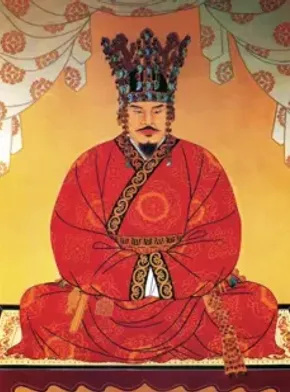
He asked not to be buried in a grand tomb. Instead, he asked for his remains to be committed to the East Sea, declaring that he would become a dragon — and keep protecting his country from beneath the waves.
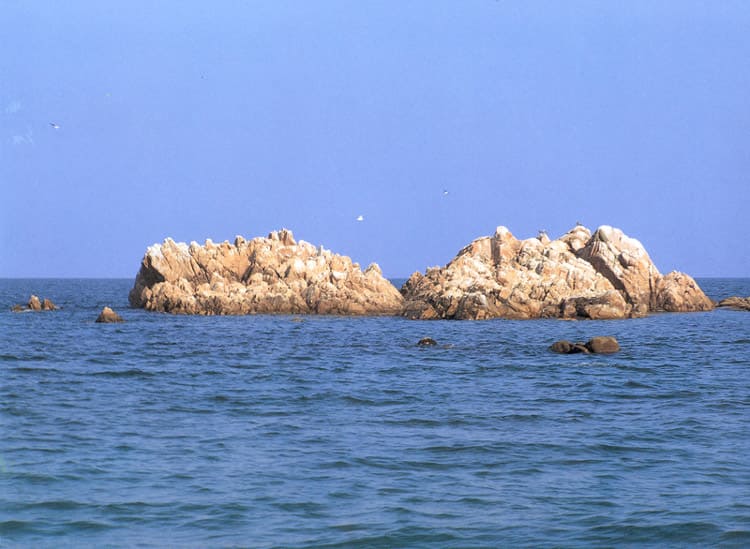
His people took him at his word. To this day, a cluster of rocks off Korea’s east coast is honored as his resting place. It’s the only underwater royal tomb in the world that I know of.
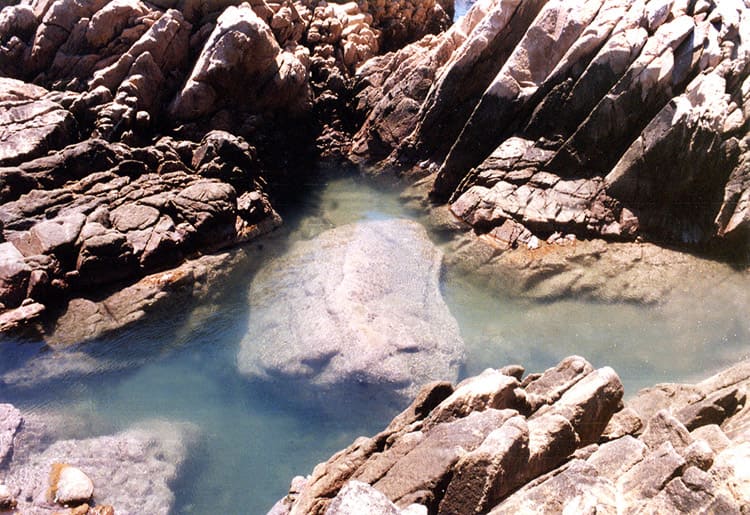
I’ll be honest: as a kid, this was the part of the story that got me. A king so unwilling to stop working that he turned his own death into a job transfer.
What Is the Manpasikjeok?
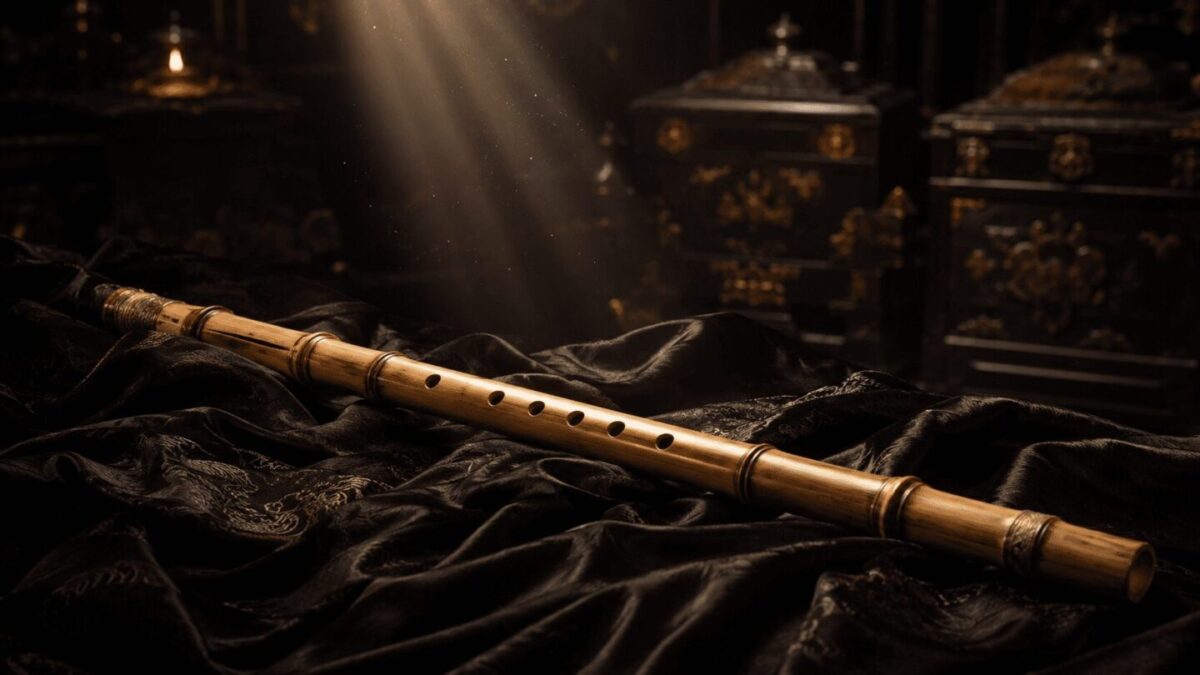
Before we go further, here’s the short version for the curious: the Manpasikjeok (만파식적) is a legendary bamboo flute from the Korean kingdom of Silla, said to have been given to King Sinmun in 682 by his father — the dragon-king Munmu — and the spirit of a great general. According to Korea’s oldest chronicles, playing the Manpasikjeok repelled invading armies, cured illness, brought rain in drought, stopped rain in floods, and calmed the wind and waves. Its name means “the flute that calms ten thousand waves,” and Silla kept it as a national treasure.
That’s the encyclopedia answer. Now let me tell it the way the old books actually tell it — because it plays out like a film.
The Island That Moved
The unifier-king dies. His son — King Sinmun — takes the throne, and one of his first acts is an act of grief: he completes a temple his father had begun on the coast, facing the sea where the old king now supposedly swims as a dragon. He names it Gameunsa — roughly, “the temple of gratitude.”
The following year, a coastal official rushes to the palace with a bizarre report: a small island is moving. It’s drifting back and forth on the waves — and it appears to be heading toward the temple.
The court diviner is summoned. His reading: the dragon-king and the spirit of the kingdom’s greatest general — the man who had led the armies of unification — are sending a gift from beyond. A treasure to guard the realm.
The king travels to the coast and climbs a lookout. The drifting island, they say, was shaped like a turtle’s head, and on its peak grew a single stalk of bamboo — a bamboo that did something impossible. By day, it split into two. By night, it joined back into one.
For nine days, storms churned the sea. Then the sky cleared, and the king crossed to the island — where a dragon rose to meet him.
The Dragon’s Riddle
The king asked the question anyone would ask: why does the bamboo split apart and come back together?
The dragon’s answer is my favorite line in the whole story. He explained it, the chronicle says, like this: a single hand cannot clap. Sound only happens when two things come together. Split apart, the bamboo is silent; joined, it can sing. Make a flute from this bamboo, the dragon said, and when it sounds, the world will know peace.
Read that again, remembering who’s talking: the dragon is the king who spent his life forcing three warring kingdoms into one. Coming from him, “things must join together to make a sound” isn’t a fortune-cookie line. It’s a unification king’s entire philosophy, compressed into a musical instrument.
The king carried the bamboo home. The flute was made. And according to the old records, it worked — enemies retreated at its sound, the sick recovered, the rains obeyed. Silla declared it a national treasure and locked it away in a special storehouse.
The Flute That Was Stolen — and Split in Two
The story doesn’t end there. The old chronicle gives the flute a sequel — and it’s a strange, wonderful one.
A decade later, a teenage nobleman — a member of Silla’s elite corps of young warriors — was kidnapped by raiders. Around the same time, the treasury reported the unthinkable: the flute was gone too.
The boy’s parents went to a temple and prayed for days. And then, the record says, the boy simply came back — appearing at the temple alongside a missing friend, carrying the lost treasures. Their story: a monk had appeared in captivity and told them to hold on. The flute had split itself into two halves, the two boys had each straddled one like riding a horse, and it had flown them home over the sea.
I love that detail more than I can explain. The flute whose whole meaning is “two things joining into one” saves two children by splitting itself apart for them — and becoming whole again only when they’re safe. After this episode, the court gave the flute an upgraded name: Manmanpapasikjeok. If the original name meant “calms ten thousand waves,” the new one essentially doubled it — ten thousand times ten thousand.
The Skeptic Who Called It a Bluff
Now — Koreans didn’t all swallow this story whole. And my favorite skeptic arrived about a thousand years later.
Jeong Yak-yong was one of the most famous scholars of Korea’s Joseon dynasty (the dynasty that came long after Silla), and he was a relentless pragmatist — the kind of man who preferred evidence over enchantment in everything from engineering to medicine. When he examined the tradition of Silla’s sacred flute, he noticed something the legends didn’t mention: surviving “sacred” Silla flutes were unusually thick, with oddly narrow finger holes. Hard to play — unless you’d grown up practicing on exactly that kind of flute.
His theory went roughly like this: people in the old Silla capital could play these flutes because they’d handled them since childhood, while musicians from elsewhere fumbled. And if word got out that only Gyeongju musicians could play the instrument, those musicians risked being summoned away to the royal court — so it was rather convenient to let everyone believe the flute itself was divine and simply refused to sound for outsiders.
In other words: a bureaucratic excuse, fossilized into a miracle.
Is he right? Nobody knows. But I find it deeply Korean that our historical record preserves both — the miracle and the man rolling his eyes at it, side by side, for us to choose between.
Correcting the Record: Bamboo, Not Narwhal
One housekeeping note, because this blog has a running tradition of checking what the English-language internet says about Korean stories.
If you search this legend in English, you may run into claims that the Manpasikjeok was made from a narwhal’s tusk rather than bamboo. To be clear: the original sources — Korea’s foundational 13th-century chronicle of history and legends, and the official history compiled even earlier — say bamboo, plainly and repeatedly. The narwhal version comes from a modern spiritual movement that consciously reinterprets Korean myths through its own symbolic framework. That’s a creative modern rereading, and it’s honest about being one — but a casual reader skimming search results could easily mistake it for the historical record. It isn’t. The old books say bamboo.
(While I’m at it: this is a Silla story, from Korea’s southeast. I’ve seen it mislabeled online as belonging to other regions and kingdoms. If a version you read doesn’t mention Silla, treat it carefully.)
Why a Kingdom Needs a Magic Flute
So why did this story exist at all?
Here’s the detail I saved for last. The year the flute appeared — the second year of the young king’s reign — was not a peaceful one. Within months of taking the throne, King Sinmun had faced a rebellion led by his own father-in-law, and had crushed it in a bloody purge. The kingdom was unified on the map, but shaky underneath. And it is precisely then that heaven, the sea, the dragon-father, and the deified general all line up to hand the new king a divine object whose message is: join together, and there will be peace.
Modern historians read the Manpasikjeok as exactly that — a masterstroke of royal storytelling, a symbol engineered to steady a nervous kingdom.
When I first learned about that interpretation, I expected to feel disillusioned. I didn’t. Because honestly, it’s what I had always vaguely felt about this story anyway: whether or not a magic flute ever sat in a Silla storehouse, the telling of it did something real. It gave a war-exhausted people something to hold onto. Sometimes a story is the technology. A thousand years before anyone coined the term “national morale,” a young king and his court understood it perfectly — and their solution was so elegant that a kid in modern Korea, reading a children’s book over a millennium later, still felt the calm it was designed to spread.
The rocks where the dragon-king supposedly rests are still there, off the east coast near Gyeongju. The temple his son built for him survives as a quiet ruin with two magnificent stone pagodas. I’ve never stood there — I told you, I did the school-trip route. But writing this made me want to go back and fix that.
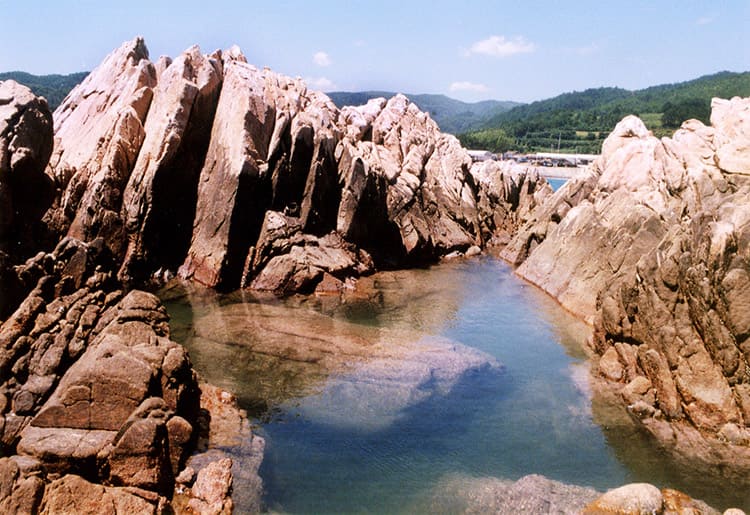
If I do, and the sea happens to go quiet while I’m standing there — I already know which flute I’ll be thinking of.