Gisaeng vs Geisha: The Woman Behind Korea’s Most Misunderstood Title
Gisaeng vs geisha — it’s one of the most common comparisons made about Korean history, and it shows up everywhere from travel blogs to K-drama forums.
Call a gisaeng a “Korean geisha” and you’ll usually get a polite nod. Say it to someone who actually studied Korean history, and you might get a correction you didn’t expect.
In 16th-century Korea, a woman could be locked inside her house, married off without being asked, and expected to never touch a book of poetry. Hwang Jini looked at all of that and chose to become a gisaeng instead — not because she had no options, but because it was the only door Korea’s Joseon kingdom — the dynasty that ruled the peninsula for roughly 500 years — opened for a woman to read, write, dance, and argue philosophy with the smartest men in the country. History remembers her as one of Korea’s greatest poets. The West, when it remembers her at all, calls her “a Korean geisha.” She’d probably have a few words about that.
The comparison isn’t wrong, exactly. It’s just missing about 80% of the story.
Who Was Hwang Jini?
Hwang Jini was born around 1506 in Kaesong, a city near present-day Pyongyang, in a Korea where a woman’s entire life was decided by men she’d never met — which family she married into, whether she’d be allowed to read, whether her opinion counted for anything at all. Even the exact year of her death isn’t settled; different records place it anywhere from the 1540s to the 1560s, which tells you something about how history treated women’s lives in this period. It recorded the men around them far more carefully.
She was born the daughter of a nobleman and a woman of much lower status, which, under the law of the time, made her an outsider from the start — respectable enough to be educated, not respectable enough to be married well. Rather than accept a quiet life as someone’s secondary wife, she took the one path available to a woman with ambition: she became a gisaeng.
It sounds like a downgrade. It wasn’t. As a gisaeng, Hwang Jini took the name Myeongwol — “bright moon” — and gained something almost no other woman in Korea at the time had: the freedom to be taken seriously as a mind.
What Gisaeng Actually Did (And How That Differed From Geisha)
The dictionary version of “gisaeng” undersells the job. Gisaeng were trained from childhood in poetry, music, dance, and conversation — skilled enough that noblemen would rather spend an evening debating philosophy with a gisaeng than with their own wives, who were rarely taught to read at all. Some gisaeng also worked as physicians and seamstresses, which meant the profession stretched from the artistic to the practical.
Here’s the part that surprises most people: despite belonging to the lowest social class in Korea at the time, cheonmin — technically ranked alongside slaves — gisaeng were among the only women in the country who were formally literate. A woman born into a noble family might never learn to write her own name. A woman born into the lowest class, if she became a gisaeng, might spend her life writing poetry that nobles would later fight to be remembered for reading.
Geisha, emerging in Japan roughly a century later, were trained in a similar range of arts. But they didn’t start from the same place. Gisaeng were, by law, government property — registered, assigned, and controlled by the state from the beginning. That distinction shapes everything else about how the two roles actually functioned.
The Woman Who Argued With Scholars
What made Hwang Jini exceptional wasn’t just that she could write — it’s who she wrote to, and who wrote back.
She moved among scholars, poets, and aristocrats as something close to an equal, at a time when most women of any class weren’t invited into that kind of conversation at all. Stories about her spread for centuries afterward — including one often repeated tale in which she supposedly outwitted a nobleman famed for his self-discipline, using a short poem built around a pun on his own name. How much of that story is fact and how much is legend polished over five hundred years of retelling is genuinely hard to say. But it survived for a reason: people wanted to believe a woman like her had existed.
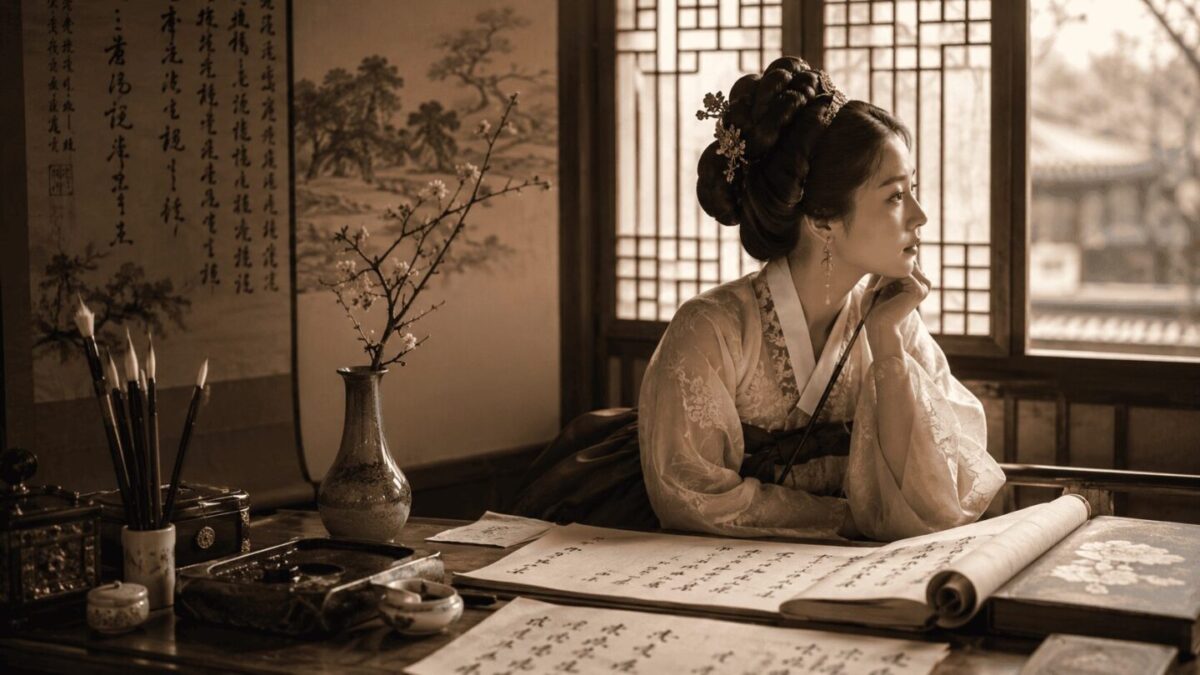
What we know for certain is smaller and, in its own way, more moving. Only a handful of her poems remain — a few sijo, a few classical Chinese verses — and nearly all of them return to the same subjects: love, distance, and the particular loneliness of a life spent being desired by many and truly known by almost no one. That contradiction is the whole of a gisaeng’s life compressed into a few lines, and it’s why her poetry still gets taught in Korean schools half a millennium later.
Gisaeng vs Geisha: Why Calling Her a “Korean Geisha” Undersells Her
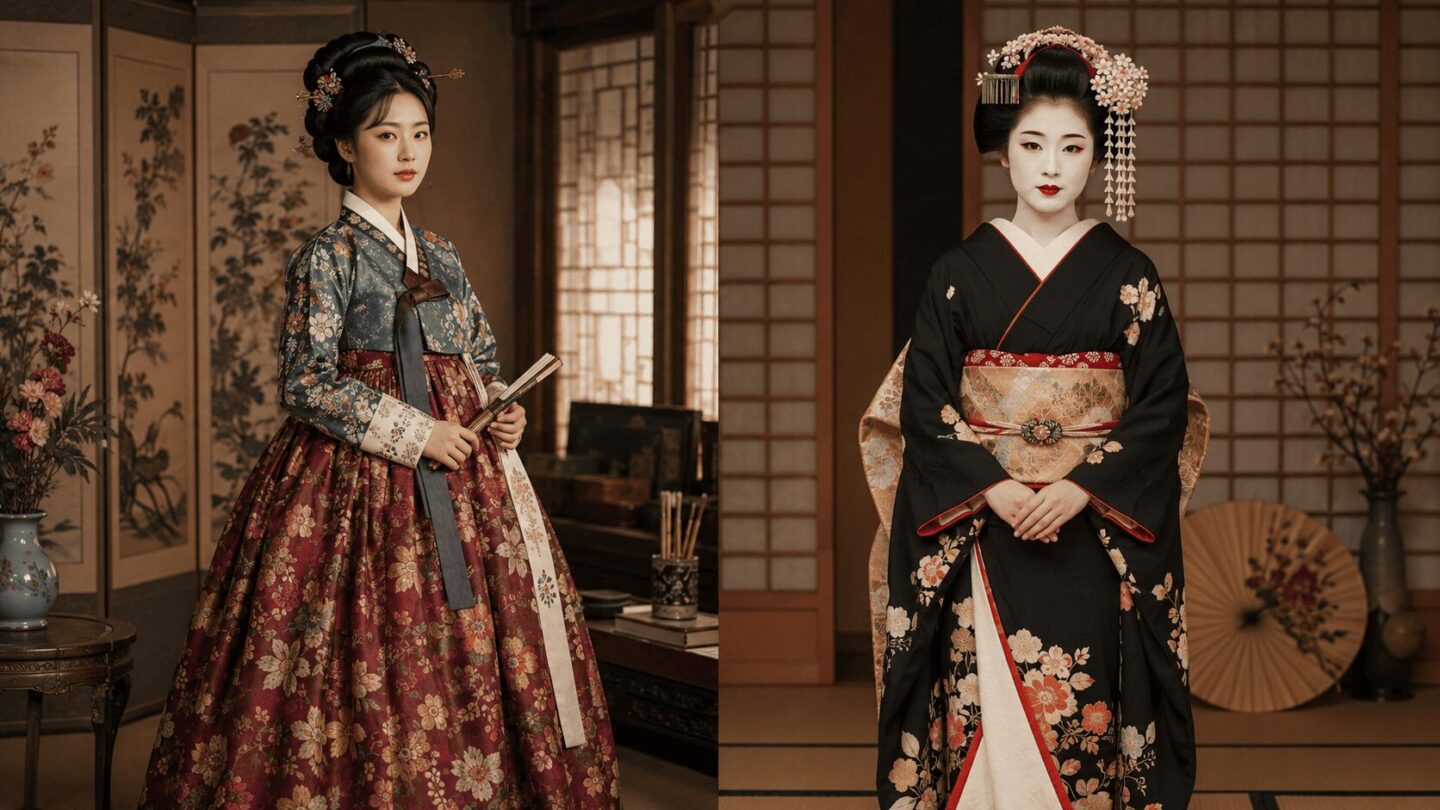
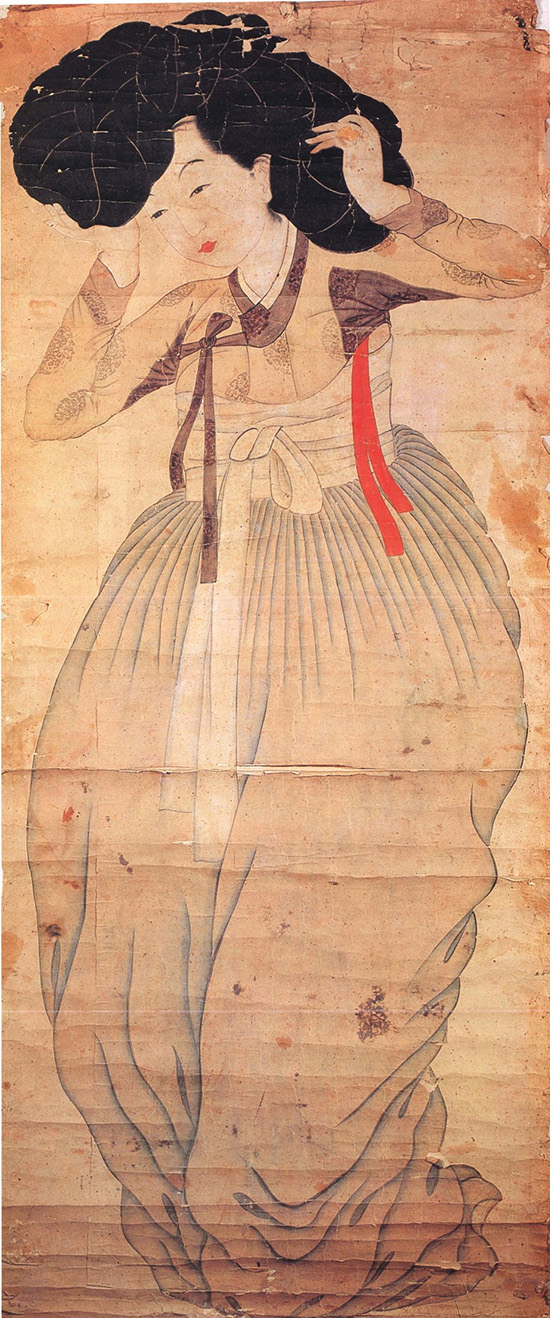
Visually, the two traditions didn’t even try to look alike. Geisha cultivated uniformity — pale white makeup, tightly wrapped kimono, a look designed to erase individual variation in favor of a single recognizable ideal. Gisaeng, especially by the late 19th and early 20th centuries, did close to the opposite: bold printed fabrics, individual hairstyles, a look that photographs from the era show as strikingly modern rather than standardized.
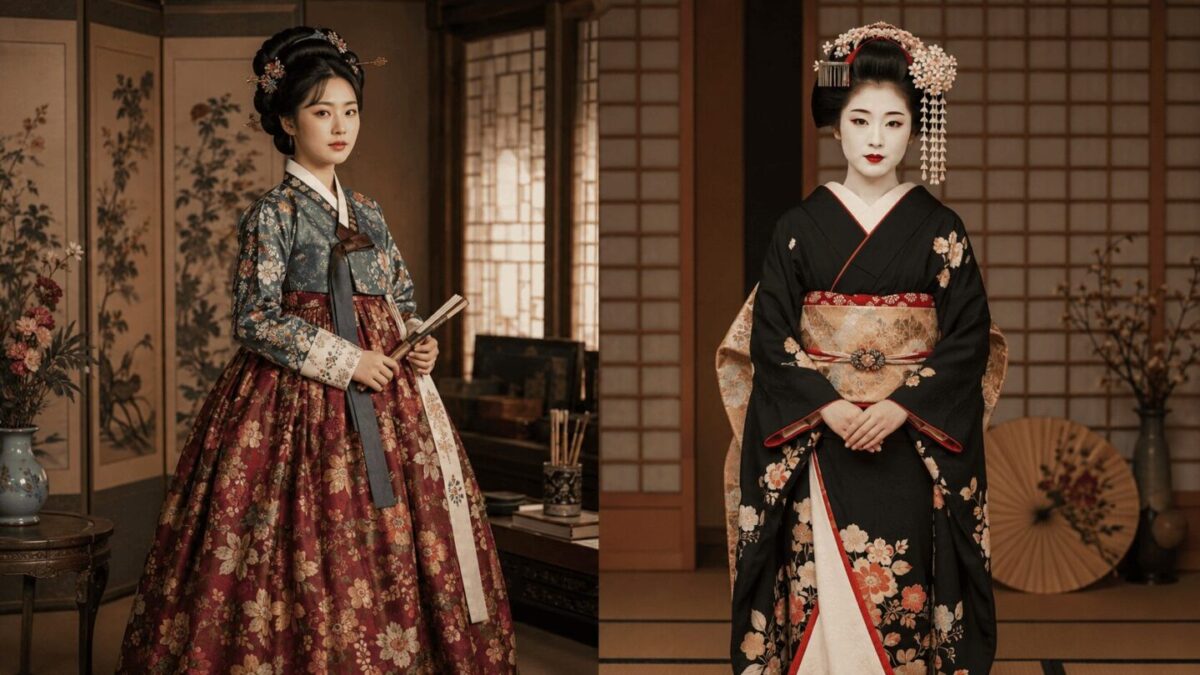
The language around each role tells its own story, too. Geisha were poetically described as belonging to the “flower and willow world.” Gisaeng carried the nickname haeohwa — “a flower that understands words” — a phrase that puts the emphasis on intellect rather than beauty. And if you’re keeping score on which came first: gisaeng are generally believed to predate geisha, who didn’t emerge as a distinct group until the 1600s.
None of this means one tradition was simply “better” than the other. It means they weren’t the same thing, and treating them as interchangeable erases exactly the parts of each that made them distinct.
A Legacy That Got Complicated
It would be dishonest to end here as if this story stayed simple. Later in Korean history — through Japanese colonial rule and further into the 20th century — the identity of the gisaeng was reshaped by forces far less romantic than poetry, and the word came to carry associations that Hwang Jini’s era never intended. That version of the story involves colonial policy, state-sanctioned prostitution, and a legacy Korea still argues about today. It’s a much heavier chapter. It’s not the one this article is telling.
One Last Thought
Hwang Jini never got to choose most of her life — not her birth, not her class, not the fact that becoming a gisaeng was the only door open to a woman who wanted to be taken seriously as a mind. What she did choose was what to write about once she was standing inside that door. Five hundred years later, that choice is still what people remember her for.
Call her a “Korean geisha” if you want the short version. Just know it’s the smallest part of who she was.