Admiral Yi Sun-sin: The Hero Betrayed by His Own Country
Western naval historians have called him the equal of Nelson — some have said he was greater. What almost none of them mention is this: the war that nearly broke Admiral Yi Sun-sin wasn’t fought only against Japan. It was fought against his own government.
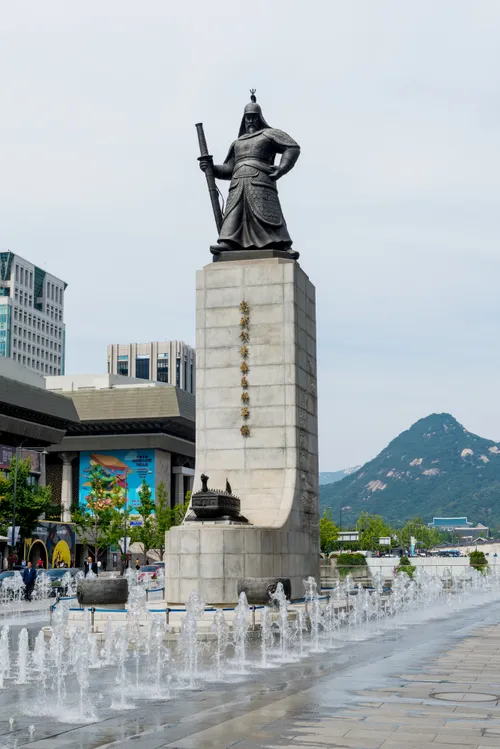
Every Korean kid learns the same version of this story in school: a flawless naval commander, an ironclad “turtle ship,” an unbroken record at sea. It’s the version cast in bronze in the middle of Seoul, at Gwanghwamun Square. But growing up with that story myself, I was never taught the part that actually makes it remarkable — not that he won battles, but what his own country did to him in between.
Who Was Admiral Yi Sun-sin, Really?
Before any of the battles, one detail is worth sitting with: Yi Sun-sin had no formal naval background. He came up through the army, not the navy, and was by most accounts an unremarkable student of the exams that were supposed to shape his career. He wasn’t groomed for greatness. By the standards of his own time, he was a late and unlikely arrival to command.
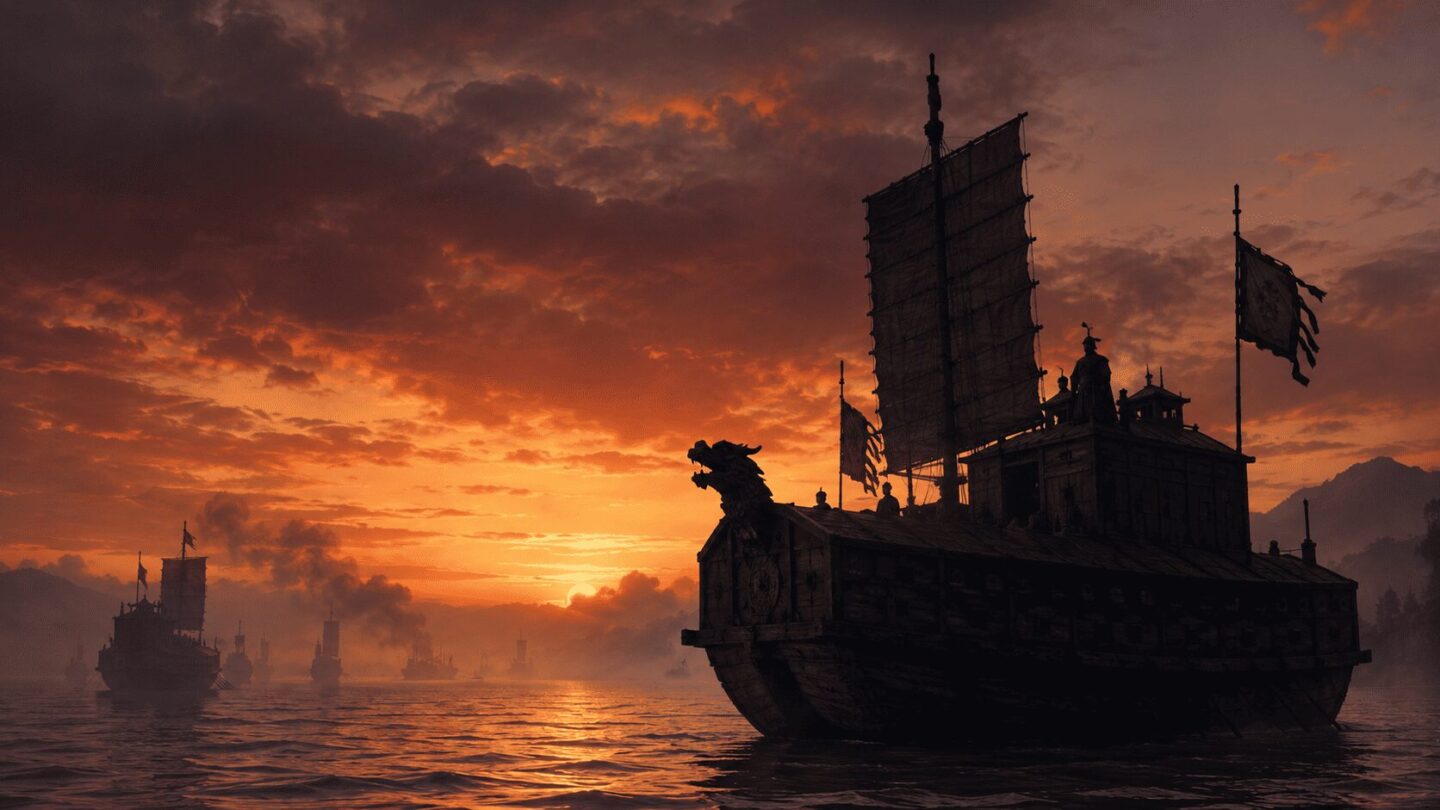
What he did have, when the Japanese invasion came in 1592, was Korea’s ironclad turtle ship, the geobukseon — low in the water, difficult to board, nearly impossible to burn. Earlier designs had existed for over a century, but Yi Sun-sin was the one who understood exactly how to use it, and against whom.
This part of the story, foreigners generally get right. Korea’s navy under Yi Sun-sin held the southern coast against a Japanese force that had already taken Seoul within weeks. It’s the next part that almost never makes it into the Western retelling.
The War Inside the War
Admiral Yi Sun-sin’s most dangerous enemy, for much of his career, wasn’t the invading Japanese navy under warlord Toyotomi Hideyoshi. It was the royal court back home, in Hanseong — the old name for what is now Seoul.
Korea at the time was ruled by the Joseon dynasty, and its military culture ran on rank, faction, and reputation. Yi had a habit of making enemies among people who outranked him. He refused to inflate reports of victory to flatter his superiors. He clashed with rival commander Won Gyun, whose jealousy curdled into open sabotage. When the court needed someone to blame for setbacks that weren’t his fault, Yi’s honesty made him an easy target. Korea’s kings weren’t always secure or gracious toward the men who protected the throne — a pattern that shows up again and again across Joseon history.
In 1597, at the height of the war, Admiral Yi Sun-sin was arrested, stripped of his rank, and tortured on the order of King Seonjo — Korea’s own ruler at the time — on charges that most historical accounts consider fabricated. He was released only after allies at court intervened, but he was demoted to a common foot soldier, ordered to serve without rank or command in the same war he had spent years trying to win.
That same year, his mother died while he was in this state of disgrace. Surviving fragments of his diary from this period don’t read like a war hero’s memoir. They read like a man in genuine despair, grieving his mother and questioning what was left to live for, while the war he’d given everything to still hadn’t ended.
This is the part of Admiral Yi Sun-sin’s story that gets lost in translation, quite literally. Western military histories tend to treat it as a brief interruption before the real story resumes. But if you grew up hearing about him only as an unbeatable commander, this is the piece that reframes everything: he wasn’t only fighting a foreign navy. He was fighting to be believed by his own people, and losing that fight more than once.

Myeongnyang: Returning to a War That Betrayed Him
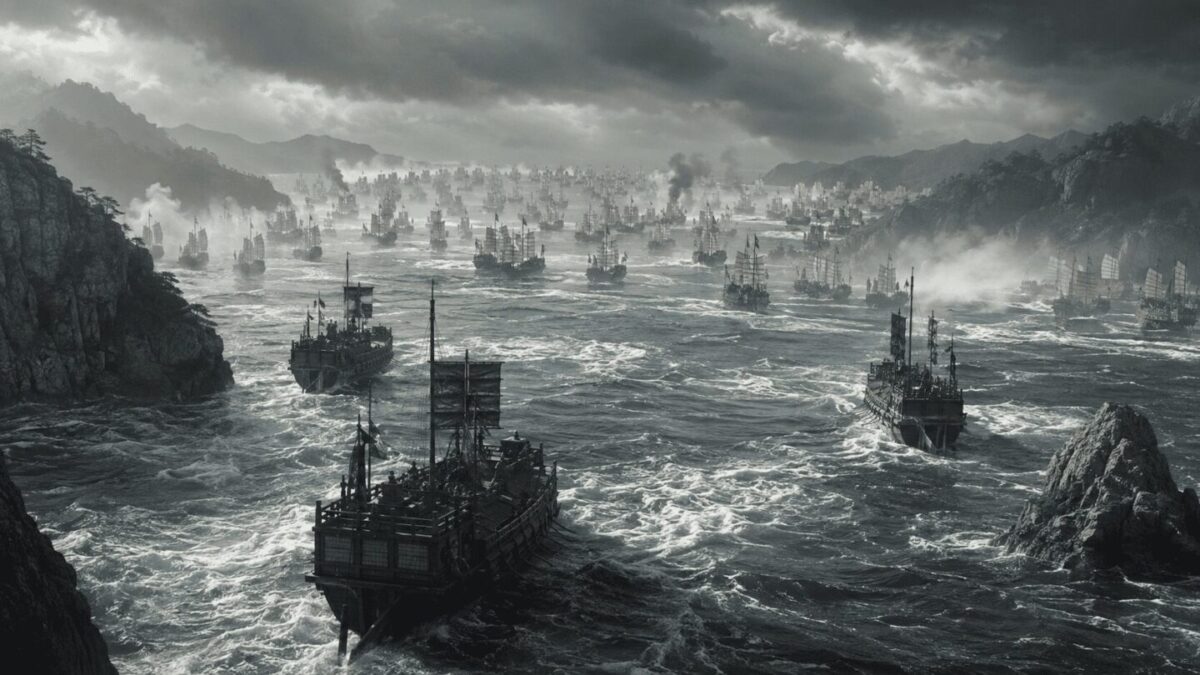
What happened next became known as the Battle of Myeongnyang — one of the most lopsided naval victories in recorded history, and the detail that changes how it should be understood: by the time Admiral Yi Sun-sin returned to command in 1597, the navy he’d built was gone. His rival Won Gyun had lost nearly the entire fleet in a disastrous defeat. Yi was handed what remained — just 13 ships — and told to hold the line against a Japanese fleet of more than 130.
He had just been tortured by the government he was about to risk his life for again.
That’s the detail that gets cut from the highlight reel. The victory at Myeongnyang isn’t only a story about tactical brilliance, narrow straits, and tidal currents turned into a weapon — though all of that is true. It’s a story about a man who had every reason to walk away from his country, and instead sailed back out to die for it if that’s what it took.
Noryang, and the Line Everyone Knows Without Knowing Where It Came From
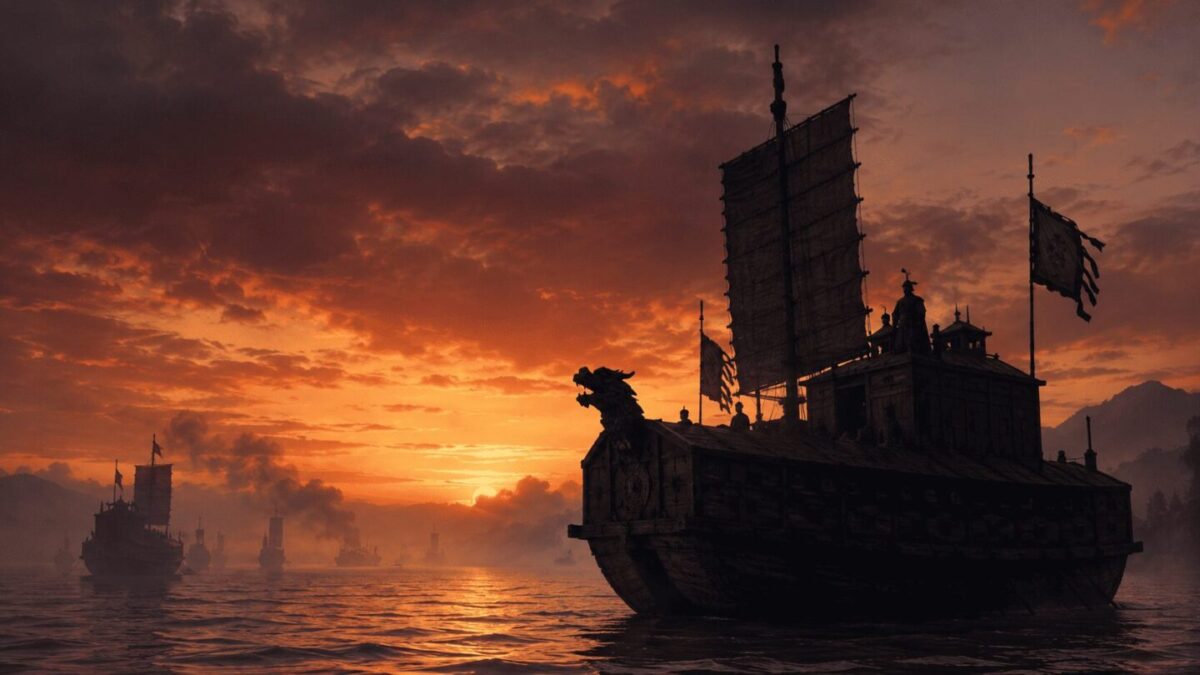
Yi Sun-sin died in 1598 at the Battle of Noryang, the war’s final major engagement, struck by a stray bullet as the fighting reached its peak. According to accounts passed down through his family and later histories, his last order was: do not announce my death.
He understood, even as he was dying, that his men needed to believe he was still commanding them until the battle was won. So his death was hidden until the fighting ended.
It’s a striking detail on its own. It becomes more striking once you know everything that came before it: the man giving this order had, a year earlier, been someone his own government tried to erase.
Why He’s Still Standing in the Middle of Seoul
Today, a bronze statue of Admiral Yi Sun-sin stands in Gwanghwamun Square, facing north toward the old royal palace — and, symbolically, toward the government that once betrayed him. Tourists photograph it without always knowing what it’s really commemorating.
Southwest of Seoul, in Asan, the shrine of Hyeonchungsa still holds his sword, his war diary, and the house he grew up in — a quieter, more personal counterpart to the bronze monument in the capital.