Empress Myeongseong: The Assassination That Shook Korea
Most Americans have heard of Empress Sisi of Austria — the beautiful, unhappy empress who was assassinated, the one Netflix keeps making shows about. But did you know Korea had an empress with an eerily similar fate?
Her name was Empress Myeongseong. And in October 1895, Imperial Japan gave the plan to kill her an operation name.
They called it Fox Hunt.
Let me tell you what happened that night — and why, more than 130 years later, Koreans still can’t fully agree on who she was.
Who Was Empress Myeongseong?
Empress Myeongseong (1851–1895), also known as Queen Min, was the wife of King Gojong, who ruled Korea during its final royal dynasty, the Joseon dynasty. She became the most politically powerful figure in the Korean court and was assassinated by Japanese agents in 1895, in an event known as the Eulmi Incident.
Here’s the part I find almost cruelly ironic.
She was chosen as queen because she was supposed to be harmless.
In 1866, Korea’s royal court needed a bride for the teenage king. The real power behind the throne was the king’s father — known as the Daewongun — and he had one requirement above all: the new queen had to come from a noble family with no political muscle. No powerful brothers. No ambitious uncles. A girl who would sit quietly in the inner palace and produce heirs.
He picked a fifteen-year-old from the Min family — a girl who had lost her father as a child and been raised by her widowed mother, with no political backing to speak of.
It may have been the worst personnel decision in five hundred years of Korean royal history. The quiet girl read history and politics instead of doing embroidery. Within a decade, she had built her own political faction, pushed her father-in-law out of power, and become — in the eyes of many historians — more politically influential than the king himself.
Foreign diplomats who met her wrote home about her sharp mind. Japan wrote about her too, in internal documents. They used a different word: obstacle.
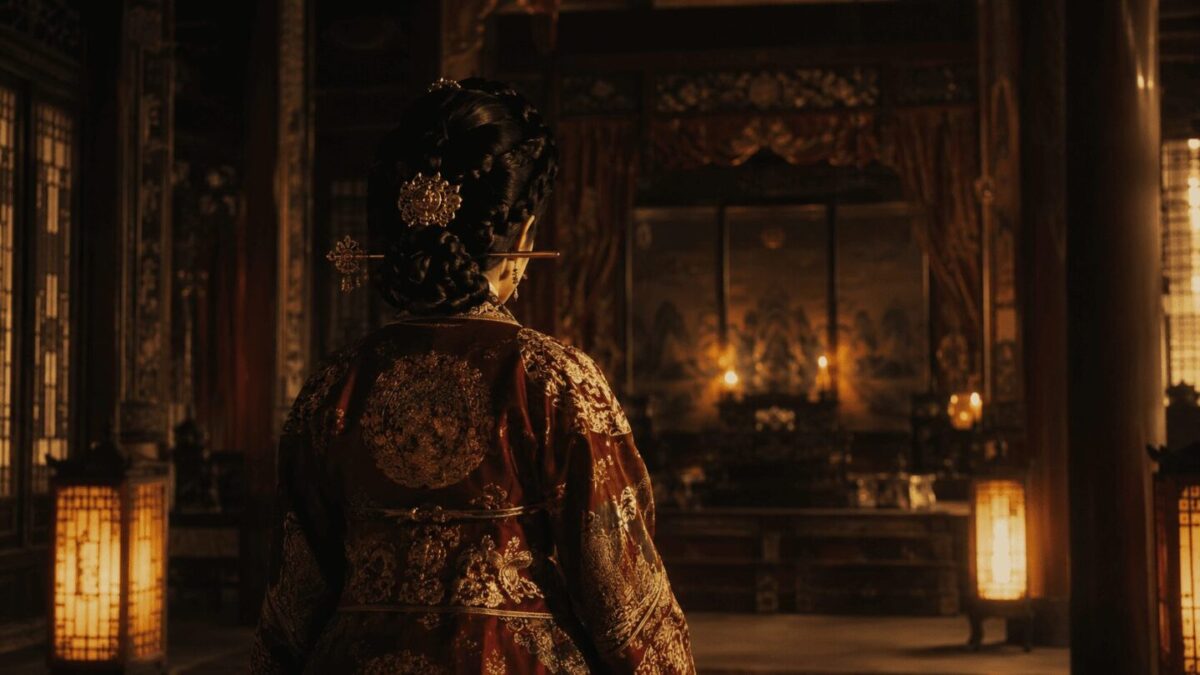
One more detail — something even devoted K-drama fans usually don’t know: not a single confirmed photograph of her survives. A few old photos have been claimed to show her over the years, but historians dispute every one of them. The most powerful woman in Korea died faceless to history. Every image of her you see today — in dramas, in paintings, on stage — is an act of imagination.
Why Was Empress Myeongseong Assassinated?
Empress Myeongseong was assassinated because Imperial Japan saw her as the biggest obstacle to its control over Korea. After Japan defeated China in a war in 1895, she moved to counter Japanese influence by building closer ties with Russia. Japanese officials in Seoul, led by Minister Miura Gorō, organized her assassination in response.
That’s the textbook answer — and it’s accurate. But here’s the context that makes it human.
By the 1890s, Korea was a small kingdom squeezed between three empires: a fading China, a rising Japan, and an ambitious Russia. King Gojong was, to put it gently, not a decisive man. It was the queen who played the great powers against each other — and for a while, she was good at it. When Japan beat China in the war and started swallowing Korea’s government from the inside, she reached for the one country strong enough to push back: Russia.
To Japan, that was unacceptable. Diplomacy hadn’t gotten rid of her. The king would never turn on his own wife.
So they decided to remove her another way.
The Night of the Fox Hunt: The Eulmi Incident
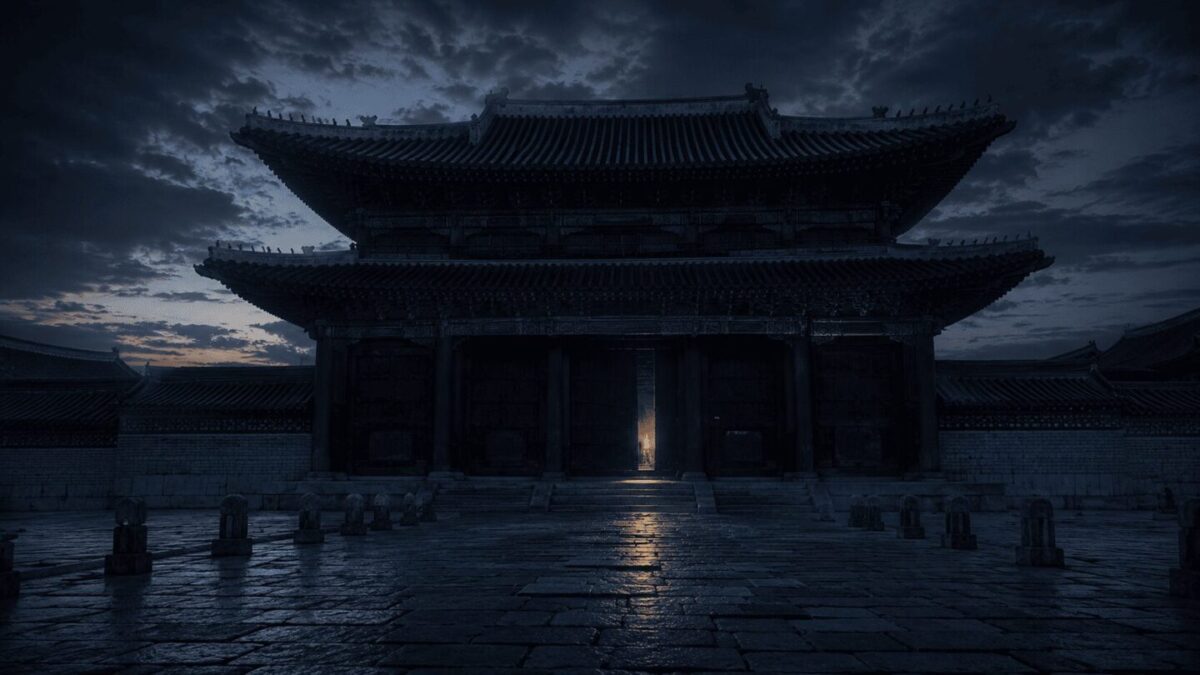
In the early hours of October 8, 1895, a group of sword-carrying Japanese agents, organized under Minister Miura Gorō, entered Gyeongbokgung Palace in Seoul. Korean guards who had sided with Japan opened the gates for them.
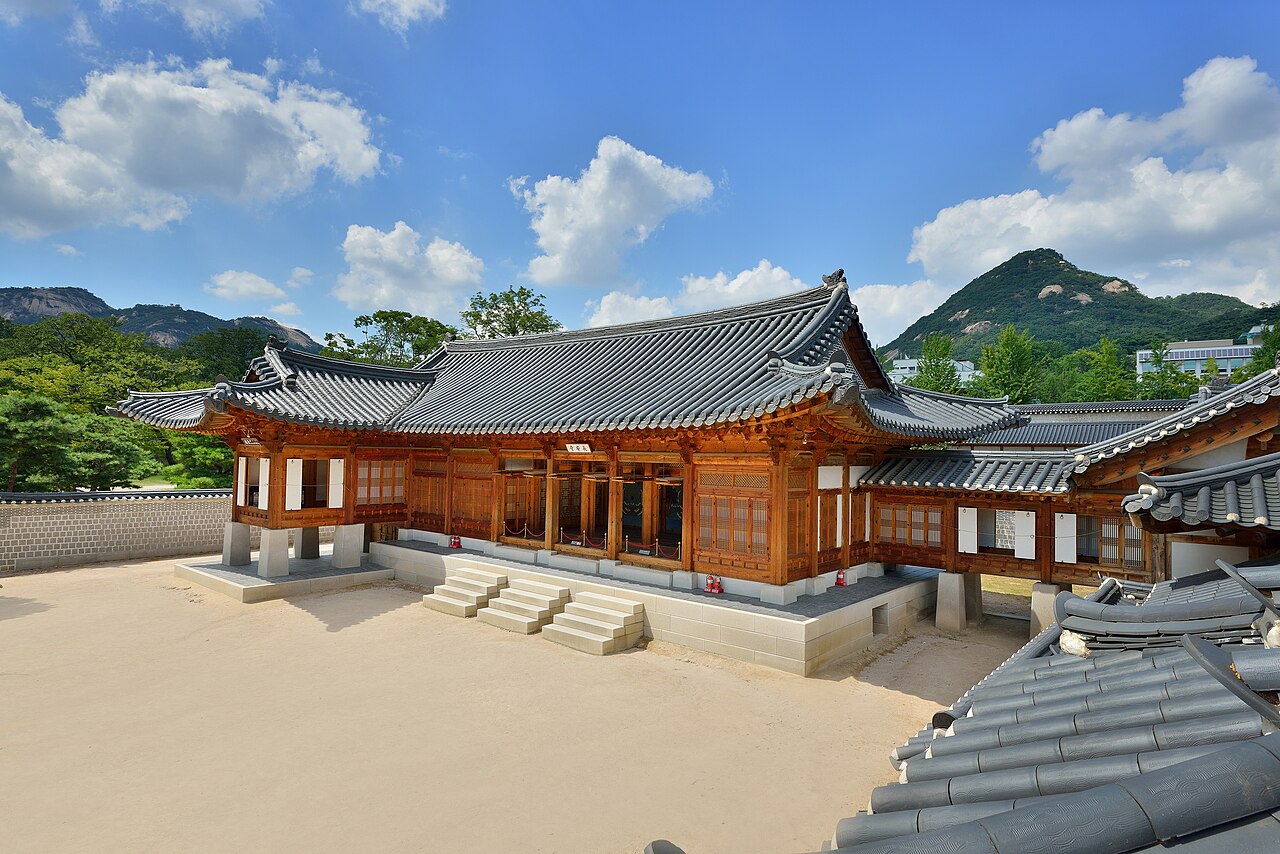
The queen lived in Geoncheonggung, a private residence tucked into the quiet northern corner of the palace grounds. It was supposed to be the safest place in the entire country.
The attackers stormed it. Court ladies were dragged by the hair and beaten as the men demanded to know which woman was the queen. She had survived assassination attempts before — she knew how to disappear among her attendants. This time, it wasn’t enough. Women suspected of being the queen were cut down. When the attackers finally identified her, they killed her with swords at Okhoru, a small pavilion inside the residence.
Then they carried her body to a nearby grove, poured oil on it, and burned it.
She was forty-three. She wasn’t killed on a battlefield or in some foreign land. She was killed a few steps from her own bedroom — in the heart of her own palace, in the middle of her own capital city.
Japan put Miura and dozens of others on trial back home. Every single one of them walked free.
A Legacy Korea Still Argues About
Here’s where I need to be honest with you, because most English articles about her are not.
If you read Western content about Empress Myeongseong, you’ll mostly find one story: a wise national heroine who died for her country. That story isn’t wrong. But it’s not the whole picture of how Koreans actually talk about her.
In Korea, her legacy is genuinely contested. On one side, she is mourned as the mother of the nation — a brilliant woman who fought to keep Korea independent and paid for it with her life. The sheer brutality of her death — at the hands of a foreign power, inside her own home — made her a symbol of everything Korea would lose in the decades that followed.
On the other side, there’s a much colder assessment. During her years in power, her relatives — the Min family — filled government posts and dominated court politics. Many Koreans, both then and now, see that era as corrupt family rule that weakened the country at the worst possible moment. In this reading, she was less a martyr and more a skilled player of a game that ordinary Koreans lost.
Even the question of who helped the assassins isn’t fully settled. Some accounts, especially outside Korea, claim her own father-in-law — the Daewongun, the man who had chosen her as a harmless bride thirty years earlier — cooperated with the plot. Korean historians still debate how far his involvement actually went, and it’s not the story Korean schools emphasize. I won’t state it as fact here, because it isn’t settled fact.
But here’s what I can tell you as a Korean: what we were taught, above all, is that Japan murdered our queen inside our own palace. That’s the part no one in Korea disputes. And that’s the part that still stings.
Where It Happened: Geoncheonggung and Okhoru
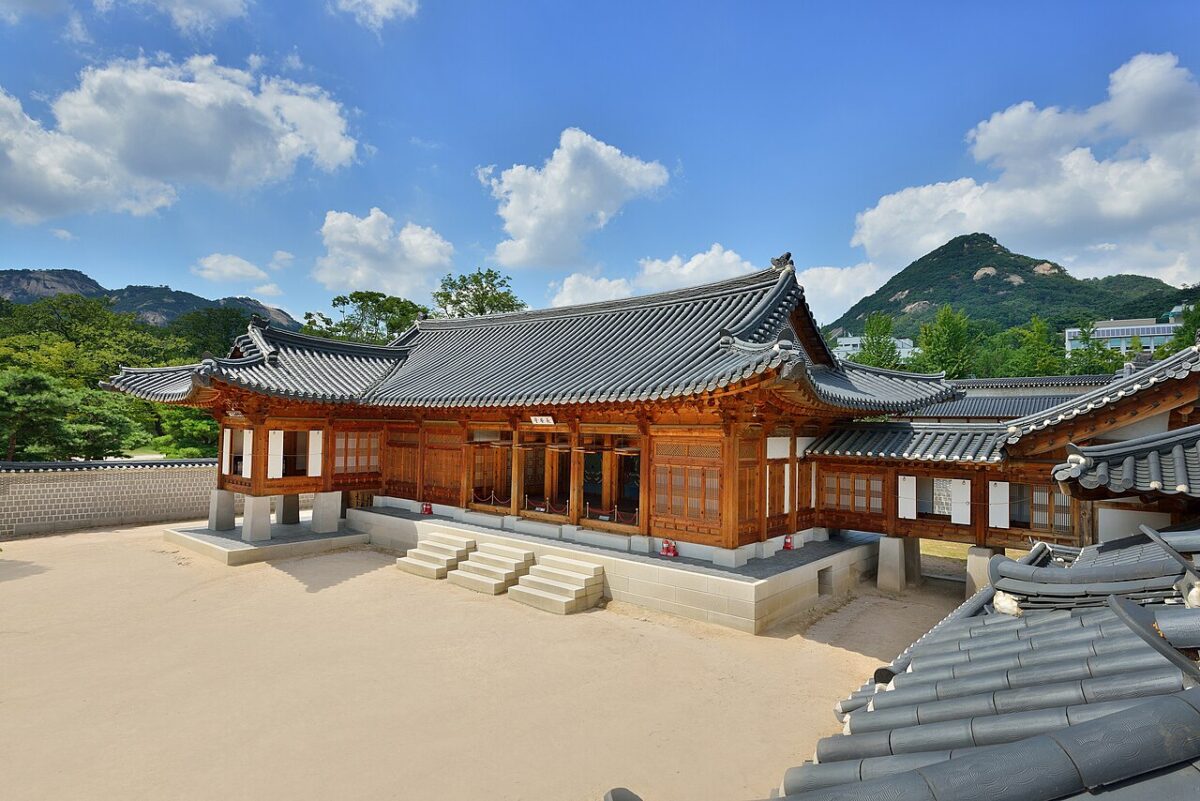
The place where it happened is still standing — rebuilt, quiet, and strangely easy to miss.
Geoncheonggung sits at the far northern end of Gyeongbokgung Palace in Seoul, past the famous pavilions and the tour groups, near a small pond. Most visitors never make it that far back. The ones who do usually walk past a modest wooden building with a small sign, snap a photo of the pretty courtyard, and move on — never realizing they’re standing where the last empress of Korea was killed.
Okhoru, the pavilion where she died, is part of this compound. There’s something quietly devastating about how ordinary it looks. No dramatic memorial. No dark atmosphere. Just wooden floors, paper doors, and a breeze coming off the pond.
If you ever visit Seoul and walk through Gyeongbokgung, go all the way to the back. Stand in that courtyard for a minute. Very few places on earth let you stand exactly where history turned.
If you want to see the layout of the palace before you go, the [Gyeongbokgung Palace] page from Korea’s Heritage Service has the full grounds map, including Geoncheonggung.
She Never Left the Stage
Two years after her death, King Gojong declared Korea an empire and gave his wife a posthumous imperial title: Empress Myeongseong. According to accounts from the time, so little of her remained after the burning that her elaborate state funeral was held with almost nothing to bury.
But if her enemies hoped she would be forgotten, they failed completely.
In Korea, she has never really left. Some of Korea’s most beloved actresses have played her on television. And since 1995 — exactly one hundred years after her death — Korean audiences have been watching The Last Empress, a homegrown musical that has become one of the longest-running shows in Korean theater. Night after night, she walks back onto the stage. Night after night, Korean audiences watch her die again.
Maybe that tells you everything about what she means here. Koreans may still argue about her politics. But no one has ever managed to look away.